Vendors / Pizza & delivery-led
PDQ POS
PDQ POS (Signature Systems, Inc.)
dossier live
- Claims in scope
- 311
- Scored
- 311
- Assessed
- 82
- Unknown
- 229
- Not applicable
- 3
- Cells challenged
- 57
unknown, never as no.Identity
- Owner
- Independent — Signature Systems, Inc., Warminster PA (760 Veterans Circle). Self-described 'privately held, debt-free, and profitable... 100+ W2 employees... 40,000 sq ft headquarters just outside of Philadelphia, PA.' No parent company, PE sponsor, or acquisition found.
- Parent
- Signature Systems
- Founded
- 1986 (site states 'over 35 years'; pizzeria page copy claims '39 years' as of 2026). Source: https://www.pdqpos.com/assets/PDQ_SSI_Product_Catalog_2025.pdf p19
- Scale
- Vendor-claimed only, and internally inconsistent: homepage claims '7,500+ clients' and '21,247+ locations'; the 2025 Product Catalog says 'INSTALLED IN MORE THAN 10,000 RESTAURANTS ACROSS THE US' (p3) and 'tens of thousands of food and beverage and retail operations' (p19). No ARR, revenue, or market-share figure is public. Treat all scale figures as claim-level and unreconciled.
- Who it is for
- US independents and small chains, heavily pizzeria/delivery-weighted, plus a genuinely distinctive casino/gaming vertical. Named references are single-store to small-multi pizzerias (Riccardo's Pizza NJ, Santucci Pizza) per https://www.featuredcustomers.com/vendor/pdq-signature-systems, alongside enterprise casino properties (Live! Casino & Hotel Louisiana, Jake's 58, Sycuan, Bonanza). Essentially no evidence of large national franchise QSR deployments. Realistic sweet spot: 1-10 unit owner-operated pizza/delivery shops in the Northeast, plus casino F&B.
- Site
- https://www.pdqpos.com/
Pricing
transparency: quote-only · unit: unknown · processor lock-in: unknown
- Software
- quote-only. No pricing page exists anywhere on pdqpos.com — the site is a single-page marketing site with no /pricing route. Capterra lists 'Contact vendor / no standard pricing'; Software Advice lists 'Pricing available upon request'; neither offers a free trial. A partner page (fourth.com) describes PDQ as a 'monthly SaaS subscription model' but states no figure. No published tiers, no per-terminal figure, no dollar amounts of any kind were found.
- Card processing
- quote-only. PDQ Pay is marketed as a first-party 'robust payment engine' and the pizzeria copy claims it 'lowers those costly credit-card fees', but no rate, markup, or interchange-plus figure is published anywhere. On lock-in: PDQ Pay is the promoted first-party product and the vendor never states whether an outside processor is permitted. A third-party integration directory names Worldpay (FIS) as a PDQ integration, which hints at some processor flexibility, but that is a low-quality secondary source and the vendor does not corroborate it — do not treat this as open.
- Contract
- unknown. The published Terms of Use is a website-use document only — it contains no service contract terms, no minimum term, no auto-renewal clause, and no cancellation notice period. No MSA or subscription agreement is publicly accessible.
- Early termination
- unknown — no published contract terms address termination.
API posture
public API: partner-gated
- Cost to integrate
- unknown — no published partner program, certification process, revenue share, or partner fee. Access is obtained through a sales conversation; a partner is issued an API user and credentials by the counterparty rather than self-registering.
- Webhooks
- unknown / none documented. No webhook, event, or callback documentation is public. The only integration mechanism visible in third-party documentation is PDQ acting as a CLIENT of a partner's API, not exposing its own.
- Data export on exit
- unknown. Neither the Terms of Use nor the Privacy Policy addresses merchant data ownership, export rights, post-termination retrieval windows, or vendor use of merchant transaction data. The Privacy Policy offers only a California 'Shine the Light' request by postal mail to the Legal Department — no self-serve export tooling, no GDPR DSAR procedure, no stated retention period.
- Notes
- CORRECTED 2026-08-30: this record previously said `public_api: none`. That was wrong in a way worth naming, because it was an absence argument built on an incomplete enumeration. PDQ runs a SECOND public site, https://ssipos.com/ — pointed to as 'Learn more at SSIpos.com' in the About-SSI boilerplate of its own 2025 press releases — which the 2026-08-01 and 2026-08-09 passes both missed because each enumerated www.pdqpos.com only. That boilerplate, on all four press releases, claims 'value-added integrations via RESTful APIs', and ssipos.com's AWARD-WINNING SOFTWARE panel repeats 'RESTful APIs'. Combined with a partner integration that demonstrably works over credentials PDQ is issued, the honest posture is partner-gated, not none: APIs exist, their documentation is not public, and no developer portal, sandbox, reference, OAuth flow, webhook contract, rate limit or versioning policy is published on either host. developer/developers/api/portal.pdqpos.com still do not resolve and ssipos.com has no developer route. ssipos.com also carries the vendor's fullest integration list, static logos and names rather than a marketplace: Konami Synkros, Light & Wonder SG Envoy, Aristocrat Oasis 360, IGT, CasinoTrac, Infor, Yellow Dog, Paytronix, GHS, Everi, CTUIT, Easybar, Berg, JOINGO, Workday, Casino Cash Trac, Kronos, Restaurant 365, Hot Schedules, Solink, Macromatix, Olo, Chowly, Worldpay, Datacap, Truist, Freedom Pay, Card Market, Branch, GiveX, Evo, Room Key, Megasys, QSR Automations, Sage, Crunchtime, Shift4. Its robots.txt reads 'User-Agent: * / Disallow:' — nothing restricted. The most load-bearing evidence about PDQ's real integration architecture still comes from a partner's own help docs, not PDQ's. Yellow Dog Software documents that 'SSI PDQ integrates with Yellow Dog's Fetch API to post interface codes and sales, and get item data' — PDQ is the API consumer. Two details matter: PDQ 'transmits transaction data daily at 9am' (a once-daily batch, not streaming), and 'PDQ's terminals must be refreshed in order to see item updates/new items' (manual terminal refresh, not push propagation). Source: https://help.yellowdogsoftware.com/signaturesystemsinc. Named integrations found across sources: DoorDash, Uber Eats, ItsaCheckmate, Olo, Restaurant365, Fourth/HotSchedules, Yellow Dog, Worldpay (FIS), eCard Systems. PDQ claims '100+ software integrations' but operates no public, browsable integrations marketplace. PDQ is NOT on DoorDash's 2026 Preferred Integration Partner list (Checkmate, Chowly, Deliverect, Otter, PAR, Qu, Square, Stream, Toast, UrbanPiper).
Capabilities
Every claim is binary and checkable. Grades: A primary documentation · B product documentation · C pricing or feature page · D marketing claim · E third-party reporting · F inference with no source. A yes on a differentiator claim requires A or B.
Order capture & FOH workflow
order-capture-floor-plan-editor
No product documentation published. Casino/table-service deployments imply table management but nothing is documented.
order-capture-seat-level
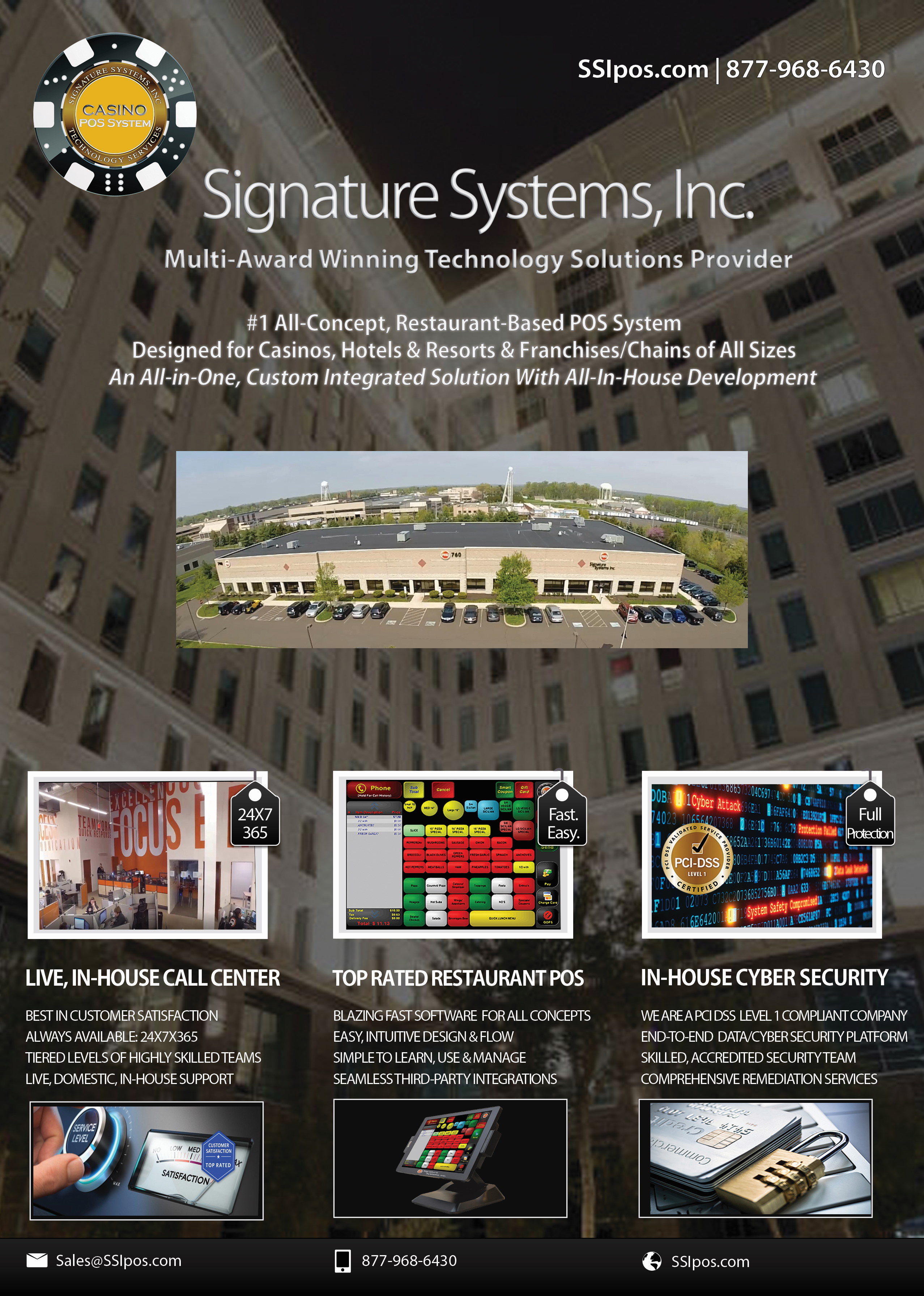
Re-searched 2026-08-30 against what is now known to be the vendor's FULL public surface, which is TWO sites, not one. www.pdqpos.com is a single marketing page plus three legal pages, six press-release and project pages, and the 20-page 2025 Product Catalog PDF. ssipos.com -- a second vendor site, named as "Learn more at SSIpos.com" in PDQ's own 2025 press releases, missed by both the 2026-08-01 and the 2026-08-09 passes because each enumerated www.pdqpos.com only -- is a WordPress marketing page (robots.txt reads "User-Agent: * / Disallow:", i.e. nothing restricted; its Yoast sitemap index lists eight pages) plus seven 2019 flyer images, two of which carry legible screenshots of the running product. There is still no manual, help centre, admin guide, knowledge base or developer portal on either host. For order capture the two sites establish the SURFACES and nothing about their behaviour: first-party 8-inch and 10-inch tablets, a counter station, a three-in-one POS/customer-display/kiosk unit, four kiosk models, and an order-entry screen (visible in the 2019 overview flyer) whose keys are categories, sizes, toppings, "1/2 with", "NO'S", Smart Coupon, Gift Card, Phone/Call History, Send, Pay, Charge Card and OOPS. Nothing in either site describes a seat, a course, a tab pre-authorisation, a transfer, an order throttle, a scheduled fire time or a drive-thru timer, and no configuration or settings screen is published anywhere. This is a determination about PDQ's PUBLICATION, not about the product: the capability may well exist and be undocumented. Recorded at category level rather than per cell, because the gap is the same gap for every cell in the category and pretending otherwise would manufacture specificity the evidence does not have.
order-capture-coursing-hold-fire
Re-searched 2026-08-30 against what is now known to be the vendor's FULL public surface, which is TWO sites, not one. www.pdqpos.com is a single marketing page plus three legal pages, six press-release and project pages, and the 20-page 2025 Product Catalog PDF. ssipos.com -- a second vendor site, named as "Learn more at SSIpos.com" in PDQ's own 2025 press releases, missed by both the 2026-08-01 and the 2026-08-09 passes because each enumerated www.pdqpos.com only -- is a WordPress marketing page (robots.txt reads "User-Agent: * / Disallow:", i.e. nothing restricted; its Yoast sitemap index lists eight pages) plus seven 2019 flyer images, two of which carry legible screenshots of the running product. There is still no manual, help centre, admin guide, knowledge base or developer portal on either host. For order capture the two sites establish the SURFACES and nothing about their behaviour: first-party 8-inch and 10-inch tablets, a counter station, a three-in-one POS/customer-display/kiosk unit, four kiosk models, and an order-entry screen (visible in the 2019 overview flyer) whose keys are categories, sizes, toppings, "1/2 with", "NO'S", Smart Coupon, Gift Card, Phone/Call History, Send, Pay, Charge Card and OOPS. Nothing in either site describes a seat, a course, a tab pre-authorisation, a transfer, an order throttle, a scheduled fire time or a drive-thru timer, and no configuration or settings screen is published anywhere. This is a determination about PDQ's PUBLICATION, not about the product: the capability may well exist and be undocumented. Recorded at category level rather than per cell, because the gap is the same gap for every cell in the category and pretending otherwise would manufacture specificity the evidence does not have.
order-capture-split-merge
Re-searched 2026-08-30 against what is now known to be the vendor's FULL public surface, which is TWO sites, not one. www.pdqpos.com is a single marketing page plus three legal pages, six press-release and project pages, and the 20-page 2025 Product Catalog PDF. ssipos.com -- a second vendor site, named as "Learn more at SSIpos.com" in PDQ's own 2025 press releases, missed by both the 2026-08-01 and the 2026-08-09 passes because each enumerated www.pdqpos.com only -- is a WordPress marketing page (robots.txt reads "User-Agent: * / Disallow:", i.e. nothing restricted; its Yoast sitemap index lists eight pages) plus seven 2019 flyer images, two of which carry legible screenshots of the running product. There is still no manual, help centre, admin guide, knowledge base or developer portal on either host. For order capture the two sites establish the SURFACES and nothing about their behaviour: first-party 8-inch and 10-inch tablets, a counter station, a three-in-one POS/customer-display/kiosk unit, four kiosk models, and an order-entry screen (visible in the 2019 overview flyer) whose keys are categories, sizes, toppings, "1/2 with", "NO'S", Smart Coupon, Gift Card, Phone/Call History, Send, Pay, Charge Card and OOPS. Nothing in either site describes a seat, a course, a tab pre-authorisation, a transfer, an order throttle, a scheduled fire time or a drive-thru timer, and no configuration or settings screen is published anywhere. This is a determination about PDQ's PUBLICATION, not about the product: the capability may well exist and be undocumented. Recorded at category level rather than per cell, because the gap is the same gap for every cell in the category and pretending otherwise would manufacture specificity the evidence does not have.
order-capture-bar-tab-preauth differentiator
Re-searched 2026-08-30 against what is now known to be the vendor's FULL public surface, which is TWO sites, not one. www.pdqpos.com is a single marketing page plus three legal pages, six press-release and project pages, and the 20-page 2025 Product Catalog PDF. ssipos.com -- a second vendor site, named as "Learn more at SSIpos.com" in PDQ's own 2025 press releases, missed by both the 2026-08-01 and the 2026-08-09 passes because each enumerated www.pdqpos.com only -- is a WordPress marketing page (robots.txt reads "User-Agent: * / Disallow:", i.e. nothing restricted; its Yoast sitemap index lists eight pages) plus seven 2019 flyer images, two of which carry legible screenshots of the running product. There is still no manual, help centre, admin guide, knowledge base or developer portal on either host. For order capture the two sites establish the SURFACES and nothing about their behaviour: first-party 8-inch and 10-inch tablets, a counter station, a three-in-one POS/customer-display/kiosk unit, four kiosk models, and an order-entry screen (visible in the 2019 overview flyer) whose keys are categories, sizes, toppings, "1/2 with", "NO'S", Smart Coupon, Gift Card, Phone/Call History, Send, Pay, Charge Card and OOPS. Nothing in either site describes a seat, a course, a tab pre-authorisation, a transfer, an order throttle, a scheduled fire time or a drive-thru timer, and no configuration or settings screen is published anywhere. This is a determination about PDQ's PUBLICATION, not about the product: the capability may well exist and be undocumented. Recorded at category level rather than per cell, because the gap is the same gap for every cell in the category and pretending otherwise would manufacture specificity the evidence does not have.
order-capture-transfer-audit
Re-searched 2026-08-30 against what is now known to be the vendor's FULL public surface, which is TWO sites, not one. www.pdqpos.com is a single marketing page plus three legal pages, six press-release and project pages, and the 20-page 2025 Product Catalog PDF. ssipos.com -- a second vendor site, named as "Learn more at SSIpos.com" in PDQ's own 2025 press releases, missed by both the 2026-08-01 and the 2026-08-09 passes because each enumerated www.pdqpos.com only -- is a WordPress marketing page (robots.txt reads "User-Agent: * / Disallow:", i.e. nothing restricted; its Yoast sitemap index lists eight pages) plus seven 2019 flyer images, two of which carry legible screenshots of the running product. There is still no manual, help centre, admin guide, knowledge base or developer portal on either host. For order capture the two sites establish the SURFACES and nothing about their behaviour: first-party 8-inch and 10-inch tablets, a counter station, a three-in-one POS/customer-display/kiosk unit, four kiosk models, and an order-entry screen (visible in the 2019 overview flyer) whose keys are categories, sizes, toppings, "1/2 with", "NO'S", Smart Coupon, Gift Card, Phone/Call History, Send, Pay, Charge Card and OOPS. Nothing in either site describes a seat, a course, a tab pre-authorisation, a transfer, an order throttle, a scheduled fire time or a drive-thru timer, and no configuration or settings screen is published anywhere. This is a determination about PDQ's PUBLICATION, not about the product: the capability may well exist and be undocumented. Recorded at category level rather than per cell, because the gap is the same gap for every cell in the category and pretending otherwise would manufacture specificity the evidence does not have.
order-capture-native-handheld
First-party 8-inch and 10-inch PDQ tablets are catalogued as mobile order-taking devices ('take orders from anywhere'), and the Multi-Revenue Center release (software revision 3.5.383) states staff 'take orders from a wireless POS tablet' and that the update 'gives operators ... the ability to place orders and accept payment for any of those operations wirelessly'. Two shortfalls: the vendor never states whether the tablet runs a native application or a remote session on a back-office terminal, and no document ties a card reader to the tablets - the catalog's EMV reader is an option on the COUNTER STATION, not on the tablets. Evidence is a vendor press release and a marketing product catalog; no product documentation exists for this vendor. https://www.globenewswire.com/news-release/2025/02/26/3033019/0/en/Signature-Systems-Inc-Announces-Slate-Of-New-Features-For-Casino-POS.html · retrieved 2026-08-09 adversarially verified
order-capture-offline-order-entry
Offline behavior is never mentioned on the site or in the catalog. No published offline matrix.
order-capture-qr-same-check differentiator
Re-searched 2026-08-30 against what is now known to be the vendor's FULL public surface, which is TWO sites, not one. www.pdqpos.com is a single marketing page plus three legal pages, six press-release and project pages, and the 20-page 2025 Product Catalog PDF. ssipos.com -- a second vendor site, named as "Learn more at SSIpos.com" in PDQ's own 2025 press releases, missed by both the 2026-08-01 and the 2026-08-09 passes because each enumerated www.pdqpos.com only -- is a WordPress marketing page (robots.txt reads "User-Agent: * / Disallow:", i.e. nothing restricted; its Yoast sitemap index lists eight pages) plus seven 2019 flyer images, two of which carry legible screenshots of the running product. There is still no manual, help centre, admin guide, knowledge base or developer portal on either host. For order capture the two sites establish the SURFACES and nothing about their behaviour: first-party 8-inch and 10-inch tablets, a counter station, a three-in-one POS/customer-display/kiosk unit, four kiosk models, and an order-entry screen (visible in the 2019 overview flyer) whose keys are categories, sizes, toppings, "1/2 with", "NO'S", Smart Coupon, Gift Card, Phone/Call History, Send, Pay, Charge Card and OOPS. Nothing in either site describes a seat, a course, a tab pre-authorisation, a transfer, an order throttle, a scheduled fire time or a drive-thru timer, and no configuration or settings screen is published anywhere. This is a determination about PDQ's PUBLICATION, not about the product: the capability may well exist and be undocumented. Recorded at category level rather than per cell, because the gap is the same gap for every cell in the category and pretending otherwise would manufacture specificity the evidence does not have.
order-capture-kiosk-first-party differentiator
Four first-party kiosk SKUs shipped. Shared menu tree with POS implied not stated; no ADA/accessibility conformance published. https://www.pdqpos.com/assets/PDQ_SSI_Product_Catalog_2025.pdf · retrieved 2026-08-01
order-capture-drive-thru
Outdoor kiosk markets 'self-ordering from the car'; digital menu boards integrated. No order-point/window separation or lane sequencing documented. https://www.pdqpos.com/assets/PDQ_SSI_Product_Catalog_2025.pdf · retrieved 2026-08-01
order-capture-drive-thru-timers
Re-searched 2026-08-30 against what is now known to be the vendor's FULL public surface, which is TWO sites, not one. www.pdqpos.com is a single marketing page plus three legal pages, six press-release and project pages, and the 20-page 2025 Product Catalog PDF. ssipos.com -- a second vendor site, named as "Learn more at SSIpos.com" in PDQ's own 2025 press releases, missed by both the 2026-08-01 and the 2026-08-09 passes because each enumerated www.pdqpos.com only -- is a WordPress marketing page (robots.txt reads "User-Agent: * / Disallow:", i.e. nothing restricted; its Yoast sitemap index lists eight pages) plus seven 2019 flyer images, two of which carry legible screenshots of the running product. There is still no manual, help centre, admin guide, knowledge base or developer portal on either host. For order capture the two sites establish the SURFACES and nothing about their behaviour: first-party 8-inch and 10-inch tablets, a counter station, a three-in-one POS/customer-display/kiosk unit, four kiosk models, and an order-entry screen (visible in the 2019 overview flyer) whose keys are categories, sizes, toppings, "1/2 with", "NO'S", Smart Coupon, Gift Card, Phone/Call History, Send, Pay, Charge Card and OOPS. Nothing in either site describes a seat, a course, a tab pre-authorisation, a transfer, an order throttle, a scheduled fire time or a drive-thru timer, and no configuration or settings screen is published anywhere. This is a determination about PDQ's PUBLICATION, not about the product: the capability may well exist and be undocumented. Recorded at category level rather than per cell, because the gap is the same gap for every cell in the category and pretending otherwise would manufacture specificity the evidence does not have.
order-capture-voice-ai differentiator
Re-searched 2026-08-30 against what is now known to be the vendor's FULL public surface, which is TWO sites, not one. www.pdqpos.com is a single marketing page plus three legal pages, six press-release and project pages, and the 20-page 2025 Product Catalog PDF. ssipos.com -- a second vendor site, named as "Learn more at SSIpos.com" in PDQ's own 2025 press releases, missed by both the 2026-08-01 and the 2026-08-09 passes because each enumerated www.pdqpos.com only -- is a WordPress marketing page (robots.txt reads "User-Agent: * / Disallow:", i.e. nothing restricted; its Yoast sitemap index lists eight pages) plus seven 2019 flyer images, two of which carry legible screenshots of the running product. There is still no manual, help centre, admin guide, knowledge base or developer portal on either host. For order capture the two sites establish the SURFACES and nothing about their behaviour: first-party 8-inch and 10-inch tablets, a counter station, a three-in-one POS/customer-display/kiosk unit, four kiosk models, and an order-entry screen (visible in the 2019 overview flyer) whose keys are categories, sizes, toppings, "1/2 with", "NO'S", Smart Coupon, Gift Card, Phone/Call History, Send, Pay, Charge Card and OOPS. Nothing in either site describes a seat, a course, a tab pre-authorisation, a transfer, an order throttle, a scheduled fire time or a drive-thru timer, and no configuration or settings screen is published anywhere. This is a determination about PDQ's PUBLICATION, not about the product: the capability may well exist and be undocumented. Recorded at category level rather than per cell, because the gap is the same gap for every cell in the category and pretending otherwise would manufacture specificity the evidence does not have.
order-capture-throttling differentiator
Re-searched 2026-08-30 against what is now known to be the vendor's FULL public surface, which is TWO sites, not one. www.pdqpos.com is a single marketing page plus three legal pages, six press-release and project pages, and the 20-page 2025 Product Catalog PDF. ssipos.com -- a second vendor site, named as "Learn more at SSIpos.com" in PDQ's own 2025 press releases, missed by both the 2026-08-01 and the 2026-08-09 passes because each enumerated www.pdqpos.com only -- is a WordPress marketing page (robots.txt reads "User-Agent: * / Disallow:", i.e. nothing restricted; its Yoast sitemap index lists eight pages) plus seven 2019 flyer images, two of which carry legible screenshots of the running product. There is still no manual, help centre, admin guide, knowledge base or developer portal on either host. For order capture the two sites establish the SURFACES and nothing about their behaviour: first-party 8-inch and 10-inch tablets, a counter station, a three-in-one POS/customer-display/kiosk unit, four kiosk models, and an order-entry screen (visible in the 2019 overview flyer) whose keys are categories, sizes, toppings, "1/2 with", "NO'S", Smart Coupon, Gift Card, Phone/Call History, Send, Pay, Charge Card and OOPS. Nothing in either site describes a seat, a course, a tab pre-authorisation, a transfer, an order throttle, a scheduled fire time or a drive-thru timer, and no configuration or settings screen is published anywhere. This is a determination about PDQ's PUBLICATION, not about the product: the capability may well exist and be undocumented. Recorded at category level rather than per cell, because the gap is the same gap for every cell in the category and pretending otherwise would manufacture specificity the evidence does not have.
order-capture-scheduled-orders
Re-searched 2026-08-30 against what is now known to be the vendor's FULL public surface, which is TWO sites, not one. www.pdqpos.com is a single marketing page plus three legal pages, six press-release and project pages, and the 20-page 2025 Product Catalog PDF. ssipos.com -- a second vendor site, named as "Learn more at SSIpos.com" in PDQ's own 2025 press releases, missed by both the 2026-08-01 and the 2026-08-09 passes because each enumerated www.pdqpos.com only -- is a WordPress marketing page (robots.txt reads "User-Agent: * / Disallow:", i.e. nothing restricted; its Yoast sitemap index lists eight pages) plus seven 2019 flyer images, two of which carry legible screenshots of the running product. There is still no manual, help centre, admin guide, knowledge base or developer portal on either host. For order capture the two sites establish the SURFACES and nothing about their behaviour: first-party 8-inch and 10-inch tablets, a counter station, a three-in-one POS/customer-display/kiosk unit, four kiosk models, and an order-entry screen (visible in the 2019 overview flyer) whose keys are categories, sizes, toppings, "1/2 with", "NO'S", Smart Coupon, Gift Card, Phone/Call History, Send, Pay, Charge Card and OOPS. Nothing in either site describes a seat, a course, a tab pre-authorisation, a transfer, an order throttle, a scheduled fire time or a drive-thru timer, and no configuration or settings screen is published anywhere. This is a determination about PDQ's PUBLICATION, not about the product: the capability may well exist and be undocumented. Recorded at category level rather than per cell, because the gap is the same gap for every cell in the category and pretending otherwise would manufacture specificity the evidence does not have.
order-capture-catering
Re-searched 2026-08-30 against what is now known to be the vendor's FULL public surface, which is TWO sites, not one. www.pdqpos.com is a single marketing page plus three legal pages, six press-release and project pages, and the 20-page 2025 Product Catalog PDF. ssipos.com -- a second vendor site, named as "Learn more at SSIpos.com" in PDQ's own 2025 press releases, missed by both the 2026-08-01 and the 2026-08-09 passes because each enumerated www.pdqpos.com only -- is a WordPress marketing page (robots.txt reads "User-Agent: * / Disallow:", i.e. nothing restricted; its Yoast sitemap index lists eight pages) plus seven 2019 flyer images, two of which carry legible screenshots of the running product. There is still no manual, help centre, admin guide, knowledge base or developer portal on either host. For order capture the two sites establish the SURFACES and nothing about their behaviour: first-party 8-inch and 10-inch tablets, a counter station, a three-in-one POS/customer-display/kiosk unit, four kiosk models, and an order-entry screen (visible in the 2019 overview flyer) whose keys are categories, sizes, toppings, "1/2 with", "NO'S", Smart Coupon, Gift Card, Phone/Call History, Send, Pay, Charge Card and OOPS. Nothing in either site describes a seat, a course, a tab pre-authorisation, a transfer, an order throttle, a scheduled fire time or a drive-thru timer, and no configuration or settings screen is published anywhere. This is a determination about PDQ's PUBLICATION, not about the product: the capability may well exist and be undocumented. Recorded at category level rather than per cell, because the gap is the same gap for every cell in the category and pretending otherwise would manufacture specificity the evidence does not have.
order-capture-order-ready-signal differentiator
Re-searched 2026-08-30 against what is now known to be the vendor's FULL public surface, which is TWO sites, not one. www.pdqpos.com is a single marketing page plus three legal pages, six press-release and project pages, and the 20-page 2025 Product Catalog PDF. ssipos.com -- a second vendor site, named as "Learn more at SSIpos.com" in PDQ's own 2025 press releases, missed by both the 2026-08-01 and the 2026-08-09 passes because each enumerated www.pdqpos.com only -- is a WordPress marketing page (robots.txt reads "User-Agent: * / Disallow:", i.e. nothing restricted; its Yoast sitemap index lists eight pages) plus seven 2019 flyer images, two of which carry legible screenshots of the running product. There is still no manual, help centre, admin guide, knowledge base or developer portal on either host. For order capture the two sites establish the SURFACES and nothing about their behaviour: first-party 8-inch and 10-inch tablets, a counter station, a three-in-one POS/customer-display/kiosk unit, four kiosk models, and an order-entry screen (visible in the 2019 overview flyer) whose keys are categories, sizes, toppings, "1/2 with", "NO'S", Smart Coupon, Gift Card, Phone/Call History, Send, Pay, Charge Card and OOPS. Nothing in either site describes a seat, a course, a tab pre-authorisation, a transfer, an order throttle, a scheduled fire time or a drive-thru timer, and no configuration or settings screen is published anywhere. This is a determination about PDQ's PUBLICATION, not about the product: the capability may well exist and be undocumented. Recorded at category level rather than per cell, because the gap is the same gap for every cell in the category and pretending otherwise would manufacture specificity the evidence does not have.
order-capture-void-comp-controls
The only first-party evidence is a peripheral blurb: the FINGERPRINT READER entry says 'save precious seconds at every login and manager override', which establishes manager override as a routine, per-user-authenticated flow in the product. Reason codes on voids/comps/discounts and an exception report are not documented - and they could not have been, because the catalog is a 20-page hardware marketing piece with no settings screens, field tables or configuration procedures anywhere in it, and PDQ publishes no manual, help centre or admin guide. Treat the gap as unpublished, not as absent. https://www.pdqpos.com/assets/PDQ_SSI_Product_Catalog_2025.pdf · retrieved 2026-08-09 adversarially verified
Menu, modifiers & pricing engine
menu-pricing-nested-modifiers
Re-searched 2026-08-30 against what is now known to be the vendor's FULL public surface, which is TWO sites, not one. www.pdqpos.com is a single marketing page plus three legal pages, six press-release and project pages, and the 20-page 2025 Product Catalog PDF. ssipos.com -- a second vendor site, named as "Learn more at SSIpos.com" in PDQ's own 2025 press releases, missed by both the 2026-08-01 and the 2026-08-09 passes because each enumerated www.pdqpos.com only -- is a WordPress marketing page (robots.txt reads "User-Agent: * / Disallow:", i.e. nothing restricted; its Yoast sitemap index lists eight pages) plus seven 2019 flyer images, two of which carry legible screenshots of the running product. There is still no manual, help centre, admin guide, knowledge base or developer portal on either host. For menu and pricing the only substantive artefact is the order-entry screenshot on the 2019 overview flyer, which is an ORDERING surface: it shows sizes, styles, a topping grid, a "1/2 with" placement key, a "NO'S" key and priced check lines. It shows no setup surface at all. Every claim in this category is about how the menu is CONFIGURED -- nesting depth, min/max counts, quantity tiers, effective dates, price books per channel, allowances, franchise inheritance, allergen fields -- and PDQ publishes no menu-setup documentation of any kind on either host. The one third-party document that touches menu data is Yellow Dog's integration page, and it describes item data flowing INTO PDQ from Yellow Dog every 15 minutes, not PDQ's own menu model. This is a determination about PDQ's PUBLICATION, not about the product: the capability may well exist and be undocumented. Recorded at category level rather than per cell, because the gap is the same gap for every cell in the category and pretending otherwise would manufacture specificity the evidence does not have.
menu-pricing-modifier-price-by-parent-size
Re-searched 2026-08-30 against what is now known to be the vendor's FULL public surface, which is TWO sites, not one. www.pdqpos.com is a single marketing page plus three legal pages, six press-release and project pages, and the 20-page 2025 Product Catalog PDF. ssipos.com -- a second vendor site, named as "Learn more at SSIpos.com" in PDQ's own 2025 press releases, missed by both the 2026-08-01 and the 2026-08-09 passes because each enumerated www.pdqpos.com only -- is a WordPress marketing page (robots.txt reads "User-Agent: * / Disallow:", i.e. nothing restricted; its Yoast sitemap index lists eight pages) plus seven 2019 flyer images, two of which carry legible screenshots of the running product. There is still no manual, help centre, admin guide, knowledge base or developer portal on either host. For menu and pricing the only substantive artefact is the order-entry screenshot on the 2019 overview flyer, which is an ORDERING surface: it shows sizes, styles, a topping grid, a "1/2 with" placement key, a "NO'S" key and priced check lines. It shows no setup surface at all. Every claim in this category is about how the menu is CONFIGURED -- nesting depth, min/max counts, quantity tiers, effective dates, price books per channel, allowances, franchise inheritance, allergen fields -- and PDQ publishes no menu-setup documentation of any kind on either host. The one third-party document that touches menu data is Yellow Dog's integration page, and it describes item data flowing INTO PDQ from Yellow Dog every 15 minutes, not PDQ's own menu model. This is a determination about PDQ's PUBLICATION, not about the product: the capability may well exist and be undocumented. Recorded at category level rather than per cell, because the gap is the same gap for every cell in the category and pretending otherwise would manufacture specificity the evidence does not have.
menu-pricing-fractional-placement differentiator
MOVED OFF `unknown` ON NEW FIRST-PARTY EVIDENCE, and the earlier verifier's reasoning was sound on the evidence it had -- it searched competitor pizza-POS pages and third-party writeups, none of which name PDQ. The evidence is the vendor's own order screen. The check pane of the order-entry screenshot on the Signature Systems overview flyer reads, line by line: MED 14" $7.50 / 1/2 with $0.00 / ANCHOVIES $1.50 / 1/2 with $0.00 / FRESH GARLIC $1.50 -- and a "1/2 with" key sits at the end of the topping grid beside PEPPERONI, MUSHROOMS, SAUSAGE and the rest. So a placement modifier is applied twice on one pie, each time carrying its own separately-priced topping. That is sectioned placement at halves with independent per-section pricing. The "1/2 with" string is read twice independently on the same screen -- once as a key in the topping grid, where it is large and unambiguous, and twice as an indented child line under the bold MED 14" parent -- which is why it is reported despite the small italic type of the check pane; the indentation of the four child rows under the parent is clear at every magnification. Shortfalls: HALVES ONLY -- no quarter or third key is present, and the claim asks for quarters ideally -- and the placement RULE is undocumented, so nothing establishes how the price is derived or whether the behaviour is configurable. See `menu-pricing-half-and-half-rule`, which stays `unknown` for exactly that reason. The artefact is a marketing flyer dated 2019 on ssipos.com (a second vendor site that the 2026-08-01 and 2026-08-09 passes never reached, because both enumerated www.pdqpos.com only); the screenshot inside it is of the running product, with a 4/2/2019 date range on screen. A screenshot is stronger than the prose around it but it is still a sales artefact, it is seven years old, and PDQ publishes no manual in which any of this is specified. Graded D on both counts. HOW IT WAS READ, because that is part of the evidence: the file is named "-lower-res" and is a 2MB JPEG of a print flyer, so the screenshot inside it was cropped and enlarged to be read at all. Panel headings, column headers and button captions come out cleanly at that magnification; small italic body rows are at the limit of the source resolution and are reported here only where a second, independent reading of the same string exists elsewhere on the page. https://ssipos.com/wp-content/uploads/2019/09/SSI-SSI-flyer-lower-res.jpg · retrieved 2026-08-30
menu-pricing-half-and-half-rule differentiator
A DELIBERATE NON-MOVE, recorded so it is not re-litigated. New first-party evidence found on 2026-08-30 does establish that PDQ takes half-and-half orders -- the order-entry screenshot on https://ssipos.com/wp-content/uploads/2019/09/SSI-SSI-flyer-lower-res.jpg shows "1/2 with" applied twice on a MED 14" with ANCHOVIES $1.50 and FRESH GARLIC $1.50 -- and that moved `menu-pricing-fractional-placement` to `partial`. It does NOT reach this claim. This claim asks whether the pricing RULE is operator-configurable among at least two of charge-the-higher-half, average-the-halves and fraction-of-full-price. One check with $1.50 against each topping cannot even identify which rule is in force, because the whole-pie price of those toppings is not on screen; and configurability is a setup question, which PDQ publishes nothing about at all. Evidence of the behaviour is not evidence of the rule.
menu-pricing-topping-quantity-tiers
Re-searched 2026-08-30 against what is now known to be the vendor's FULL public surface, which is TWO sites, not one. www.pdqpos.com is a single marketing page plus three legal pages, six press-release and project pages, and the 20-page 2025 Product Catalog PDF. ssipos.com -- a second vendor site, named as "Learn more at SSIpos.com" in PDQ's own 2025 press releases, missed by both the 2026-08-01 and the 2026-08-09 passes because each enumerated www.pdqpos.com only -- is a WordPress marketing page (robots.txt reads "User-Agent: * / Disallow:", i.e. nothing restricted; its Yoast sitemap index lists eight pages) plus seven 2019 flyer images, two of which carry legible screenshots of the running product. There is still no manual, help centre, admin guide, knowledge base or developer portal on either host. For menu and pricing the only substantive artefact is the order-entry screenshot on the 2019 overview flyer, which is an ORDERING surface: it shows sizes, styles, a topping grid, a "1/2 with" placement key, a "NO'S" key and priced check lines. It shows no setup surface at all. Every claim in this category is about how the menu is CONFIGURED -- nesting depth, min/max counts, quantity tiers, effective dates, price books per channel, allowances, franchise inheritance, allergen fields -- and PDQ publishes no menu-setup documentation of any kind on either host. The one third-party document that touches menu data is Yellow Dog's integration page, and it describes item data flowing INTO PDQ from Yellow Dog every 15 minutes, not PDQ's own menu model. This is a determination about PDQ's PUBLICATION, not about the product: the capability may well exist and be undocumented. Recorded at category level rather than per cell, because the gap is the same gap for every cell in the category and pretending otherwise would manufacture specificity the evidence does not have.
menu-pricing-size-style-matrix differentiator
The order-entry screenshot on the Signature Systems overview flyer shows a size row and a style row crossed with each other: Small 10", MED 14", Large 16" for the regular crust, and SM Sicilian, LARGE SICILIAN, SM VEGGIE SICILIAN, LG VEGGIE SICILIAN beside them, with a matching specials row (10"/14"/16" PIZZA SPECIAL, SM SICILIAN SPECIAL, LG SICILIAN SPECIAL). The check pane prices the selected cell independently -- MED 14" rings at $7.50 -- so distinct size x style cells carry distinct prices. Shortfall, and it is the claim's actual subject: this is the ORDERING surface, not the configuration surface. Nothing shows a two-axis grid with a per-cell override; seven flat items each with its own price would produce exactly this screen, and PDQ publishes no menu-setup documentation that could tell the two apart. The artefact is a marketing flyer dated 2019 on ssipos.com (a second vendor site that the 2026-08-01 and 2026-08-09 passes never reached, because both enumerated www.pdqpos.com only); the screenshot inside it is of the running product, with a 4/2/2019 date range on screen. A screenshot is stronger than the prose around it but it is still a sales artefact, it is seven years old, and PDQ publishes no manual in which any of this is specified. Graded D on both counts. HOW IT WAS READ, because that is part of the evidence: the file is named "-lower-res" and is a 2MB JPEG of a print flyer, so the screenshot inside it was cropped and enlarged to be read at all. Panel headings, column headers and button captions come out cleanly at that magnification; small italic body rows are at the limit of the source resolution and are reported here only where a second, independent reading of the same string exists elsewhere on the page. https://ssipos.com/wp-content/uploads/2019/09/SSI-SSI-flyer-lower-res.jpg · retrieved 2026-08-30
menu-pricing-included-allowance differentiator
Re-searched 2026-08-30 against what is now known to be the vendor's FULL public surface, which is TWO sites, not one. www.pdqpos.com is a single marketing page plus three legal pages, six press-release and project pages, and the 20-page 2025 Product Catalog PDF. ssipos.com -- a second vendor site, named as "Learn more at SSIpos.com" in PDQ's own 2025 press releases, missed by both the 2026-08-01 and the 2026-08-09 passes because each enumerated www.pdqpos.com only -- is a WordPress marketing page (robots.txt reads "User-Agent: * / Disallow:", i.e. nothing restricted; its Yoast sitemap index lists eight pages) plus seven 2019 flyer images, two of which carry legible screenshots of the running product. There is still no manual, help centre, admin guide, knowledge base or developer portal on either host. For menu and pricing the only substantive artefact is the order-entry screenshot on the 2019 overview flyer, which is an ORDERING surface: it shows sizes, styles, a topping grid, a "1/2 with" placement key, a "NO'S" key and priced check lines. It shows no setup surface at all. Every claim in this category is about how the menu is CONFIGURED -- nesting depth, min/max counts, quantity tiers, effective dates, price books per channel, allowances, franchise inheritance, allergen fields -- and PDQ publishes no menu-setup documentation of any kind on either host. The one third-party document that touches menu data is Yellow Dog's integration page, and it describes item data flowing INTO PDQ from Yellow Dog every 15 minutes, not PDQ's own menu model. This is a determination about PDQ's PUBLICATION, not about the product: the capability may well exist and be undocumented. Recorded at category level rather than per cell, because the gap is the same gap for every cell in the category and pretending otherwise would manufacture specificity the evidence does not have.
menu-pricing-combos
Re-searched 2026-08-30 against what is now known to be the vendor's FULL public surface, which is TWO sites, not one. www.pdqpos.com is a single marketing page plus three legal pages, six press-release and project pages, and the 20-page 2025 Product Catalog PDF. ssipos.com -- a second vendor site, named as "Learn more at SSIpos.com" in PDQ's own 2025 press releases, missed by both the 2026-08-01 and the 2026-08-09 passes because each enumerated www.pdqpos.com only -- is a WordPress marketing page (robots.txt reads "User-Agent: * / Disallow:", i.e. nothing restricted; its Yoast sitemap index lists eight pages) plus seven 2019 flyer images, two of which carry legible screenshots of the running product. There is still no manual, help centre, admin guide, knowledge base or developer portal on either host. For menu and pricing the only substantive artefact is the order-entry screenshot on the 2019 overview flyer, which is an ORDERING surface: it shows sizes, styles, a topping grid, a "1/2 with" placement key, a "NO'S" key and priced check lines. It shows no setup surface at all. Every claim in this category is about how the menu is CONFIGURED -- nesting depth, min/max counts, quantity tiers, effective dates, price books per channel, allowances, franchise inheritance, allergen fields -- and PDQ publishes no menu-setup documentation of any kind on either host. The one third-party document that touches menu data is Yellow Dog's integration page, and it describes item data flowing INTO PDQ from Yellow Dog every 15 minutes, not PDQ's own menu model. This is a determination about PDQ's PUBLICATION, not about the product: the capability may well exist and be undocumented. Recorded at category level rather than per cell, because the gap is the same gap for every cell in the category and pretending otherwise would manufacture specificity the evidence does not have.
menu-pricing-upsell-prompts differentiator
The POS Solutions flyer leads with selling "more food via programatic up-sell", and two of its three panels attach up-sell to a named surface: DIGITAL MENU BOARDS are "GREAT FOR UP-SELL/PROMOTIONS" with "INSTANT MENU/PRICE UPDATES", and GUEST DISPLAY MONITORS "SHOWCASE PROMOS; UP-SELL PRODUCT". Two shortfalls, both load-bearing. The channels evidenced are customer-facing DISPLAYS, not the POS, kiosk or online-ordering flows the claim names, and nothing describes a prompt configured per item or per channel. And the claim's second half -- that the vendor reports attach-rate on those prompts -- has no evidence at all; no attach-rate metric appears on the reporting dashboard or anywhere else. The artefact is a marketing flyer dated 2019 on ssipos.com (a second vendor site that the 2026-08-01 and 2026-08-09 passes never reached, because both enumerated www.pdqpos.com only); the screenshot inside it is of the running product, with a 4/2/2019 date range on screen. A screenshot is stronger than the prose around it but it is still a sales artefact, it is seven years old, and PDQ publishes no manual in which any of this is specified. Graded D on both counts. HOW IT WAS READ, because that is part of the evidence: the file is named "-lower-res" and is a 2MB JPEG of a print flyer, so the screenshot inside it was cropped and enlarged to be read at all. Panel headings, column headers and button captions come out cleanly at that magnification; small italic body rows are at the limit of the source resolution and are reported here only where a second, independent reading of the same string exists elsewhere on the page. https://ssipos.com/wp-content/uploads/2019/09/SSI-solutions-flyer-lower-res.jpg · retrieved 2026-08-30

menu-pricing-86-propagation
Score upheld, but the supporting note is materially wrong and should be corrected before it propagates into the narrative. The Yellow Dog page actually says PDQ 'gets item data from Yellow Dog's API every 15 minutes', that terminal refresh 'can be done manually but it is also done automatically nightly', and that 'new/updated barcodes will be scannable at the POS WITHOUT a refresh'. The dossier compressed this into 'manual terminal refresh, not push propagation', which overstates the counter-signal. adversarially verified
menu-pricing-countdown-auto-86 differentiator
Re-searched 2026-08-30 against what is now known to be the vendor's FULL public surface, which is TWO sites, not one. www.pdqpos.com is a single marketing page plus three legal pages, six press-release and project pages, and the 20-page 2025 Product Catalog PDF. ssipos.com -- a second vendor site, named as "Learn more at SSIpos.com" in PDQ's own 2025 press releases, missed by both the 2026-08-01 and the 2026-08-09 passes because each enumerated www.pdqpos.com only -- is a WordPress marketing page (robots.txt reads "User-Agent: * / Disallow:", i.e. nothing restricted; its Yoast sitemap index lists eight pages) plus seven 2019 flyer images, two of which carry legible screenshots of the running product. There is still no manual, help centre, admin guide, knowledge base or developer portal on either host. For menu and pricing the only substantive artefact is the order-entry screenshot on the 2019 overview flyer, which is an ORDERING surface: it shows sizes, styles, a topping grid, a "1/2 with" placement key, a "NO'S" key and priced check lines. It shows no setup surface at all. Every claim in this category is about how the menu is CONFIGURED -- nesting depth, min/max counts, quantity tiers, effective dates, price books per channel, allowances, franchise inheritance, allergen fields -- and PDQ publishes no menu-setup documentation of any kind on either host. The one third-party document that touches menu data is Yellow Dog's integration page, and it describes item data flowing INTO PDQ from Yellow Dog every 15 minutes, not PDQ's own menu model. This is a determination about PDQ's PUBLICATION, not about the product: the capability may well exist and be undocumented. Recorded at category level rather than per cell, because the gap is the same gap for every cell in the category and pretending otherwise would manufacture specificity the evidence does not have.
menu-pricing-dayparting
Re-searched 2026-08-30 against what is now known to be the vendor's FULL public surface, which is TWO sites, not one. www.pdqpos.com is a single marketing page plus three legal pages, six press-release and project pages, and the 20-page 2025 Product Catalog PDF. ssipos.com -- a second vendor site, named as "Learn more at SSIpos.com" in PDQ's own 2025 press releases, missed by both the 2026-08-01 and the 2026-08-09 passes because each enumerated www.pdqpos.com only -- is a WordPress marketing page (robots.txt reads "User-Agent: * / Disallow:", i.e. nothing restricted; its Yoast sitemap index lists eight pages) plus seven 2019 flyer images, two of which carry legible screenshots of the running product. There is still no manual, help centre, admin guide, knowledge base or developer portal on either host. For menu and pricing the only substantive artefact is the order-entry screenshot on the 2019 overview flyer, which is an ORDERING surface: it shows sizes, styles, a topping grid, a "1/2 with" placement key, a "NO'S" key and priced check lines. It shows no setup surface at all. Every claim in this category is about how the menu is CONFIGURED -- nesting depth, min/max counts, quantity tiers, effective dates, price books per channel, allowances, franchise inheritance, allergen fields -- and PDQ publishes no menu-setup documentation of any kind on either host. The one third-party document that touches menu data is Yellow Dog's integration page, and it describes item data flowing INTO PDQ from Yellow Dog every 15 minutes, not PDQ's own menu model. This is a determination about PDQ's PUBLICATION, not about the product: the capability may well exist and be undocumented. Recorded at category level rather than per cell, because the gap is the same gap for every cell in the category and pretending otherwise would manufacture specificity the evidence does not have.
menu-pricing-channel-price-books
Re-searched 2026-08-30 against what is now known to be the vendor's FULL public surface, which is TWO sites, not one. www.pdqpos.com is a single marketing page plus three legal pages, six press-release and project pages, and the 20-page 2025 Product Catalog PDF. ssipos.com -- a second vendor site, named as "Learn more at SSIpos.com" in PDQ's own 2025 press releases, missed by both the 2026-08-01 and the 2026-08-09 passes because each enumerated www.pdqpos.com only -- is a WordPress marketing page (robots.txt reads "User-Agent: * / Disallow:", i.e. nothing restricted; its Yoast sitemap index lists eight pages) plus seven 2019 flyer images, two of which carry legible screenshots of the running product. There is still no manual, help centre, admin guide, knowledge base or developer portal on either host. For menu and pricing the only substantive artefact is the order-entry screenshot on the 2019 overview flyer, which is an ORDERING surface: it shows sizes, styles, a topping grid, a "1/2 with" placement key, a "NO'S" key and priced check lines. It shows no setup surface at all. Every claim in this category is about how the menu is CONFIGURED -- nesting depth, min/max counts, quantity tiers, effective dates, price books per channel, allowances, franchise inheritance, allergen fields -- and PDQ publishes no menu-setup documentation of any kind on either host. The one third-party document that touches menu data is Yellow Dog's integration page, and it describes item data flowing INTO PDQ from Yellow Dog every 15 minutes, not PDQ's own menu model. This is a determination about PDQ's PUBLICATION, not about the product: the capability may well exist and be undocumented. Recorded at category level rather than per cell, because the gap is the same gap for every cell in the category and pretending otherwise would manufacture specificity the evidence does not have.
menu-pricing-dual-pricing differentiator
Pizzeria copy claims PDQ 'lowers those costly credit-card fees', which hints at cash discount, but no dual-pricing feature is described.
menu-pricing-versioning-effective-dates differentiator
Re-searched 2026-08-30 against what is now known to be the vendor's FULL public surface, which is TWO sites, not one. www.pdqpos.com is a single marketing page plus three legal pages, six press-release and project pages, and the 20-page 2025 Product Catalog PDF. ssipos.com -- a second vendor site, named as "Learn more at SSIpos.com" in PDQ's own 2025 press releases, missed by both the 2026-08-01 and the 2026-08-09 passes because each enumerated www.pdqpos.com only -- is a WordPress marketing page (robots.txt reads "User-Agent: * / Disallow:", i.e. nothing restricted; its Yoast sitemap index lists eight pages) plus seven 2019 flyer images, two of which carry legible screenshots of the running product. There is still no manual, help centre, admin guide, knowledge base or developer portal on either host. For menu and pricing the only substantive artefact is the order-entry screenshot on the 2019 overview flyer, which is an ORDERING surface: it shows sizes, styles, a topping grid, a "1/2 with" placement key, a "NO'S" key and priced check lines. It shows no setup surface at all. Every claim in this category is about how the menu is CONFIGURED -- nesting depth, min/max counts, quantity tiers, effective dates, price books per channel, allowances, franchise inheritance, allergen fields -- and PDQ publishes no menu-setup documentation of any kind on either host. The one third-party document that touches menu data is Yellow Dog's integration page, and it describes item data flowing INTO PDQ from Yellow Dog every 15 minutes, not PDQ's own menu model. This is a determination about PDQ's PUBLICATION, not about the product: the capability may well exist and be undocumented. Recorded at category level rather than per cell, because the gap is the same gap for every cell in the category and pretending otherwise would manufacture specificity the evidence does not have.
menu-pricing-franchise-hierarchy differentiator
Re-searched 2026-08-30 against what is now known to be the vendor's FULL public surface, which is TWO sites, not one. www.pdqpos.com is a single marketing page plus three legal pages, six press-release and project pages, and the 20-page 2025 Product Catalog PDF. ssipos.com -- a second vendor site, named as "Learn more at SSIpos.com" in PDQ's own 2025 press releases, missed by both the 2026-08-01 and the 2026-08-09 passes because each enumerated www.pdqpos.com only -- is a WordPress marketing page (robots.txt reads "User-Agent: * / Disallow:", i.e. nothing restricted; its Yoast sitemap index lists eight pages) plus seven 2019 flyer images, two of which carry legible screenshots of the running product. There is still no manual, help centre, admin guide, knowledge base or developer portal on either host. For menu and pricing the only substantive artefact is the order-entry screenshot on the 2019 overview flyer, which is an ORDERING surface: it shows sizes, styles, a topping grid, a "1/2 with" placement key, a "NO'S" key and priced check lines. It shows no setup surface at all. Every claim in this category is about how the menu is CONFIGURED -- nesting depth, min/max counts, quantity tiers, effective dates, price books per channel, allowances, franchise inheritance, allergen fields -- and PDQ publishes no menu-setup documentation of any kind on either host. The one third-party document that touches menu data is Yellow Dog's integration page, and it describes item data flowing INTO PDQ from Yellow Dog every 15 minutes, not PDQ's own menu model. This is a determination about PDQ's PUBLICATION, not about the product: the capability may well exist and be undocumented. Recorded at category level rather than per cell, because the gap is the same gap for every cell in the category and pretending otherwise would manufacture specificity the evidence does not have.
menu-pricing-allergen-nutrition
Re-searched 2026-08-30 against what is now known to be the vendor's FULL public surface, which is TWO sites, not one. www.pdqpos.com is a single marketing page plus three legal pages, six press-release and project pages, and the 20-page 2025 Product Catalog PDF. ssipos.com -- a second vendor site, named as "Learn more at SSIpos.com" in PDQ's own 2025 press releases, missed by both the 2026-08-01 and the 2026-08-09 passes because each enumerated www.pdqpos.com only -- is a WordPress marketing page (robots.txt reads "User-Agent: * / Disallow:", i.e. nothing restricted; its Yoast sitemap index lists eight pages) plus seven 2019 flyer images, two of which carry legible screenshots of the running product. There is still no manual, help centre, admin guide, knowledge base or developer portal on either host. For menu and pricing the only substantive artefact is the order-entry screenshot on the 2019 overview flyer, which is an ORDERING surface: it shows sizes, styles, a topping grid, a "1/2 with" placement key, a "NO'S" key and priced check lines. It shows no setup surface at all. Every claim in this category is about how the menu is CONFIGURED -- nesting depth, min/max counts, quantity tiers, effective dates, price books per channel, allowances, franchise inheritance, allergen fields -- and PDQ publishes no menu-setup documentation of any kind on either host. The one third-party document that touches menu data is Yellow Dog's integration page, and it describes item data flowing INTO PDQ from Yellow Dog every 15 minutes, not PDQ's own menu model. This is a determination about PDQ's PUBLICATION, not about the product: the capability may well exist and be undocumented. Recorded at category level rather than per cell, because the gap is the same gap for every cell in the category and pretending otherwise would manufacture specificity the evidence does not have.
menu-pricing-recipe-linkage differentiator
Counter-signal: recipe/on-hand costing is handled by partners (Yellow Dog, Restaurant365) in documented integrations.
menu-pricing-3p-menu-push
Re-searched 2026-08-30 against what is now known to be the vendor's FULL public surface, which is TWO sites, not one. www.pdqpos.com is a single marketing page plus three legal pages, six press-release and project pages, and the 20-page 2025 Product Catalog PDF. ssipos.com -- a second vendor site, named as "Learn more at SSIpos.com" in PDQ's own 2025 press releases, missed by both the 2026-08-01 and the 2026-08-09 passes because each enumerated www.pdqpos.com only -- is a WordPress marketing page (robots.txt reads "User-Agent: * / Disallow:", i.e. nothing restricted; its Yoast sitemap index lists eight pages) plus seven 2019 flyer images, two of which carry legible screenshots of the running product. There is still no manual, help centre, admin guide, knowledge base or developer portal on either host. For menu and pricing the only substantive artefact is the order-entry screenshot on the 2019 overview flyer, which is an ORDERING surface: it shows sizes, styles, a topping grid, a "1/2 with" placement key, a "NO'S" key and priced check lines. It shows no setup surface at all. Every claim in this category is about how the menu is CONFIGURED -- nesting depth, min/max counts, quantity tiers, effective dates, price books per channel, allowances, franchise inheritance, allergen fields -- and PDQ publishes no menu-setup documentation of any kind on either host. The one third-party document that touches menu data is Yellow Dog's integration page, and it describes item data flowing INTO PDQ from Yellow Dog every 15 minutes, not PDQ's own menu model. This is a determination about PDQ's PUBLICATION, not about the product: the capability may well exist and be undocumented. Recorded at category level rather than per cell, because the gap is the same gap for every cell in the category and pretending otherwise would manufacture specificity the evidence does not have.
menu-pricing-dynamic-pricing
Re-searched 2026-08-30 against what is now known to be the vendor's FULL public surface, which is TWO sites, not one. www.pdqpos.com is a single marketing page plus three legal pages, six press-release and project pages, and the 20-page 2025 Product Catalog PDF. ssipos.com -- a second vendor site, named as "Learn more at SSIpos.com" in PDQ's own 2025 press releases, missed by both the 2026-08-01 and the 2026-08-09 passes because each enumerated www.pdqpos.com only -- is a WordPress marketing page (robots.txt reads "User-Agent: * / Disallow:", i.e. nothing restricted; its Yoast sitemap index lists eight pages) plus seven 2019 flyer images, two of which carry legible screenshots of the running product. There is still no manual, help centre, admin guide, knowledge base or developer portal on either host. For menu and pricing the only substantive artefact is the order-entry screenshot on the 2019 overview flyer, which is an ORDERING surface: it shows sizes, styles, a topping grid, a "1/2 with" placement key, a "NO'S" key and priced check lines. It shows no setup surface at all. Every claim in this category is about how the menu is CONFIGURED -- nesting depth, min/max counts, quantity tiers, effective dates, price books per channel, allowances, franchise inheritance, allergen fields -- and PDQ publishes no menu-setup documentation of any kind on either host. The one third-party document that touches menu data is Yellow Dog's integration page, and it describes item data flowing INTO PDQ from Yellow Dog every 15 minutes, not PDQ's own menu model. This is a determination about PDQ's PUBLICATION, not about the product: the capability may well exist and be undocumented. Recorded at category level rather than per cell, because the gap is the same gap for every cell in the category and pretending otherwise would manufacture specificity the evidence does not have.
Payments & money movement
payments-processor-choice differentiator
PDQ Pay is the promoted first-party engine; vendor never states whether outside processors are allowed. A third-party directory names Worldpay (FIS) but that is weak evidence.
payments-published-rates differentiator
PDQ operates a dedicated first-party payments product page for PDQ Pay. Its entire commercial copy is qualitative — 'Simplify payment acceptance and improve your bottom line', 'defend your revenue with leading fraud intelligence' — and it contains no rate, no percentage, no per-transaction figure and no interchange-plus markup. The live homepage likewise carries the claim that PDQ 'lowers those costly credit-card fees' with no number attached. A vendor payments page that markets on price and states no price is positive evidence that rates are quote-only. https://web.archive.org/web/20251209110121/https://www.pdqpos.com/payments/ · retrieved 2026-08-02 adversarially verified
payments-dual-pricing differentiator
Re-searched 2026-08-30 against what is now known to be the vendor's FULL public surface, which is TWO sites, not one. www.pdqpos.com is a single marketing page plus three legal pages, six press-release and project pages, and the 20-page 2025 Product Catalog PDF. ssipos.com -- a second vendor site, named as "Learn more at SSIpos.com" in PDQ's own 2025 press releases, missed by both the 2026-08-01 and the 2026-08-09 passes because each enumerated www.pdqpos.com only -- is a WordPress marketing page (robots.txt reads "User-Agent: * / Disallow:", i.e. nothing restricted; its Yoast sitemap index lists eight pages) plus seven 2019 flyer images, two of which carry legible screenshots of the running product. There is still no manual, help centre, admin guide, knowledge base or developer portal on either host. For payments both sites market PDQ Pay in purely qualitative terms -- "a robust payment engine", "defend your revenue with leading fraud intelligence", "lowers those costly credit-card fees" -- with no rate, no tender rules and no flow description. The hardware evidence is a counter station with an optional EMV reader, a card-swipe pinpad, a pin-pad mount and "MOBILE EMV PAYMENT" on the tablet POS; the order screen shows Gift Card, Smart Coupon, Pay and Charge Card keys and a Delivery Fee line. None of that reaches surcharging rules, dual pricing, tap-to-phone, tip adjustment or pooling, offline store-and-forward and its decline liability, house accounts, split tender, chargeback tooling, card-on-file, payout timing or multi-entity routing, none of which is mentioned anywhere on either host. This is a determination about PDQ's PUBLICATION, not about the product: the capability may well exist and be undocumented. Recorded at category level rather than per cell, because the gap is the same gap for every cell in the category and pretending otherwise would manufacture specificity the evidence does not have.
payments-surcharge-guardrails differentiator
Re-searched 2026-08-30 against what is now known to be the vendor's FULL public surface, which is TWO sites, not one. www.pdqpos.com is a single marketing page plus three legal pages, six press-release and project pages, and the 20-page 2025 Product Catalog PDF. ssipos.com -- a second vendor site, named as "Learn more at SSIpos.com" in PDQ's own 2025 press releases, missed by both the 2026-08-01 and the 2026-08-09 passes because each enumerated www.pdqpos.com only -- is a WordPress marketing page (robots.txt reads "User-Agent: * / Disallow:", i.e. nothing restricted; its Yoast sitemap index lists eight pages) plus seven 2019 flyer images, two of which carry legible screenshots of the running product. There is still no manual, help centre, admin guide, knowledge base or developer portal on either host. For payments both sites market PDQ Pay in purely qualitative terms -- "a robust payment engine", "defend your revenue with leading fraud intelligence", "lowers those costly credit-card fees" -- with no rate, no tender rules and no flow description. The hardware evidence is a counter station with an optional EMV reader, a card-swipe pinpad, a pin-pad mount and "MOBILE EMV PAYMENT" on the tablet POS; the order screen shows Gift Card, Smart Coupon, Pay and Charge Card keys and a Delivery Fee line. None of that reaches surcharging rules, dual pricing, tap-to-phone, tip adjustment or pooling, offline store-and-forward and its decline liability, house accounts, split tender, chargeback tooling, card-on-file, payout timing or multi-entity routing, none of which is mentioned anywhere on either host. This is a determination about PDQ's PUBLICATION, not about the product: the capability may well exist and be undocumented. Recorded at category level rather than per cell, because the gap is the same gap for every cell in the category and pretending otherwise would manufacture specificity the evidence does not have.
payments-emv-nfc
The COUNTER STATION is 'Available with an optional slim MSR, 2D barcode reader, EMV reader, and pin pad mounts', so EMV exists but as an option on one SKU rather than across all first-party terminals; the CARD SWIPE PINPAD is described only as 'Taking a variety of payment options' and the PIN PAD MOUNT as accepting 'all forms of card-based payment'. CORRECTION 2026-08-30: the shortfall recorded here -- that EMV was tied only to the counter station -- no longer holds. The vendor's POS Hardware flyer at https://ssipos.com/wp-content/uploads/2019/09/SSI-hardware-flyer-lower-res.jpg lists "MOBILE EMV PAYMENT" as a bullet of TABLET POS, and its photograph pairs the tablet with a separate handheld card device, so EMV on the handheld is a stated capability delivered by a PAIRED READER rather than by the tablet itself. Contactless, Apple Pay and Google Pay are still named nowhere on either vendor site or in the catalog - but the catalog states no device specifications at all (no model numbers, no OS, no radios), so its silence is a publication gap and is not evidence that the terminals lack NFC. https://www.pdqpos.com/assets/PDQ_SSI_Product_Catalog_2025.pdf · retrieved 2026-08-09 adversarially verified
payments-softpos-tap-to-pay differentiator
Re-searched 2026-08-30 against what is now known to be the vendor's FULL public surface, which is TWO sites, not one. www.pdqpos.com is a single marketing page plus three legal pages, six press-release and project pages, and the 20-page 2025 Product Catalog PDF. ssipos.com -- a second vendor site, named as "Learn more at SSIpos.com" in PDQ's own 2025 press releases, missed by both the 2026-08-01 and the 2026-08-09 passes because each enumerated www.pdqpos.com only -- is a WordPress marketing page (robots.txt reads "User-Agent: * / Disallow:", i.e. nothing restricted; its Yoast sitemap index lists eight pages) plus seven 2019 flyer images, two of which carry legible screenshots of the running product. There is still no manual, help centre, admin guide, knowledge base or developer portal on either host. For payments both sites market PDQ Pay in purely qualitative terms -- "a robust payment engine", "defend your revenue with leading fraud intelligence", "lowers those costly credit-card fees" -- with no rate, no tender rules and no flow description. The hardware evidence is a counter station with an optional EMV reader, a card-swipe pinpad, a pin-pad mount and "MOBILE EMV PAYMENT" on the tablet POS; the order screen shows Gift Card, Smart Coupon, Pay and Charge Card keys and a Delivery Fee line. None of that reaches surcharging rules, dual pricing, tap-to-phone, tip adjustment or pooling, offline store-and-forward and its decline liability, house accounts, split tender, chargeback tooling, card-on-file, payout timing or multi-entity routing, none of which is mentioned anywhere on either host. This is a determination about PDQ's PUBLICATION, not about the product: the capability may well exist and be undocumented. Recorded at category level rather than per cell, because the gap is the same gap for every cell in the category and pretending otherwise would manufacture specificity the evidence does not have.
payments-pay-at-table
The Multi-Revenue Center release (software revision 3.5.383) states the update 'gives operators ... the ability to place orders and accept payment for any of those operations wirelessly' and that 'Guests can place, pay for and receive orders for any restaurant on premises without the need to leave their seat', with staff taking orders 'from a wireless POS tablet'. It also adds virtual tables and tab transfer between locations. Shortfalls: CORRECTION 2026-08-30: the vendor's POS Hardware flyer at https://ssipos.com/wp-content/uploads/2019/09/SSI-hardware-flyer-lower-res.jpg lists TABLET POS as "COUNTER/WALL-MOUNT & HAND-HELD", "GREAT FOR TABLESIDE ORDERING" and "MOBILE EMV PAYMENT", so EMV at the table is stated after all -- via a paired handheld reader shown beside the tablet, not on the tablet. What remains unstated is contactless acceptance, and, and no tip prompt or check-splitting flow is documented anywhere - PDQ publishes no manual or help centre in which one could appear. https://www.globenewswire.com/news-release/2025/02/26/3033019/0/en/Signature-Systems-Inc-Announces-Slate-Of-New-Features-For-Casino-POS.html · retrieved 2026-08-09 adversarially verified
payments-qr-guest-pay differentiator
Re-searched 2026-08-30 against what is now known to be the vendor's FULL public surface, which is TWO sites, not one. www.pdqpos.com is a single marketing page plus three legal pages, six press-release and project pages, and the 20-page 2025 Product Catalog PDF. ssipos.com -- a second vendor site, named as "Learn more at SSIpos.com" in PDQ's own 2025 press releases, missed by both the 2026-08-01 and the 2026-08-09 passes because each enumerated www.pdqpos.com only -- is a WordPress marketing page (robots.txt reads "User-Agent: * / Disallow:", i.e. nothing restricted; its Yoast sitemap index lists eight pages) plus seven 2019 flyer images, two of which carry legible screenshots of the running product. There is still no manual, help centre, admin guide, knowledge base or developer portal on either host. For payments both sites market PDQ Pay in purely qualitative terms -- "a robust payment engine", "defend your revenue with leading fraud intelligence", "lowers those costly credit-card fees" -- with no rate, no tender rules and no flow description. The hardware evidence is a counter station with an optional EMV reader, a card-swipe pinpad, a pin-pad mount and "MOBILE EMV PAYMENT" on the tablet POS; the order screen shows Gift Card, Smart Coupon, Pay and Charge Card keys and a Delivery Fee line. None of that reaches surcharging rules, dual pricing, tap-to-phone, tip adjustment or pooling, offline store-and-forward and its decline liability, house accounts, split tender, chargeback tooling, card-on-file, payout timing or multi-entity routing, none of which is mentioned anywhere on either host. This is a determination about PDQ's PUBLICATION, not about the product: the capability may well exist and be undocumented. Recorded at category level rather than per cell, because the gap is the same gap for every cell in the category and pretending otherwise would manufacture specificity the evidence does not have.
payments-tip-adjust
Re-searched 2026-08-30 against what is now known to be the vendor's FULL public surface, which is TWO sites, not one. www.pdqpos.com is a single marketing page plus three legal pages, six press-release and project pages, and the 20-page 2025 Product Catalog PDF. ssipos.com -- a second vendor site, named as "Learn more at SSIpos.com" in PDQ's own 2025 press releases, missed by both the 2026-08-01 and the 2026-08-09 passes because each enumerated www.pdqpos.com only -- is a WordPress marketing page (robots.txt reads "User-Agent: * / Disallow:", i.e. nothing restricted; its Yoast sitemap index lists eight pages) plus seven 2019 flyer images, two of which carry legible screenshots of the running product. There is still no manual, help centre, admin guide, knowledge base or developer portal on either host. For payments both sites market PDQ Pay in purely qualitative terms -- "a robust payment engine", "defend your revenue with leading fraud intelligence", "lowers those costly credit-card fees" -- with no rate, no tender rules and no flow description. The hardware evidence is a counter station with an optional EMV reader, a card-swipe pinpad, a pin-pad mount and "MOBILE EMV PAYMENT" on the tablet POS; the order screen shows Gift Card, Smart Coupon, Pay and Charge Card keys and a Delivery Fee line. None of that reaches surcharging rules, dual pricing, tap-to-phone, tip adjustment or pooling, offline store-and-forward and its decline liability, house accounts, split tender, chargeback tooling, card-on-file, payout timing or multi-entity routing, none of which is mentioned anywhere on either host. This is a determination about PDQ's PUBLICATION, not about the product: the capability may well exist and be undocumented. Recorded at category level rather than per cell, because the gap is the same gap for every cell in the category and pretending otherwise would manufacture specificity the evidence does not have.
payments-tip-pooling differentiator
Re-searched 2026-08-30 against what is now known to be the vendor's FULL public surface, which is TWO sites, not one. www.pdqpos.com is a single marketing page plus three legal pages, six press-release and project pages, and the 20-page 2025 Product Catalog PDF. ssipos.com -- a second vendor site, named as "Learn more at SSIpos.com" in PDQ's own 2025 press releases, missed by both the 2026-08-01 and the 2026-08-09 passes because each enumerated www.pdqpos.com only -- is a WordPress marketing page (robots.txt reads "User-Agent: * / Disallow:", i.e. nothing restricted; its Yoast sitemap index lists eight pages) plus seven 2019 flyer images, two of which carry legible screenshots of the running product. There is still no manual, help centre, admin guide, knowledge base or developer portal on either host. For payments both sites market PDQ Pay in purely qualitative terms -- "a robust payment engine", "defend your revenue with leading fraud intelligence", "lowers those costly credit-card fees" -- with no rate, no tender rules and no flow description. The hardware evidence is a counter station with an optional EMV reader, a card-swipe pinpad, a pin-pad mount and "MOBILE EMV PAYMENT" on the tablet POS; the order screen shows Gift Card, Smart Coupon, Pay and Charge Card keys and a Delivery Fee line. None of that reaches surcharging rules, dual pricing, tap-to-phone, tip adjustment or pooling, offline store-and-forward and its decline liability, house accounts, split tender, chargeback tooling, card-on-file, payout timing or multi-entity routing, none of which is mentioned anywhere on either host. This is a determination about PDQ's PUBLICATION, not about the product: the capability may well exist and be undocumented. Recorded at category level rather than per cell, because the gap is the same gap for every cell in the category and pretending otherwise would manufacture specificity the evidence does not have.
payments-offline-store-and-forward differentiator
Re-searched 2026-08-30 against what is now known to be the vendor's FULL public surface, which is TWO sites, not one. www.pdqpos.com is a single marketing page plus three legal pages, six press-release and project pages, and the 20-page 2025 Product Catalog PDF. ssipos.com -- a second vendor site, named as "Learn more at SSIpos.com" in PDQ's own 2025 press releases, missed by both the 2026-08-01 and the 2026-08-09 passes because each enumerated www.pdqpos.com only -- is a WordPress marketing page (robots.txt reads "User-Agent: * / Disallow:", i.e. nothing restricted; its Yoast sitemap index lists eight pages) plus seven 2019 flyer images, two of which carry legible screenshots of the running product. There is still no manual, help centre, admin guide, knowledge base or developer portal on either host. For payments both sites market PDQ Pay in purely qualitative terms -- "a robust payment engine", "defend your revenue with leading fraud intelligence", "lowers those costly credit-card fees" -- with no rate, no tender rules and no flow description. The hardware evidence is a counter station with an optional EMV reader, a card-swipe pinpad, a pin-pad mount and "MOBILE EMV PAYMENT" on the tablet POS; the order screen shows Gift Card, Smart Coupon, Pay and Charge Card keys and a Delivery Fee line. None of that reaches surcharging rules, dual pricing, tap-to-phone, tip adjustment or pooling, offline store-and-forward and its decline liability, house accounts, split tender, chargeback tooling, card-on-file, payout timing or multi-entity routing, none of which is mentioned anywhere on either host. This is a determination about PDQ's PUBLICATION, not about the product: the capability may well exist and be undocumented. Recorded at category level rather than per cell, because the gap is the same gap for every cell in the category and pretending otherwise would manufacture specificity the evidence does not have.
payments-offline-decline-liability differentiator
Re-searched 2026-08-30 against what is now known to be the vendor's FULL public surface, which is TWO sites, not one. www.pdqpos.com is a single marketing page plus three legal pages, six press-release and project pages, and the 20-page 2025 Product Catalog PDF. ssipos.com -- a second vendor site, named as "Learn more at SSIpos.com" in PDQ's own 2025 press releases, missed by both the 2026-08-01 and the 2026-08-09 passes because each enumerated www.pdqpos.com only -- is a WordPress marketing page (robots.txt reads "User-Agent: * / Disallow:", i.e. nothing restricted; its Yoast sitemap index lists eight pages) plus seven 2019 flyer images, two of which carry legible screenshots of the running product. There is still no manual, help centre, admin guide, knowledge base or developer portal on either host. For payments both sites market PDQ Pay in purely qualitative terms -- "a robust payment engine", "defend your revenue with leading fraud intelligence", "lowers those costly credit-card fees" -- with no rate, no tender rules and no flow description. The hardware evidence is a counter station with an optional EMV reader, a card-swipe pinpad, a pin-pad mount and "MOBILE EMV PAYMENT" on the tablet POS; the order screen shows Gift Card, Smart Coupon, Pay and Charge Card keys and a Delivery Fee line. None of that reaches surcharging rules, dual pricing, tap-to-phone, tip adjustment or pooling, offline store-and-forward and its decline liability, house accounts, split tender, chargeback tooling, card-on-file, payout timing or multi-entity routing, none of which is mentioned anywhere on either host. This is a determination about PDQ's PUBLICATION, not about the product: the capability may well exist and be undocumented. Recorded at category level rather than per cell, because the gap is the same gap for every cell in the category and pretending otherwise would manufacture specificity the evidence does not have.
payments-gift-cards
First-party evidence the original pass missed: PDQ's own 'PDQ POS Feature Overview' enumerates 'Built-in gift card processing' under POS capabilities, 'Check gift card balance' as a named POS-screen function, and 'Multiple payment options (cash, credit, gift, coupons, etc.)' under Payment. That establishes first-party gift cards with at-POS balance lookup. Shortfall: the claim also requires redemption across every location in the group and through the online-ordering channel, and neither is stated anywhere — the same document lists multi-store functions only for inventory transfer and reporting. Further caveat: this PDF now 404s on pdqpos.com and was retrieved from a 2019 Internet Archive capture of a 2016 upload, so it is dated vendor collateral, not current documentation. https://web.archive.org/web/20191218142437/https://www.pdqpos.com/wp-content/uploads/2016/12/Product-Feature-Summary.pdf · retrieved 2026-08-02 adversarially verified
payments-house-accounts
Re-searched 2026-08-30 against what is now known to be the vendor's FULL public surface, which is TWO sites, not one. www.pdqpos.com is a single marketing page plus three legal pages, six press-release and project pages, and the 20-page 2025 Product Catalog PDF. ssipos.com -- a second vendor site, named as "Learn more at SSIpos.com" in PDQ's own 2025 press releases, missed by both the 2026-08-01 and the 2026-08-09 passes because each enumerated www.pdqpos.com only -- is a WordPress marketing page (robots.txt reads "User-Agent: * / Disallow:", i.e. nothing restricted; its Yoast sitemap index lists eight pages) plus seven 2019 flyer images, two of which carry legible screenshots of the running product. There is still no manual, help centre, admin guide, knowledge base or developer portal on either host. For payments both sites market PDQ Pay in purely qualitative terms -- "a robust payment engine", "defend your revenue with leading fraud intelligence", "lowers those costly credit-card fees" -- with no rate, no tender rules and no flow description. The hardware evidence is a counter station with an optional EMV reader, a card-swipe pinpad, a pin-pad mount and "MOBILE EMV PAYMENT" on the tablet POS; the order screen shows Gift Card, Smart Coupon, Pay and Charge Card keys and a Delivery Fee line. None of that reaches surcharging rules, dual pricing, tap-to-phone, tip adjustment or pooling, offline store-and-forward and its decline liability, house accounts, split tender, chargeback tooling, card-on-file, payout timing or multi-entity routing, none of which is mentioned anywhere on either host. This is a determination about PDQ's PUBLICATION, not about the product: the capability may well exist and be undocumented. Recorded at category level rather than per cell, because the gap is the same gap for every cell in the category and pretending otherwise would manufacture specificity the evidence does not have.
payments-split-tender
Re-searched 2026-08-30 against what is now known to be the vendor's FULL public surface, which is TWO sites, not one. www.pdqpos.com is a single marketing page plus three legal pages, six press-release and project pages, and the 20-page 2025 Product Catalog PDF. ssipos.com -- a second vendor site, named as "Learn more at SSIpos.com" in PDQ's own 2025 press releases, missed by both the 2026-08-01 and the 2026-08-09 passes because each enumerated www.pdqpos.com only -- is a WordPress marketing page (robots.txt reads "User-Agent: * / Disallow:", i.e. nothing restricted; its Yoast sitemap index lists eight pages) plus seven 2019 flyer images, two of which carry legible screenshots of the running product. There is still no manual, help centre, admin guide, knowledge base or developer portal on either host. For payments both sites market PDQ Pay in purely qualitative terms -- "a robust payment engine", "defend your revenue with leading fraud intelligence", "lowers those costly credit-card fees" -- with no rate, no tender rules and no flow description. The hardware evidence is a counter station with an optional EMV reader, a card-swipe pinpad, a pin-pad mount and "MOBILE EMV PAYMENT" on the tablet POS; the order screen shows Gift Card, Smart Coupon, Pay and Charge Card keys and a Delivery Fee line. None of that reaches surcharging rules, dual pricing, tap-to-phone, tip adjustment or pooling, offline store-and-forward and its decline liability, house accounts, split tender, chargeback tooling, card-on-file, payout timing or multi-entity routing, none of which is mentioned anywhere on either host. This is a determination about PDQ's PUBLICATION, not about the product: the capability may well exist and be undocumented. Recorded at category level rather than per cell, because the gap is the same gap for every cell in the category and pretending otherwise would manufacture specificity the evidence does not have.
payments-refund-void-controls
Manager override is a named, routine flow in the product: the catalog's FINGERPRINT READER entry says 'save precious seconds at every login and manager override', and the homepage lists 'secure fingerprint POS log-in' among the system's essentials, so approvals are authenticated per individual. What the claim additionally requires - an immutable audit log identifying the approver, and role gating spelled out for voids, refunds, discounts and no-sales specifically - is published nowhere; the catalog is a hardware marketing piece with no software content, and PDQ operates no documentation site, so this is a publication gap rather than a demonstrated absence. https://www.pdqpos.com/assets/PDQ_SSI_Product_Catalog_2025.pdf · retrieved 2026-08-09 adversarially verified
payments-chargeback-tooling differentiator
Re-searched 2026-08-30 against what is now known to be the vendor's FULL public surface, which is TWO sites, not one. www.pdqpos.com is a single marketing page plus three legal pages, six press-release and project pages, and the 20-page 2025 Product Catalog PDF. ssipos.com -- a second vendor site, named as "Learn more at SSIpos.com" in PDQ's own 2025 press releases, missed by both the 2026-08-01 and the 2026-08-09 passes because each enumerated www.pdqpos.com only -- is a WordPress marketing page (robots.txt reads "User-Agent: * / Disallow:", i.e. nothing restricted; its Yoast sitemap index lists eight pages) plus seven 2019 flyer images, two of which carry legible screenshots of the running product. There is still no manual, help centre, admin guide, knowledge base or developer portal on either host. For payments both sites market PDQ Pay in purely qualitative terms -- "a robust payment engine", "defend your revenue with leading fraud intelligence", "lowers those costly credit-card fees" -- with no rate, no tender rules and no flow description. The hardware evidence is a counter station with an optional EMV reader, a card-swipe pinpad, a pin-pad mount and "MOBILE EMV PAYMENT" on the tablet POS; the order screen shows Gift Card, Smart Coupon, Pay and Charge Card keys and a Delivery Fee line. None of that reaches surcharging rules, dual pricing, tap-to-phone, tip adjustment or pooling, offline store-and-forward and its decline liability, house accounts, split tender, chargeback tooling, card-on-file, payout timing or multi-entity routing, none of which is mentioned anywhere on either host. This is a determination about PDQ's PUBLICATION, not about the product: the capability may well exist and be undocumented. Recorded at category level rather than per cell, because the gap is the same gap for every cell in the category and pretending otherwise would manufacture specificity the evidence does not have.
payments-card-on-file differentiator
Re-searched 2026-08-30 against what is now known to be the vendor's FULL public surface, which is TWO sites, not one. www.pdqpos.com is a single marketing page plus three legal pages, six press-release and project pages, and the 20-page 2025 Product Catalog PDF. ssipos.com -- a second vendor site, named as "Learn more at SSIpos.com" in PDQ's own 2025 press releases, missed by both the 2026-08-01 and the 2026-08-09 passes because each enumerated www.pdqpos.com only -- is a WordPress marketing page (robots.txt reads "User-Agent: * / Disallow:", i.e. nothing restricted; its Yoast sitemap index lists eight pages) plus seven 2019 flyer images, two of which carry legible screenshots of the running product. There is still no manual, help centre, admin guide, knowledge base or developer portal on either host. For payments both sites market PDQ Pay in purely qualitative terms -- "a robust payment engine", "defend your revenue with leading fraud intelligence", "lowers those costly credit-card fees" -- with no rate, no tender rules and no flow description. The hardware evidence is a counter station with an optional EMV reader, a card-swipe pinpad, a pin-pad mount and "MOBILE EMV PAYMENT" on the tablet POS; the order screen shows Gift Card, Smart Coupon, Pay and Charge Card keys and a Delivery Fee line. None of that reaches surcharging rules, dual pricing, tap-to-phone, tip adjustment or pooling, offline store-and-forward and its decline liability, house accounts, split tender, chargeback tooling, card-on-file, payout timing or multi-entity routing, none of which is mentioned anywhere on either host. This is a determination about PDQ's PUBLICATION, not about the product: the capability may well exist and be undocumented. Recorded at category level rather than per cell, because the gap is the same gap for every cell in the category and pretending otherwise would manufacture specificity the evidence does not have.
payments-payout-timing differentiator
Re-searched 2026-08-30 against what is now known to be the vendor's FULL public surface, which is TWO sites, not one. www.pdqpos.com is a single marketing page plus three legal pages, six press-release and project pages, and the 20-page 2025 Product Catalog PDF. ssipos.com -- a second vendor site, named as "Learn more at SSIpos.com" in PDQ's own 2025 press releases, missed by both the 2026-08-01 and the 2026-08-09 passes because each enumerated www.pdqpos.com only -- is a WordPress marketing page (robots.txt reads "User-Agent: * / Disallow:", i.e. nothing restricted; its Yoast sitemap index lists eight pages) plus seven 2019 flyer images, two of which carry legible screenshots of the running product. There is still no manual, help centre, admin guide, knowledge base or developer portal on either host. For payments both sites market PDQ Pay in purely qualitative terms -- "a robust payment engine", "defend your revenue with leading fraud intelligence", "lowers those costly credit-card fees" -- with no rate, no tender rules and no flow description. The hardware evidence is a counter station with an optional EMV reader, a card-swipe pinpad, a pin-pad mount and "MOBILE EMV PAYMENT" on the tablet POS; the order screen shows Gift Card, Smart Coupon, Pay and Charge Card keys and a Delivery Fee line. None of that reaches surcharging rules, dual pricing, tap-to-phone, tip adjustment or pooling, offline store-and-forward and its decline liability, house accounts, split tender, chargeback tooling, card-on-file, payout timing or multi-entity routing, none of which is mentioned anywhere on either host. This is a determination about PDQ's PUBLICATION, not about the product: the capability may well exist and be undocumented. Recorded at category level rather than per cell, because the gap is the same gap for every cell in the category and pretending otherwise would manufacture specificity the evidence does not have.
payments-multi-entity-routing differentiator
Re-searched 2026-08-30 against what is now known to be the vendor's FULL public surface, which is TWO sites, not one. www.pdqpos.com is a single marketing page plus three legal pages, six press-release and project pages, and the 20-page 2025 Product Catalog PDF. ssipos.com -- a second vendor site, named as "Learn more at SSIpos.com" in PDQ's own 2025 press releases, missed by both the 2026-08-01 and the 2026-08-09 passes because each enumerated www.pdqpos.com only -- is a WordPress marketing page (robots.txt reads "User-Agent: * / Disallow:", i.e. nothing restricted; its Yoast sitemap index lists eight pages) plus seven 2019 flyer images, two of which carry legible screenshots of the running product. There is still no manual, help centre, admin guide, knowledge base or developer portal on either host. For payments both sites market PDQ Pay in purely qualitative terms -- "a robust payment engine", "defend your revenue with leading fraud intelligence", "lowers those costly credit-card fees" -- with no rate, no tender rules and no flow description. The hardware evidence is a counter station with an optional EMV reader, a card-swipe pinpad, a pin-pad mount and "MOBILE EMV PAYMENT" on the tablet POS; the order screen shows Gift Card, Smart Coupon, Pay and Charge Card keys and a Delivery Fee line. None of that reaches surcharging rules, dual pricing, tap-to-phone, tip adjustment or pooling, offline store-and-forward and its decline liability, house accounts, split tender, chargeback tooling, card-on-file, payout timing or multi-entity routing, none of which is mentioned anywhere on either host. This is a determination about PDQ's PUBLICATION, not about the product: the capability may well exist and be undocumented. Recorded at category level rather than per cell, because the gap is the same gap for every cell in the category and pretending otherwise would manufacture specificity the evidence does not have.
payments-p2pe-pci4
No validated P2PE solution appears on the PCI SSC listing for Signature Systems, and the vendor never uses the terms P2PE or tokenization in any public material I could reach. 'PDQ Security' marketing and 'PCI DSS compliance' in a press release do not evidence point-to-point encryption. Unknown, not partial. adversarially verified
Kitchen & production
kitchen-station-routing
Re-searched 2026-08-30 against what is now known to be the vendor's FULL public surface, which is TWO sites, not one. www.pdqpos.com is a single marketing page plus three legal pages, six press-release and project pages, and the 20-page 2025 Product Catalog PDF. ssipos.com -- a second vendor site, named as "Learn more at SSIpos.com" in PDQ's own 2025 press releases, missed by both the 2026-08-01 and the 2026-08-09 passes because each enumerated www.pdqpos.com only -- is a WordPress marketing page (robots.txt reads "User-Agent: * / Disallow:", i.e. nothing restricted; its Yoast sitemap index lists eight pages) plus seven 2019 flyer images, two of which carry legible screenshots of the running product. There is still no manual, help centre, admin guide, knowledge base or developer portal on either host. For the kitchen, hardware is established and software is not. The 2025 catalog has a VDUs/KDS section -- a 15-inch monitor and bump-bar combo "controlled by the bump bar", a 22-inch waterproof all-in-one and a DigiVue signage PC -- and ssipos.com lists "integrated kitchen display systems" among the hardware. That settles that a first-party KDS exists with physical bump bars. It settles nothing about routing rules, expo consolidation, course firing, prep pacing, throttling, channel pause propagation, ready callbacks, all-day counts, SLA alerts, printer fallback, offline operation, build screens, recall/refire, modification alerts, waste logging, speed-of-service reporting or prep forecasting -- none of which appears in any published PDQ material, and none of which a hardware catalog could carry. This is a determination about PDQ's PUBLICATION, not about the product: the capability may well exist and be undocumented. Recorded at category level rather than per cell, because the gap is the same gap for every cell in the category and pretending otherwise would manufacture specificity the evidence does not have.
kitchen-expo-consolidation
Re-searched 2026-08-30 against what is now known to be the vendor's FULL public surface, which is TWO sites, not one. www.pdqpos.com is a single marketing page plus three legal pages, six press-release and project pages, and the 20-page 2025 Product Catalog PDF. ssipos.com -- a second vendor site, named as "Learn more at SSIpos.com" in PDQ's own 2025 press releases, missed by both the 2026-08-01 and the 2026-08-09 passes because each enumerated www.pdqpos.com only -- is a WordPress marketing page (robots.txt reads "User-Agent: * / Disallow:", i.e. nothing restricted; its Yoast sitemap index lists eight pages) plus seven 2019 flyer images, two of which carry legible screenshots of the running product. There is still no manual, help centre, admin guide, knowledge base or developer portal on either host. For the kitchen, hardware is established and software is not. The 2025 catalog has a VDUs/KDS section -- a 15-inch monitor and bump-bar combo "controlled by the bump bar", a 22-inch waterproof all-in-one and a DigiVue signage PC -- and ssipos.com lists "integrated kitchen display systems" among the hardware. That settles that a first-party KDS exists with physical bump bars. It settles nothing about routing rules, expo consolidation, course firing, prep pacing, throttling, channel pause propagation, ready callbacks, all-day counts, SLA alerts, printer fallback, offline operation, build screens, recall/refire, modification alerts, waste logging, speed-of-service reporting or prep forecasting -- none of which appears in any published PDQ material, and none of which a hardware catalog could carry. This is a determination about PDQ's PUBLICATION, not about the product: the capability may well exist and be undocumented. Recorded at category level rather than per cell, because the gap is the same gap for every cell in the category and pretending otherwise would manufacture specificity the evidence does not have.
kitchen-course-firing differentiator
Re-searched 2026-08-30 against what is now known to be the vendor's FULL public surface, which is TWO sites, not one. www.pdqpos.com is a single marketing page plus three legal pages, six press-release and project pages, and the 20-page 2025 Product Catalog PDF. ssipos.com -- a second vendor site, named as "Learn more at SSIpos.com" in PDQ's own 2025 press releases, missed by both the 2026-08-01 and the 2026-08-09 passes because each enumerated www.pdqpos.com only -- is a WordPress marketing page (robots.txt reads "User-Agent: * / Disallow:", i.e. nothing restricted; its Yoast sitemap index lists eight pages) plus seven 2019 flyer images, two of which carry legible screenshots of the running product. There is still no manual, help centre, admin guide, knowledge base or developer portal on either host. For the kitchen, hardware is established and software is not. The 2025 catalog has a VDUs/KDS section -- a 15-inch monitor and bump-bar combo "controlled by the bump bar", a 22-inch waterproof all-in-one and a DigiVue signage PC -- and ssipos.com lists "integrated kitchen display systems" among the hardware. That settles that a first-party KDS exists with physical bump bars. It settles nothing about routing rules, expo consolidation, course firing, prep pacing, throttling, channel pause propagation, ready callbacks, all-day counts, SLA alerts, printer fallback, offline operation, build screens, recall/refire, modification alerts, waste logging, speed-of-service reporting or prep forecasting -- none of which appears in any published PDQ material, and none of which a hardware catalog could carry. This is a determination about PDQ's PUBLICATION, not about the product: the capability may well exist and be undocumented. Recorded at category level rather than per cell, because the gap is the same gap for every cell in the category and pretending otherwise would manufacture specificity the evidence does not have.
kitchen-prep-time-pacing differentiator
Re-searched 2026-08-30 against what is now known to be the vendor's FULL public surface, which is TWO sites, not one. www.pdqpos.com is a single marketing page plus three legal pages, six press-release and project pages, and the 20-page 2025 Product Catalog PDF. ssipos.com -- a second vendor site, named as "Learn more at SSIpos.com" in PDQ's own 2025 press releases, missed by both the 2026-08-01 and the 2026-08-09 passes because each enumerated www.pdqpos.com only -- is a WordPress marketing page (robots.txt reads "User-Agent: * / Disallow:", i.e. nothing restricted; its Yoast sitemap index lists eight pages) plus seven 2019 flyer images, two of which carry legible screenshots of the running product. There is still no manual, help centre, admin guide, knowledge base or developer portal on either host. For the kitchen, hardware is established and software is not. The 2025 catalog has a VDUs/KDS section -- a 15-inch monitor and bump-bar combo "controlled by the bump bar", a 22-inch waterproof all-in-one and a DigiVue signage PC -- and ssipos.com lists "integrated kitchen display systems" among the hardware. That settles that a first-party KDS exists with physical bump bars. It settles nothing about routing rules, expo consolidation, course firing, prep pacing, throttling, channel pause propagation, ready callbacks, all-day counts, SLA alerts, printer fallback, offline operation, build screens, recall/refire, modification alerts, waste logging, speed-of-service reporting or prep forecasting -- none of which appears in any published PDQ material, and none of which a hardware catalog could carry. This is a determination about PDQ's PUBLICATION, not about the product: the capability may well exist and be undocumented. Recorded at category level rather than per cell, because the gap is the same gap for every cell in the category and pretending otherwise would manufacture specificity the evidence does not have.
kitchen-order-throttling differentiator
Re-searched 2026-08-30 against what is now known to be the vendor's FULL public surface, which is TWO sites, not one. www.pdqpos.com is a single marketing page plus three legal pages, six press-release and project pages, and the 20-page 2025 Product Catalog PDF. ssipos.com -- a second vendor site, named as "Learn more at SSIpos.com" in PDQ's own 2025 press releases, missed by both the 2026-08-01 and the 2026-08-09 passes because each enumerated www.pdqpos.com only -- is a WordPress marketing page (robots.txt reads "User-Agent: * / Disallow:", i.e. nothing restricted; its Yoast sitemap index lists eight pages) plus seven 2019 flyer images, two of which carry legible screenshots of the running product. There is still no manual, help centre, admin guide, knowledge base or developer portal on either host. For the kitchen, hardware is established and software is not. The 2025 catalog has a VDUs/KDS section -- a 15-inch monitor and bump-bar combo "controlled by the bump bar", a 22-inch waterproof all-in-one and a DigiVue signage PC -- and ssipos.com lists "integrated kitchen display systems" among the hardware. That settles that a first-party KDS exists with physical bump bars. It settles nothing about routing rules, expo consolidation, course firing, prep pacing, throttling, channel pause propagation, ready callbacks, all-day counts, SLA alerts, printer fallback, offline operation, build screens, recall/refire, modification alerts, waste logging, speed-of-service reporting or prep forecasting -- none of which appears in any published PDQ material, and none of which a hardware catalog could carry. This is a determination about PDQ's PUBLICATION, not about the product: the capability may well exist and be undocumented. Recorded at category level rather than per cell, because the gap is the same gap for every cell in the category and pretending otherwise would manufacture specificity the evidence does not have.
kitchen-channel-pause-propagation differentiator
Re-searched 2026-08-30 against what is now known to be the vendor's FULL public surface, which is TWO sites, not one. www.pdqpos.com is a single marketing page plus three legal pages, six press-release and project pages, and the 20-page 2025 Product Catalog PDF. ssipos.com -- a second vendor site, named as "Learn more at SSIpos.com" in PDQ's own 2025 press releases, missed by both the 2026-08-01 and the 2026-08-09 passes because each enumerated www.pdqpos.com only -- is a WordPress marketing page (robots.txt reads "User-Agent: * / Disallow:", i.e. nothing restricted; its Yoast sitemap index lists eight pages) plus seven 2019 flyer images, two of which carry legible screenshots of the running product. There is still no manual, help centre, admin guide, knowledge base or developer portal on either host. For the kitchen, hardware is established and software is not. The 2025 catalog has a VDUs/KDS section -- a 15-inch monitor and bump-bar combo "controlled by the bump bar", a 22-inch waterproof all-in-one and a DigiVue signage PC -- and ssipos.com lists "integrated kitchen display systems" among the hardware. That settles that a first-party KDS exists with physical bump bars. It settles nothing about routing rules, expo consolidation, course firing, prep pacing, throttling, channel pause propagation, ready callbacks, all-day counts, SLA alerts, printer fallback, offline operation, build screens, recall/refire, modification alerts, waste logging, speed-of-service reporting or prep forecasting -- none of which appears in any published PDQ material, and none of which a hardware catalog could carry. This is a determination about PDQ's PUBLICATION, not about the product: the capability may well exist and be undocumented. Recorded at category level rather than per cell, because the gap is the same gap for every cell in the category and pretending otherwise would manufacture specificity the evidence does not have.
kitchen-order-ready-callback differentiator
Re-searched 2026-08-30 against what is now known to be the vendor's FULL public surface, which is TWO sites, not one. www.pdqpos.com is a single marketing page plus three legal pages, six press-release and project pages, and the 20-page 2025 Product Catalog PDF. ssipos.com -- a second vendor site, named as "Learn more at SSIpos.com" in PDQ's own 2025 press releases, missed by both the 2026-08-01 and the 2026-08-09 passes because each enumerated www.pdqpos.com only -- is a WordPress marketing page (robots.txt reads "User-Agent: * / Disallow:", i.e. nothing restricted; its Yoast sitemap index lists eight pages) plus seven 2019 flyer images, two of which carry legible screenshots of the running product. There is still no manual, help centre, admin guide, knowledge base or developer portal on either host. For the kitchen, hardware is established and software is not. The 2025 catalog has a VDUs/KDS section -- a 15-inch monitor and bump-bar combo "controlled by the bump bar", a 22-inch waterproof all-in-one and a DigiVue signage PC -- and ssipos.com lists "integrated kitchen display systems" among the hardware. That settles that a first-party KDS exists with physical bump bars. It settles nothing about routing rules, expo consolidation, course firing, prep pacing, throttling, channel pause propagation, ready callbacks, all-day counts, SLA alerts, printer fallback, offline operation, build screens, recall/refire, modification alerts, waste logging, speed-of-service reporting or prep forecasting -- none of which appears in any published PDQ material, and none of which a hardware catalog could carry. This is a determination about PDQ's PUBLICATION, not about the product: the capability may well exist and be undocumented. Recorded at category level rather than per cell, because the gap is the same gap for every cell in the category and pretending otherwise would manufacture specificity the evidence does not have.
kitchen-bump-bar-hardware
The 2025 product catalog is now retrievable and extractable (it was not on 2026-08-01, which is why this sat at partial). Page 8 heads a section 'VDUs/KDS' and lists a '15 IN. MONITOR & BUMP BAR' SKU: 'Controlled by the bump bar, the 15 in. monitor & bump bar combo unit is a perfect replacement for the ticket system commonly used in kitchens, lowering paper-use and increasing efficiency in expediting customer orders.' A named, first-party bump-bar model, so the documented-supported-model test is met. Key legends and programmability are not described. The former citation, /pdq-pos-hardware-catalog/, now 301s to the pdqpos.com homepage and has been withdrawn. https://www.pdqpos.com/assets/PDQ_SSI_Product_Catalog_2025.pdf · retrieved 2026-08-09 adversarially verified
kitchen-all-day-counts
Re-searched 2026-08-30 against what is now known to be the vendor's FULL public surface, which is TWO sites, not one. www.pdqpos.com is a single marketing page plus three legal pages, six press-release and project pages, and the 20-page 2025 Product Catalog PDF. ssipos.com -- a second vendor site, named as "Learn more at SSIpos.com" in PDQ's own 2025 press releases, missed by both the 2026-08-01 and the 2026-08-09 passes because each enumerated www.pdqpos.com only -- is a WordPress marketing page (robots.txt reads "User-Agent: * / Disallow:", i.e. nothing restricted; its Yoast sitemap index lists eight pages) plus seven 2019 flyer images, two of which carry legible screenshots of the running product. There is still no manual, help centre, admin guide, knowledge base or developer portal on either host. For the kitchen, hardware is established and software is not. The 2025 catalog has a VDUs/KDS section -- a 15-inch monitor and bump-bar combo "controlled by the bump bar", a 22-inch waterproof all-in-one and a DigiVue signage PC -- and ssipos.com lists "integrated kitchen display systems" among the hardware. That settles that a first-party KDS exists with physical bump bars. It settles nothing about routing rules, expo consolidation, course firing, prep pacing, throttling, channel pause propagation, ready callbacks, all-day counts, SLA alerts, printer fallback, offline operation, build screens, recall/refire, modification alerts, waste logging, speed-of-service reporting or prep forecasting -- none of which appears in any published PDQ material, and none of which a hardware catalog could carry. This is a determination about PDQ's PUBLICATION, not about the product: the capability may well exist and be undocumented. Recorded at category level rather than per cell, because the gap is the same gap for every cell in the category and pretending otherwise would manufacture specificity the evidence does not have.
kitchen-sla-alerts
Re-searched 2026-08-30 against what is now known to be the vendor's FULL public surface, which is TWO sites, not one. www.pdqpos.com is a single marketing page plus three legal pages, six press-release and project pages, and the 20-page 2025 Product Catalog PDF. ssipos.com -- a second vendor site, named as "Learn more at SSIpos.com" in PDQ's own 2025 press releases, missed by both the 2026-08-01 and the 2026-08-09 passes because each enumerated www.pdqpos.com only -- is a WordPress marketing page (robots.txt reads "User-Agent: * / Disallow:", i.e. nothing restricted; its Yoast sitemap index lists eight pages) plus seven 2019 flyer images, two of which carry legible screenshots of the running product. There is still no manual, help centre, admin guide, knowledge base or developer portal on either host. For the kitchen, hardware is established and software is not. The 2025 catalog has a VDUs/KDS section -- a 15-inch monitor and bump-bar combo "controlled by the bump bar", a 22-inch waterproof all-in-one and a DigiVue signage PC -- and ssipos.com lists "integrated kitchen display systems" among the hardware. That settles that a first-party KDS exists with physical bump bars. It settles nothing about routing rules, expo consolidation, course firing, prep pacing, throttling, channel pause propagation, ready callbacks, all-day counts, SLA alerts, printer fallback, offline operation, build screens, recall/refire, modification alerts, waste logging, speed-of-service reporting or prep forecasting -- none of which appears in any published PDQ material, and none of which a hardware catalog could carry. This is a determination about PDQ's PUBLICATION, not about the product: the capability may well exist and be undocumented. Recorded at category level rather than per cell, because the gap is the same gap for every cell in the category and pretending otherwise would manufacture specificity the evidence does not have.
kitchen-printer-fallback differentiator
Re-searched 2026-08-30 against what is now known to be the vendor's FULL public surface, which is TWO sites, not one. www.pdqpos.com is a single marketing page plus three legal pages, six press-release and project pages, and the 20-page 2025 Product Catalog PDF. ssipos.com -- a second vendor site, named as "Learn more at SSIpos.com" in PDQ's own 2025 press releases, missed by both the 2026-08-01 and the 2026-08-09 passes because each enumerated www.pdqpos.com only -- is a WordPress marketing page (robots.txt reads "User-Agent: * / Disallow:", i.e. nothing restricted; its Yoast sitemap index lists eight pages) plus seven 2019 flyer images, two of which carry legible screenshots of the running product. There is still no manual, help centre, admin guide, knowledge base or developer portal on either host. For the kitchen, hardware is established and software is not. The 2025 catalog has a VDUs/KDS section -- a 15-inch monitor and bump-bar combo "controlled by the bump bar", a 22-inch waterproof all-in-one and a DigiVue signage PC -- and ssipos.com lists "integrated kitchen display systems" among the hardware. That settles that a first-party KDS exists with physical bump bars. It settles nothing about routing rules, expo consolidation, course firing, prep pacing, throttling, channel pause propagation, ready callbacks, all-day counts, SLA alerts, printer fallback, offline operation, build screens, recall/refire, modification alerts, waste logging, speed-of-service reporting or prep forecasting -- none of which appears in any published PDQ material, and none of which a hardware catalog could carry. This is a determination about PDQ's PUBLICATION, not about the product: the capability may well exist and be undocumented. Recorded at category level rather than per cell, because the gap is the same gap for every cell in the category and pretending otherwise would manufacture specificity the evidence does not have.
kitchen-offline-operation differentiator
Re-searched 2026-08-30 against what is now known to be the vendor's FULL public surface, which is TWO sites, not one. www.pdqpos.com is a single marketing page plus three legal pages, six press-release and project pages, and the 20-page 2025 Product Catalog PDF. ssipos.com -- a second vendor site, named as "Learn more at SSIpos.com" in PDQ's own 2025 press releases, missed by both the 2026-08-01 and the 2026-08-09 passes because each enumerated www.pdqpos.com only -- is a WordPress marketing page (robots.txt reads "User-Agent: * / Disallow:", i.e. nothing restricted; its Yoast sitemap index lists eight pages) plus seven 2019 flyer images, two of which carry legible screenshots of the running product. There is still no manual, help centre, admin guide, knowledge base or developer portal on either host. For the kitchen, hardware is established and software is not. The 2025 catalog has a VDUs/KDS section -- a 15-inch monitor and bump-bar combo "controlled by the bump bar", a 22-inch waterproof all-in-one and a DigiVue signage PC -- and ssipos.com lists "integrated kitchen display systems" among the hardware. That settles that a first-party KDS exists with physical bump bars. It settles nothing about routing rules, expo consolidation, course firing, prep pacing, throttling, channel pause propagation, ready callbacks, all-day counts, SLA alerts, printer fallback, offline operation, build screens, recall/refire, modification alerts, waste logging, speed-of-service reporting or prep forecasting -- none of which appears in any published PDQ material, and none of which a hardware catalog could carry. This is a determination about PDQ's PUBLICATION, not about the product: the capability may well exist and be undocumented. Recorded at category level rather than per cell, because the gap is the same gap for every cell in the category and pretending otherwise would manufacture specificity the evidence does not have.
kitchen-item-build-screens differentiator
Re-searched 2026-08-30 against what is now known to be the vendor's FULL public surface, which is TWO sites, not one. www.pdqpos.com is a single marketing page plus three legal pages, six press-release and project pages, and the 20-page 2025 Product Catalog PDF. ssipos.com -- a second vendor site, named as "Learn more at SSIpos.com" in PDQ's own 2025 press releases, missed by both the 2026-08-01 and the 2026-08-09 passes because each enumerated www.pdqpos.com only -- is a WordPress marketing page (robots.txt reads "User-Agent: * / Disallow:", i.e. nothing restricted; its Yoast sitemap index lists eight pages) plus seven 2019 flyer images, two of which carry legible screenshots of the running product. There is still no manual, help centre, admin guide, knowledge base or developer portal on either host. For the kitchen, hardware is established and software is not. The 2025 catalog has a VDUs/KDS section -- a 15-inch monitor and bump-bar combo "controlled by the bump bar", a 22-inch waterproof all-in-one and a DigiVue signage PC -- and ssipos.com lists "integrated kitchen display systems" among the hardware. That settles that a first-party KDS exists with physical bump bars. It settles nothing about routing rules, expo consolidation, course firing, prep pacing, throttling, channel pause propagation, ready callbacks, all-day counts, SLA alerts, printer fallback, offline operation, build screens, recall/refire, modification alerts, waste logging, speed-of-service reporting or prep forecasting -- none of which appears in any published PDQ material, and none of which a hardware catalog could carry. This is a determination about PDQ's PUBLICATION, not about the product: the capability may well exist and be undocumented. Recorded at category level rather than per cell, because the gap is the same gap for every cell in the category and pretending otherwise would manufacture specificity the evidence does not have.
kitchen-pizza-fractional-display differentiator
No make-line screen documentation published despite pizza positioning.
kitchen-recall-refire
Re-searched 2026-08-30 against what is now known to be the vendor's FULL public surface, which is TWO sites, not one. www.pdqpos.com is a single marketing page plus three legal pages, six press-release and project pages, and the 20-page 2025 Product Catalog PDF. ssipos.com -- a second vendor site, named as "Learn more at SSIpos.com" in PDQ's own 2025 press releases, missed by both the 2026-08-01 and the 2026-08-09 passes because each enumerated www.pdqpos.com only -- is a WordPress marketing page (robots.txt reads "User-Agent: * / Disallow:", i.e. nothing restricted; its Yoast sitemap index lists eight pages) plus seven 2019 flyer images, two of which carry legible screenshots of the running product. There is still no manual, help centre, admin guide, knowledge base or developer portal on either host. For the kitchen, hardware is established and software is not. The 2025 catalog has a VDUs/KDS section -- a 15-inch monitor and bump-bar combo "controlled by the bump bar", a 22-inch waterproof all-in-one and a DigiVue signage PC -- and ssipos.com lists "integrated kitchen display systems" among the hardware. That settles that a first-party KDS exists with physical bump bars. It settles nothing about routing rules, expo consolidation, course firing, prep pacing, throttling, channel pause propagation, ready callbacks, all-day counts, SLA alerts, printer fallback, offline operation, build screens, recall/refire, modification alerts, waste logging, speed-of-service reporting or prep forecasting -- none of which appears in any published PDQ material, and none of which a hardware catalog could carry. This is a determination about PDQ's PUBLICATION, not about the product: the capability may well exist and be undocumented. Recorded at category level rather than per cell, because the gap is the same gap for every cell in the category and pretending otherwise would manufacture specificity the evidence does not have.
kitchen-order-modification-alerts differentiator
Re-searched 2026-08-30 against what is now known to be the vendor's FULL public surface, which is TWO sites, not one. www.pdqpos.com is a single marketing page plus three legal pages, six press-release and project pages, and the 20-page 2025 Product Catalog PDF. ssipos.com -- a second vendor site, named as "Learn more at SSIpos.com" in PDQ's own 2025 press releases, missed by both the 2026-08-01 and the 2026-08-09 passes because each enumerated www.pdqpos.com only -- is a WordPress marketing page (robots.txt reads "User-Agent: * / Disallow:", i.e. nothing restricted; its Yoast sitemap index lists eight pages) plus seven 2019 flyer images, two of which carry legible screenshots of the running product. There is still no manual, help centre, admin guide, knowledge base or developer portal on either host. For the kitchen, hardware is established and software is not. The 2025 catalog has a VDUs/KDS section -- a 15-inch monitor and bump-bar combo "controlled by the bump bar", a 22-inch waterproof all-in-one and a DigiVue signage PC -- and ssipos.com lists "integrated kitchen display systems" among the hardware. That settles that a first-party KDS exists with physical bump bars. It settles nothing about routing rules, expo consolidation, course firing, prep pacing, throttling, channel pause propagation, ready callbacks, all-day counts, SLA alerts, printer fallback, offline operation, build screens, recall/refire, modification alerts, waste logging, speed-of-service reporting or prep forecasting -- none of which appears in any published PDQ material, and none of which a hardware catalog could carry. This is a determination about PDQ's PUBLICATION, not about the product: the capability may well exist and be undocumented. Recorded at category level rather than per cell, because the gap is the same gap for every cell in the category and pretending otherwise would manufacture specificity the evidence does not have.
kitchen-guest-ready-notification differentiator
'SMS customer notifications' shipped in the PDQ Delivery Toolkit; trigger source (KDS bump vs dispatch) not documented. https://www.pdqpos.com/ · retrieved 2026-08-01
kitchen-waste-logging
Re-searched 2026-08-30 against what is now known to be the vendor's FULL public surface, which is TWO sites, not one. www.pdqpos.com is a single marketing page plus three legal pages, six press-release and project pages, and the 20-page 2025 Product Catalog PDF. ssipos.com -- a second vendor site, named as "Learn more at SSIpos.com" in PDQ's own 2025 press releases, missed by both the 2026-08-01 and the 2026-08-09 passes because each enumerated www.pdqpos.com only -- is a WordPress marketing page (robots.txt reads "User-Agent: * / Disallow:", i.e. nothing restricted; its Yoast sitemap index lists eight pages) plus seven 2019 flyer images, two of which carry legible screenshots of the running product. There is still no manual, help centre, admin guide, knowledge base or developer portal on either host. For the kitchen, hardware is established and software is not. The 2025 catalog has a VDUs/KDS section -- a 15-inch monitor and bump-bar combo "controlled by the bump bar", a 22-inch waterproof all-in-one and a DigiVue signage PC -- and ssipos.com lists "integrated kitchen display systems" among the hardware. That settles that a first-party KDS exists with physical bump bars. It settles nothing about routing rules, expo consolidation, course firing, prep pacing, throttling, channel pause propagation, ready callbacks, all-day counts, SLA alerts, printer fallback, offline operation, build screens, recall/refire, modification alerts, waste logging, speed-of-service reporting or prep forecasting -- none of which appears in any published PDQ material, and none of which a hardware catalog could carry. This is a determination about PDQ's PUBLICATION, not about the product: the capability may well exist and be undocumented. Recorded at category level rather than per cell, because the gap is the same gap for every cell in the category and pretending otherwise would manufacture specificity the evidence does not have.
kitchen-speed-of-service-reporting
Re-searched 2026-08-30 against what is now known to be the vendor's FULL public surface, which is TWO sites, not one. www.pdqpos.com is a single marketing page plus three legal pages, six press-release and project pages, and the 20-page 2025 Product Catalog PDF. ssipos.com -- a second vendor site, named as "Learn more at SSIpos.com" in PDQ's own 2025 press releases, missed by both the 2026-08-01 and the 2026-08-09 passes because each enumerated www.pdqpos.com only -- is a WordPress marketing page (robots.txt reads "User-Agent: * / Disallow:", i.e. nothing restricted; its Yoast sitemap index lists eight pages) plus seven 2019 flyer images, two of which carry legible screenshots of the running product. There is still no manual, help centre, admin guide, knowledge base or developer portal on either host. For the kitchen, hardware is established and software is not. The 2025 catalog has a VDUs/KDS section -- a 15-inch monitor and bump-bar combo "controlled by the bump bar", a 22-inch waterproof all-in-one and a DigiVue signage PC -- and ssipos.com lists "integrated kitchen display systems" among the hardware. That settles that a first-party KDS exists with physical bump bars. It settles nothing about routing rules, expo consolidation, course firing, prep pacing, throttling, channel pause propagation, ready callbacks, all-day counts, SLA alerts, printer fallback, offline operation, build screens, recall/refire, modification alerts, waste logging, speed-of-service reporting or prep forecasting -- none of which appears in any published PDQ material, and none of which a hardware catalog could carry. This is a determination about PDQ's PUBLICATION, not about the product: the capability may well exist and be undocumented. Recorded at category level rather than per cell, because the gap is the same gap for every cell in the category and pretending otherwise would manufacture specificity the evidence does not have.
kitchen-prep-forecasting
Re-searched 2026-08-30 against what is now known to be the vendor's FULL public surface, which is TWO sites, not one. www.pdqpos.com is a single marketing page plus three legal pages, six press-release and project pages, and the 20-page 2025 Product Catalog PDF. ssipos.com -- a second vendor site, named as "Learn more at SSIpos.com" in PDQ's own 2025 press releases, missed by both the 2026-08-01 and the 2026-08-09 passes because each enumerated www.pdqpos.com only -- is a WordPress marketing page (robots.txt reads "User-Agent: * / Disallow:", i.e. nothing restricted; its Yoast sitemap index lists eight pages) plus seven 2019 flyer images, two of which carry legible screenshots of the running product. There is still no manual, help centre, admin guide, knowledge base or developer portal on either host. For the kitchen, hardware is established and software is not. The 2025 catalog has a VDUs/KDS section -- a 15-inch monitor and bump-bar combo "controlled by the bump bar", a 22-inch waterproof all-in-one and a DigiVue signage PC -- and ssipos.com lists "integrated kitchen display systems" among the hardware. That settles that a first-party KDS exists with physical bump bars. It settles nothing about routing rules, expo consolidation, course firing, prep pacing, throttling, channel pause propagation, ready callbacks, all-day counts, SLA alerts, printer fallback, offline operation, build screens, recall/refire, modification alerts, waste logging, speed-of-service reporting or prep forecasting -- none of which appears in any published PDQ material, and none of which a hardware catalog could carry. This is a determination about PDQ's PUBLICATION, not about the product: the capability may well exist and be undocumented. Recorded at category level rather than per cell, because the gap is the same gap for every cell in the category and pretending otherwise would manufacture specificity the evidence does not have.
Delivery, dispatch & third-party channels
delivery-driver-roster
'PDQ Delivery Toolkit app' is a native module with driver mapping/tracking and enhanced reporting. Clock-in/out and assignment-state modelling not documented. https://www.pdqpos.com/ · retrieved 2026-08-01
delivery-dispatch-board
A dispatch surface is implied by the Delivery Toolkit but no dispatch screen, undispatched queue, or run batching is documented. https://www.pdqpos.com/ · retrieved 2026-08-01
delivery-route-map differentiator
'driver mapping and tracking' is claimed; multi-stop route sequencing/optimization is not. https://www.pdqpos.com/ · retrieved 2026-08-01
delivery-driver-tracking differentiator
Native delivery dispatch/tracking is explicitly one of the conclusion-flipping cells and must clear the highest bar. The only evidence is the homepage phrase 'Delivery toolkit app that integrates driver mapping and tracking' — one clause of marketing copy. No product doc, no screenshot, no help article, no description of what is tracked (GPS breadcrumb vs. status flag), no dispatch screen. The dossier itself scores the adjacent dispatch-board and route-map cells partial off the same sentence; scoring tracking 'yes' off that same sentence is inconsistent. https://www.pdqpos.com/ · retrieved 2026-08-01 adversarially verified
delivery-zones-polygon differentiator
Re-searched 2026-08-30 against what is now known to be the vendor's FULL public surface, which is TWO sites, not one. www.pdqpos.com is a single marketing page plus three legal pages, six press-release and project pages, and the 20-page 2025 Product Catalog PDF. ssipos.com -- a second vendor site, named as "Learn more at SSIpos.com" in PDQ's own 2025 press releases, missed by both the 2026-08-01 and the 2026-08-09 passes because each enumerated www.pdqpos.com only -- is a WordPress marketing page (robots.txt reads "User-Agent: * / Disallow:", i.e. nothing restricted; its Yoast sitemap index lists eight pages) plus seven 2019 flyer images, two of which carry legible screenshots of the running product. There is still no manual, help centre, admin guide, knowledge base or developer portal on either host. Delivery is the best-marketed and least-documented part of this product. www.pdqpos.com names "PDQ Delivery Toolkit" and describes "a full-featured delivery toolkit app that integrates driver mapping and tracking, SMS customer notifications, enhanced reporting, and DoorDash/Uber Eats integration", plus "PDQ Third Party Fulfillment (3PF)". The 2019 reporting screenshot corroborates that delivery is a first-class dimension: Delivery and Web Delivery are separate transaction types, the Store Totals grid carries a "Late Del" column, and the Labor Summary pays Driver, Driver Bike and Driver In-Shop as distinct job classes. What is missing is every mechanism the claims ask about -- zone geometry, zone pricing, address validation, per-run compensation inputs, a driver cash settle-up producing an over/short, DaaS fallback, menu push and 86 sync to marketplaces, store pause, marketplace reconciliation, injection-error visibility, how a promise time is computed, and offline behaviour. None of it is described on either host. This is a determination about PDQ's PUBLICATION, not about the product: the capability may well exist and be undocumented. Recorded at category level rather than per cell, because the gap is the same gap for every cell in the category and pretending otherwise would manufacture specificity the evidence does not have.
delivery-zone-pricing
Re-searched 2026-08-30 against what is now known to be the vendor's FULL public surface, which is TWO sites, not one. www.pdqpos.com is a single marketing page plus three legal pages, six press-release and project pages, and the 20-page 2025 Product Catalog PDF. ssipos.com -- a second vendor site, named as "Learn more at SSIpos.com" in PDQ's own 2025 press releases, missed by both the 2026-08-01 and the 2026-08-09 passes because each enumerated www.pdqpos.com only -- is a WordPress marketing page (robots.txt reads "User-Agent: * / Disallow:", i.e. nothing restricted; its Yoast sitemap index lists eight pages) plus seven 2019 flyer images, two of which carry legible screenshots of the running product. There is still no manual, help centre, admin guide, knowledge base or developer portal on either host. Delivery is the best-marketed and least-documented part of this product. www.pdqpos.com names "PDQ Delivery Toolkit" and describes "a full-featured delivery toolkit app that integrates driver mapping and tracking, SMS customer notifications, enhanced reporting, and DoorDash/Uber Eats integration", plus "PDQ Third Party Fulfillment (3PF)". The 2019 reporting screenshot corroborates that delivery is a first-class dimension: Delivery and Web Delivery are separate transaction types, the Store Totals grid carries a "Late Del" column, and the Labor Summary pays Driver, Driver Bike and Driver In-Shop as distinct job classes. What is missing is every mechanism the claims ask about -- zone geometry, zone pricing, address validation, per-run compensation inputs, a driver cash settle-up producing an over/short, DaaS fallback, menu push and 86 sync to marketplaces, store pause, marketplace reconciliation, injection-error visibility, how a promise time is computed, and offline behaviour. None of it is described on either host. This is a determination about PDQ's PUBLICATION, not about the product: the capability may well exist and be undocumented. Recorded at category level rather than per cell, because the gap is the same gap for every cell in the category and pretending otherwise would manufacture specificity the evidence does not have.
delivery-address-validation
Re-searched 2026-08-30 against what is now known to be the vendor's FULL public surface, which is TWO sites, not one. www.pdqpos.com is a single marketing page plus three legal pages, six press-release and project pages, and the 20-page 2025 Product Catalog PDF. ssipos.com -- a second vendor site, named as "Learn more at SSIpos.com" in PDQ's own 2025 press releases, missed by both the 2026-08-01 and the 2026-08-09 passes because each enumerated www.pdqpos.com only -- is a WordPress marketing page (robots.txt reads "User-Agent: * / Disallow:", i.e. nothing restricted; its Yoast sitemap index lists eight pages) plus seven 2019 flyer images, two of which carry legible screenshots of the running product. There is still no manual, help centre, admin guide, knowledge base or developer portal on either host. Delivery is the best-marketed and least-documented part of this product. www.pdqpos.com names "PDQ Delivery Toolkit" and describes "a full-featured delivery toolkit app that integrates driver mapping and tracking, SMS customer notifications, enhanced reporting, and DoorDash/Uber Eats integration", plus "PDQ Third Party Fulfillment (3PF)". The 2019 reporting screenshot corroborates that delivery is a first-class dimension: Delivery and Web Delivery are separate transaction types, the Store Totals grid carries a "Late Del" column, and the Labor Summary pays Driver, Driver Bike and Driver In-Shop as distinct job classes. What is missing is every mechanism the claims ask about -- zone geometry, zone pricing, address validation, per-run compensation inputs, a driver cash settle-up producing an over/short, DaaS fallback, menu push and 86 sync to marketplaces, store pause, marketplace reconciliation, injection-error visibility, how a promise time is computed, and offline behaviour. None of it is described on either host. This is a determination about PDQ's PUBLICATION, not about the product: the capability may well exist and be undocumented. Recorded at category level rather than per cell, because the gap is the same gap for every cell in the category and pretending otherwise would manufacture specificity the evidence does not have.
delivery-driver-comp differentiator
Re-searched 2026-08-30 against what is now known to be the vendor's FULL public surface, which is TWO sites, not one. www.pdqpos.com is a single marketing page plus three legal pages, six press-release and project pages, and the 20-page 2025 Product Catalog PDF. ssipos.com -- a second vendor site, named as "Learn more at SSIpos.com" in PDQ's own 2025 press releases, missed by both the 2026-08-01 and the 2026-08-09 passes because each enumerated www.pdqpos.com only -- is a WordPress marketing page (robots.txt reads "User-Agent: * / Disallow:", i.e. nothing restricted; its Yoast sitemap index lists eight pages) plus seven 2019 flyer images, two of which carry legible screenshots of the running product. There is still no manual, help centre, admin guide, knowledge base or developer portal on either host. Delivery is the best-marketed and least-documented part of this product. www.pdqpos.com names "PDQ Delivery Toolkit" and describes "a full-featured delivery toolkit app that integrates driver mapping and tracking, SMS customer notifications, enhanced reporting, and DoorDash/Uber Eats integration", plus "PDQ Third Party Fulfillment (3PF)". The 2019 reporting screenshot corroborates that delivery is a first-class dimension: Delivery and Web Delivery are separate transaction types, the Store Totals grid carries a "Late Del" column, and the Labor Summary pays Driver, Driver Bike and Driver In-Shop as distinct job classes. What is missing is every mechanism the claims ask about -- zone geometry, zone pricing, address validation, per-run compensation inputs, a driver cash settle-up producing an over/short, DaaS fallback, menu push and 86 sync to marketplaces, store pause, marketplace reconciliation, injection-error visibility, how a promise time is computed, and offline behaviour. None of it is described on either host. This is a determination about PDQ's PUBLICATION, not about the product: the capability may well exist and be undocumented. Recorded at category level rather than per cell, because the gap is the same gap for every cell in the category and pretending otherwise would manufacture specificity the evidence does not have.
delivery-cash-reconcile
Re-searched 2026-08-30 against what is now known to be the vendor's FULL public surface, which is TWO sites, not one. www.pdqpos.com is a single marketing page plus three legal pages, six press-release and project pages, and the 20-page 2025 Product Catalog PDF. ssipos.com -- a second vendor site, named as "Learn more at SSIpos.com" in PDQ's own 2025 press releases, missed by both the 2026-08-01 and the 2026-08-09 passes because each enumerated www.pdqpos.com only -- is a WordPress marketing page (robots.txt reads "User-Agent: * / Disallow:", i.e. nothing restricted; its Yoast sitemap index lists eight pages) plus seven 2019 flyer images, two of which carry legible screenshots of the running product. There is still no manual, help centre, admin guide, knowledge base or developer portal on either host. Delivery is the best-marketed and least-documented part of this product. www.pdqpos.com names "PDQ Delivery Toolkit" and describes "a full-featured delivery toolkit app that integrates driver mapping and tracking, SMS customer notifications, enhanced reporting, and DoorDash/Uber Eats integration", plus "PDQ Third Party Fulfillment (3PF)". The 2019 reporting screenshot corroborates that delivery is a first-class dimension: Delivery and Web Delivery are separate transaction types, the Store Totals grid carries a "Late Del" column, and the Labor Summary pays Driver, Driver Bike and Driver In-Shop as distinct job classes. What is missing is every mechanism the claims ask about -- zone geometry, zone pricing, address validation, per-run compensation inputs, a driver cash settle-up producing an over/short, DaaS fallback, menu push and 86 sync to marketplaces, store pause, marketplace reconciliation, injection-error visibility, how a promise time is computed, and offline behaviour. None of it is described on either host. This is a determination about PDQ's PUBLICATION, not about the product: the capability may well exist and be undocumented. Recorded at category level rather than per cell, because the gap is the same gap for every cell in the category and pretending otherwise would manufacture specificity the evidence does not have.
delivery-daas-dispatch
DoorDash is named as a marketplace integration; DoorDash Drive / Uber Direct courier dispatch is not mentioned.
delivery-daas-fallback differentiator
Re-searched 2026-08-30 against what is now known to be the vendor's FULL public surface, which is TWO sites, not one. www.pdqpos.com is a single marketing page plus three legal pages, six press-release and project pages, and the 20-page 2025 Product Catalog PDF. ssipos.com -- a second vendor site, named as "Learn more at SSIpos.com" in PDQ's own 2025 press releases, missed by both the 2026-08-01 and the 2026-08-09 passes because each enumerated www.pdqpos.com only -- is a WordPress marketing page (robots.txt reads "User-Agent: * / Disallow:", i.e. nothing restricted; its Yoast sitemap index lists eight pages) plus seven 2019 flyer images, two of which carry legible screenshots of the running product. There is still no manual, help centre, admin guide, knowledge base or developer portal on either host. Delivery is the best-marketed and least-documented part of this product. www.pdqpos.com names "PDQ Delivery Toolkit" and describes "a full-featured delivery toolkit app that integrates driver mapping and tracking, SMS customer notifications, enhanced reporting, and DoorDash/Uber Eats integration", plus "PDQ Third Party Fulfillment (3PF)". The 2019 reporting screenshot corroborates that delivery is a first-class dimension: Delivery and Web Delivery are separate transaction types, the Store Totals grid carries a "Late Del" column, and the Labor Summary pays Driver, Driver Bike and Driver In-Shop as distinct job classes. What is missing is every mechanism the claims ask about -- zone geometry, zone pricing, address validation, per-run compensation inputs, a driver cash settle-up producing an over/short, DaaS fallback, menu push and 86 sync to marketplaces, store pause, marketplace reconciliation, injection-error visibility, how a promise time is computed, and offline behaviour. None of it is described on either host. This is a determination about PDQ's PUBLICATION, not about the product: the capability may well exist and be undocumented. Recorded at category level rather than per cell, because the gap is the same gap for every cell in the category and pretending otherwise would manufacture specificity the evidence does not have.
delivery-3p-direct-integration differentiator
DoorDash and Uber Eats named as direct integrations via PDQ Third Party Fulfillment (3PF). Grubhub is never named. Not a DoorDash Preferred Integration Partner. https://www.pdqpos.com/ · retrieved 2026-08-01
delivery-3p-injection
'PDQ Third Party Fulfillment (3PF)' is a named product implying injection; ticket-level behavior and tablet-free operation not documented. https://www.pdqpos.com/ · retrieved 2026-08-01
delivery-menu-push
Re-searched 2026-08-30 against what is now known to be the vendor's FULL public surface, which is TWO sites, not one. www.pdqpos.com is a single marketing page plus three legal pages, six press-release and project pages, and the 20-page 2025 Product Catalog PDF. ssipos.com -- a second vendor site, named as "Learn more at SSIpos.com" in PDQ's own 2025 press releases, missed by both the 2026-08-01 and the 2026-08-09 passes because each enumerated www.pdqpos.com only -- is a WordPress marketing page (robots.txt reads "User-Agent: * / Disallow:", i.e. nothing restricted; its Yoast sitemap index lists eight pages) plus seven 2019 flyer images, two of which carry legible screenshots of the running product. There is still no manual, help centre, admin guide, knowledge base or developer portal on either host. Delivery is the best-marketed and least-documented part of this product. www.pdqpos.com names "PDQ Delivery Toolkit" and describes "a full-featured delivery toolkit app that integrates driver mapping and tracking, SMS customer notifications, enhanced reporting, and DoorDash/Uber Eats integration", plus "PDQ Third Party Fulfillment (3PF)". The 2019 reporting screenshot corroborates that delivery is a first-class dimension: Delivery and Web Delivery are separate transaction types, the Store Totals grid carries a "Late Del" column, and the Labor Summary pays Driver, Driver Bike and Driver In-Shop as distinct job classes. What is missing is every mechanism the claims ask about -- zone geometry, zone pricing, address validation, per-run compensation inputs, a driver cash settle-up producing an over/short, DaaS fallback, menu push and 86 sync to marketplaces, store pause, marketplace reconciliation, injection-error visibility, how a promise time is computed, and offline behaviour. None of it is described on either host. This is a determination about PDQ's PUBLICATION, not about the product: the capability may well exist and be undocumented. Recorded at category level rather than per cell, because the gap is the same gap for every cell in the category and pretending otherwise would manufacture specificity the evidence does not have.
delivery-86-sync
Re-searched 2026-08-30 against what is now known to be the vendor's FULL public surface, which is TWO sites, not one. www.pdqpos.com is a single marketing page plus three legal pages, six press-release and project pages, and the 20-page 2025 Product Catalog PDF. ssipos.com -- a second vendor site, named as "Learn more at SSIpos.com" in PDQ's own 2025 press releases, missed by both the 2026-08-01 and the 2026-08-09 passes because each enumerated www.pdqpos.com only -- is a WordPress marketing page (robots.txt reads "User-Agent: * / Disallow:", i.e. nothing restricted; its Yoast sitemap index lists eight pages) plus seven 2019 flyer images, two of which carry legible screenshots of the running product. There is still no manual, help centre, admin guide, knowledge base or developer portal on either host. Delivery is the best-marketed and least-documented part of this product. www.pdqpos.com names "PDQ Delivery Toolkit" and describes "a full-featured delivery toolkit app that integrates driver mapping and tracking, SMS customer notifications, enhanced reporting, and DoorDash/Uber Eats integration", plus "PDQ Third Party Fulfillment (3PF)". The 2019 reporting screenshot corroborates that delivery is a first-class dimension: Delivery and Web Delivery are separate transaction types, the Store Totals grid carries a "Late Del" column, and the Labor Summary pays Driver, Driver Bike and Driver In-Shop as distinct job classes. What is missing is every mechanism the claims ask about -- zone geometry, zone pricing, address validation, per-run compensation inputs, a driver cash settle-up producing an over/short, DaaS fallback, menu push and 86 sync to marketplaces, store pause, marketplace reconciliation, injection-error visibility, how a promise time is computed, and offline behaviour. None of it is described on either host. This is a determination about PDQ's PUBLICATION, not about the product: the capability may well exist and be undocumented. Recorded at category level rather than per cell, because the gap is the same gap for every cell in the category and pretending otherwise would manufacture specificity the evidence does not have.
delivery-store-pause
Re-searched 2026-08-30 against what is now known to be the vendor's FULL public surface, which is TWO sites, not one. www.pdqpos.com is a single marketing page plus three legal pages, six press-release and project pages, and the 20-page 2025 Product Catalog PDF. ssipos.com -- a second vendor site, named as "Learn more at SSIpos.com" in PDQ's own 2025 press releases, missed by both the 2026-08-01 and the 2026-08-09 passes because each enumerated www.pdqpos.com only -- is a WordPress marketing page (robots.txt reads "User-Agent: * / Disallow:", i.e. nothing restricted; its Yoast sitemap index lists eight pages) plus seven 2019 flyer images, two of which carry legible screenshots of the running product. There is still no manual, help centre, admin guide, knowledge base or developer portal on either host. Delivery is the best-marketed and least-documented part of this product. www.pdqpos.com names "PDQ Delivery Toolkit" and describes "a full-featured delivery toolkit app that integrates driver mapping and tracking, SMS customer notifications, enhanced reporting, and DoorDash/Uber Eats integration", plus "PDQ Third Party Fulfillment (3PF)". The 2019 reporting screenshot corroborates that delivery is a first-class dimension: Delivery and Web Delivery are separate transaction types, the Store Totals grid carries a "Late Del" column, and the Labor Summary pays Driver, Driver Bike and Driver In-Shop as distinct job classes. What is missing is every mechanism the claims ask about -- zone geometry, zone pricing, address validation, per-run compensation inputs, a driver cash settle-up producing an over/short, DaaS fallback, menu push and 86 sync to marketplaces, store pause, marketplace reconciliation, injection-error visibility, how a promise time is computed, and offline behaviour. None of it is described on either host. This is a determination about PDQ's PUBLICATION, not about the product: the capability may well exist and be undocumented. Recorded at category level rather than per cell, because the gap is the same gap for every cell in the category and pretending otherwise would manufacture specificity the evidence does not have.
delivery-3p-reconciliation differentiator
Re-searched 2026-08-30 against what is now known to be the vendor's FULL public surface, which is TWO sites, not one. www.pdqpos.com is a single marketing page plus three legal pages, six press-release and project pages, and the 20-page 2025 Product Catalog PDF. ssipos.com -- a second vendor site, named as "Learn more at SSIpos.com" in PDQ's own 2025 press releases, missed by both the 2026-08-01 and the 2026-08-09 passes because each enumerated www.pdqpos.com only -- is a WordPress marketing page (robots.txt reads "User-Agent: * / Disallow:", i.e. nothing restricted; its Yoast sitemap index lists eight pages) plus seven 2019 flyer images, two of which carry legible screenshots of the running product. There is still no manual, help centre, admin guide, knowledge base or developer portal on either host. Delivery is the best-marketed and least-documented part of this product. www.pdqpos.com names "PDQ Delivery Toolkit" and describes "a full-featured delivery toolkit app that integrates driver mapping and tracking, SMS customer notifications, enhanced reporting, and DoorDash/Uber Eats integration", plus "PDQ Third Party Fulfillment (3PF)". The 2019 reporting screenshot corroborates that delivery is a first-class dimension: Delivery and Web Delivery are separate transaction types, the Store Totals grid carries a "Late Del" column, and the Labor Summary pays Driver, Driver Bike and Driver In-Shop as distinct job classes. What is missing is every mechanism the claims ask about -- zone geometry, zone pricing, address validation, per-run compensation inputs, a driver cash settle-up producing an over/short, DaaS fallback, menu push and 86 sync to marketplaces, store pause, marketplace reconciliation, injection-error visibility, how a promise time is computed, and offline behaviour. None of it is described on either host. This is a determination about PDQ's PUBLICATION, not about the product: the capability may well exist and be undocumented. Recorded at category level rather than per cell, because the gap is the same gap for every cell in the category and pretending otherwise would manufacture specificity the evidence does not have.
delivery-injection-error-visibility differentiator
Re-searched 2026-08-30 against what is now known to be the vendor's FULL public surface, which is TWO sites, not one. www.pdqpos.com is a single marketing page plus three legal pages, six press-release and project pages, and the 20-page 2025 Product Catalog PDF. ssipos.com -- a second vendor site, named as "Learn more at SSIpos.com" in PDQ's own 2025 press releases, missed by both the 2026-08-01 and the 2026-08-09 passes because each enumerated www.pdqpos.com only -- is a WordPress marketing page (robots.txt reads "User-Agent: * / Disallow:", i.e. nothing restricted; its Yoast sitemap index lists eight pages) plus seven 2019 flyer images, two of which carry legible screenshots of the running product. There is still no manual, help centre, admin guide, knowledge base or developer portal on either host. Delivery is the best-marketed and least-documented part of this product. www.pdqpos.com names "PDQ Delivery Toolkit" and describes "a full-featured delivery toolkit app that integrates driver mapping and tracking, SMS customer notifications, enhanced reporting, and DoorDash/Uber Eats integration", plus "PDQ Third Party Fulfillment (3PF)". The 2019 reporting screenshot corroborates that delivery is a first-class dimension: Delivery and Web Delivery are separate transaction types, the Store Totals grid carries a "Late Del" column, and the Labor Summary pays Driver, Driver Bike and Driver In-Shop as distinct job classes. What is missing is every mechanism the claims ask about -- zone geometry, zone pricing, address validation, per-run compensation inputs, a driver cash settle-up producing an over/short, DaaS fallback, menu push and 86 sync to marketplaces, store pause, marketplace reconciliation, injection-error visibility, how a promise time is computed, and offline behaviour. None of it is described on either host. This is a determination about PDQ's PUBLICATION, not about the product: the capability may well exist and be undocumented. Recorded at category level rather than per cell, because the gap is the same gap for every cell in the category and pretending otherwise would manufacture specificity the evidence does not have.
delivery-tracking-page
'SMS customer notifications' shipped in the Delivery Toolkit; a branded tracking page on the restaurant's own domain is not documented. https://www.pdqpos.com/ · retrieved 2026-08-01
delivery-promise-time differentiator
Re-searched 2026-08-30 against what is now known to be the vendor's FULL public surface, which is TWO sites, not one. www.pdqpos.com is a single marketing page plus three legal pages, six press-release and project pages, and the 20-page 2025 Product Catalog PDF. ssipos.com -- a second vendor site, named as "Learn more at SSIpos.com" in PDQ's own 2025 press releases, missed by both the 2026-08-01 and the 2026-08-09 passes because each enumerated www.pdqpos.com only -- is a WordPress marketing page (robots.txt reads "User-Agent: * / Disallow:", i.e. nothing restricted; its Yoast sitemap index lists eight pages) plus seven 2019 flyer images, two of which carry legible screenshots of the running product. There is still no manual, help centre, admin guide, knowledge base or developer portal on either host. Delivery is the best-marketed and least-documented part of this product. www.pdqpos.com names "PDQ Delivery Toolkit" and describes "a full-featured delivery toolkit app that integrates driver mapping and tracking, SMS customer notifications, enhanced reporting, and DoorDash/Uber Eats integration", plus "PDQ Third Party Fulfillment (3PF)". The 2019 reporting screenshot corroborates that delivery is a first-class dimension: Delivery and Web Delivery are separate transaction types, the Store Totals grid carries a "Late Del" column, and the Labor Summary pays Driver, Driver Bike and Driver In-Shop as distinct job classes. What is missing is every mechanism the claims ask about -- zone geometry, zone pricing, address validation, per-run compensation inputs, a driver cash settle-up producing an over/short, DaaS fallback, menu push and 86 sync to marketplaces, store pause, marketplace reconciliation, injection-error visibility, how a promise time is computed, and offline behaviour. None of it is described on either host. This is a determination about PDQ's PUBLICATION, not about the product: the capability may well exist and be undocumented. Recorded at category level rather than per cell, because the gap is the same gap for every cell in the category and pretending otherwise would manufacture specificity the evidence does not have.
delivery-offline-behavior
Re-searched 2026-08-30 against what is now known to be the vendor's FULL public surface, which is TWO sites, not one. www.pdqpos.com is a single marketing page plus three legal pages, six press-release and project pages, and the 20-page 2025 Product Catalog PDF. ssipos.com -- a second vendor site, named as "Learn more at SSIpos.com" in PDQ's own 2025 press releases, missed by both the 2026-08-01 and the 2026-08-09 passes because each enumerated www.pdqpos.com only -- is a WordPress marketing page (robots.txt reads "User-Agent: * / Disallow:", i.e. nothing restricted; its Yoast sitemap index lists eight pages) plus seven 2019 flyer images, two of which carry legible screenshots of the running product. There is still no manual, help centre, admin guide, knowledge base or developer portal on either host. Delivery is the best-marketed and least-documented part of this product. www.pdqpos.com names "PDQ Delivery Toolkit" and describes "a full-featured delivery toolkit app that integrates driver mapping and tracking, SMS customer notifications, enhanced reporting, and DoorDash/Uber Eats integration", plus "PDQ Third Party Fulfillment (3PF)". The 2019 reporting screenshot corroborates that delivery is a first-class dimension: Delivery and Web Delivery are separate transaction types, the Store Totals grid carries a "Late Del" column, and the Labor Summary pays Driver, Driver Bike and Driver In-Shop as distinct job classes. What is missing is every mechanism the claims ask about -- zone geometry, zone pricing, address validation, per-run compensation inputs, a driver cash settle-up producing an over/short, DaaS fallback, menu push and 86 sync to marketplaces, store pause, marketplace reconciliation, injection-error visibility, how a promise time is computed, and offline behaviour. None of it is described on either host. This is a determination about PDQ's PUBLICATION, not about the product: the capability may well exist and be undocumented. Recorded at category level rather than per cell, because the gap is the same gap for every cell in the category and pretending otherwise would manufacture specificity the evidence does not have.
Digital ordering & guest-facing channels
digital-first-party-web
Sole evidence is homepage marketing copy — I confirmed the verbatim strings 'built-in custom online ordering' and 'integrated online ordering' exist, so the module is real, but there is no product documentation and no statement that it is included rather than a priced add-on. Third-party listings indicate online ordering and loyalty are extra-fee modules on top of base pricing, and the 'commission-free' half of this sub-feature is nowhere stated by the vendor. A named marketing module with unknown packaging and unverified commission terms is partial, not yes. A denylisted source was also cited https://www.pdqpos.com/ · retrieved 2026-08-01 adversarially verified
digital-menu-single-source
Marketed as 'built-in' and 'integrated' online ordering, implying a shared menu; single-source propagation is not documented. https://www.pdqpos.com/ · retrieved 2026-08-01
digital-native-app differentiator
Verified in the cited press release: 'their brand-new mobile ordering suite' and a 'natively integrated In-Place Dining mobile app' at Live! Casino Louisiana. Partial is right — this is a property-specific casino deployment, and I found no branded per-restaurant apps in the App Store or Play Store. https://www.pdqpos.com/newsarticles.aspx?rid=PR_000_live_louisiana&nb=true · retrieved 2026-08-01 adversarially verified
digital-account-saved-payment
Re-searched 2026-08-30 against what is now known to be the vendor's FULL public surface, which is TWO sites, not one. www.pdqpos.com is a single marketing page plus three legal pages, six press-release and project pages, and the 20-page 2025 Product Catalog PDF. ssipos.com -- a second vendor site, named as "Learn more at SSIpos.com" in PDQ's own 2025 press releases, missed by both the 2026-08-01 and the 2026-08-09 passes because each enumerated www.pdqpos.com only -- is a WordPress marketing page (robots.txt reads "User-Agent: * / Disallow:", i.e. nothing restricted; its Yoast sitemap index lists eight pages) plus seven 2019 flyer images, two of which carry legible screenshots of the running product. There is still no manual, help centre, admin guide, knowledge base or developer portal on either host. Digital ordering is claimed, never shown. Both sites market "custom Online Ordering" / "natively integrated online ordering" as a first-party module, and the 2025 press releases add a "natively integrated 'In-Place Dining' mobile app" and, for Live! Casino & Hotel Louisiana, "a mobile ordering experience ... the first of its kind in the nation". No ordering site, demo, screenshot or documentation of that module is published anywhere, so guest accounts and saved payment, upsell engines, scheduled-order pacing, QR table ordering, group ordering, catering portals, AI voice or drive-thru ordering, Google Order and Apple Business Connect listings, subscriptions, promo parity across channels, checkout PCI/SCA handling and surcharge transparency all rest on nothing. This is a determination about PDQ's PUBLICATION, not about the product: the capability may well exist and be undocumented. Recorded at category level rather than per cell, because the gap is the same gap for every cell in the category and pretending otherwise would manufacture specificity the evidence does not have.
digital-upsell-engine differentiator
Re-searched 2026-08-30 against what is now known to be the vendor's FULL public surface, which is TWO sites, not one. www.pdqpos.com is a single marketing page plus three legal pages, six press-release and project pages, and the 20-page 2025 Product Catalog PDF. ssipos.com -- a second vendor site, named as "Learn more at SSIpos.com" in PDQ's own 2025 press releases, missed by both the 2026-08-01 and the 2026-08-09 passes because each enumerated www.pdqpos.com only -- is a WordPress marketing page (robots.txt reads "User-Agent: * / Disallow:", i.e. nothing restricted; its Yoast sitemap index lists eight pages) plus seven 2019 flyer images, two of which carry legible screenshots of the running product. There is still no manual, help centre, admin guide, knowledge base or developer portal on either host. Digital ordering is claimed, never shown. Both sites market "custom Online Ordering" / "natively integrated online ordering" as a first-party module, and the 2025 press releases add a "natively integrated 'In-Place Dining' mobile app" and, for Live! Casino & Hotel Louisiana, "a mobile ordering experience ... the first of its kind in the nation". No ordering site, demo, screenshot or documentation of that module is published anywhere, so guest accounts and saved payment, upsell engines, scheduled-order pacing, QR table ordering, group ordering, catering portals, AI voice or drive-thru ordering, Google Order and Apple Business Connect listings, subscriptions, promo parity across channels, checkout PCI/SCA handling and surcharge transparency all rest on nothing. This is a determination about PDQ's PUBLICATION, not about the product: the capability may well exist and be undocumented. Recorded at category level rather than per cell, because the gap is the same gap for every cell in the category and pretending otherwise would manufacture specificity the evidence does not have.
digital-scheduled-pacing
Re-searched 2026-08-30 against what is now known to be the vendor's FULL public surface, which is TWO sites, not one. www.pdqpos.com is a single marketing page plus three legal pages, six press-release and project pages, and the 20-page 2025 Product Catalog PDF. ssipos.com -- a second vendor site, named as "Learn more at SSIpos.com" in PDQ's own 2025 press releases, missed by both the 2026-08-01 and the 2026-08-09 passes because each enumerated www.pdqpos.com only -- is a WordPress marketing page (robots.txt reads "User-Agent: * / Disallow:", i.e. nothing restricted; its Yoast sitemap index lists eight pages) plus seven 2019 flyer images, two of which carry legible screenshots of the running product. There is still no manual, help centre, admin guide, knowledge base or developer portal on either host. Digital ordering is claimed, never shown. Both sites market "custom Online Ordering" / "natively integrated online ordering" as a first-party module, and the 2025 press releases add a "natively integrated 'In-Place Dining' mobile app" and, for Live! Casino & Hotel Louisiana, "a mobile ordering experience ... the first of its kind in the nation". No ordering site, demo, screenshot or documentation of that module is published anywhere, so guest accounts and saved payment, upsell engines, scheduled-order pacing, QR table ordering, group ordering, catering portals, AI voice or drive-thru ordering, Google Order and Apple Business Connect listings, subscriptions, promo parity across channels, checkout PCI/SCA handling and surcharge transparency all rest on nothing. This is a determination about PDQ's PUBLICATION, not about the product: the capability may well exist and be undocumented. Recorded at category level rather than per cell, because the gap is the same gap for every cell in the category and pretending otherwise would manufacture specificity the evidence does not have.
digital-fulfillment-modes
Delivery, takeout, online ordering and 'contactless services' referenced; curbside arrival check-in and per-mode fee/prep config not documented. https://www.pdqpos.com/ · retrieved 2026-08-01
digital-qr-table
Re-searched 2026-08-30 against what is now known to be the vendor's FULL public surface, which is TWO sites, not one. www.pdqpos.com is a single marketing page plus three legal pages, six press-release and project pages, and the 20-page 2025 Product Catalog PDF. ssipos.com -- a second vendor site, named as "Learn more at SSIpos.com" in PDQ's own 2025 press releases, missed by both the 2026-08-01 and the 2026-08-09 passes because each enumerated www.pdqpos.com only -- is a WordPress marketing page (robots.txt reads "User-Agent: * / Disallow:", i.e. nothing restricted; its Yoast sitemap index lists eight pages) plus seven 2019 flyer images, two of which carry legible screenshots of the running product. There is still no manual, help centre, admin guide, knowledge base or developer portal on either host. Digital ordering is claimed, never shown. Both sites market "custom Online Ordering" / "natively integrated online ordering" as a first-party module, and the 2025 press releases add a "natively integrated 'In-Place Dining' mobile app" and, for Live! Casino & Hotel Louisiana, "a mobile ordering experience ... the first of its kind in the nation". No ordering site, demo, screenshot or documentation of that module is published anywhere, so guest accounts and saved payment, upsell engines, scheduled-order pacing, QR table ordering, group ordering, catering portals, AI voice or drive-thru ordering, Google Order and Apple Business Connect listings, subscriptions, promo parity across channels, checkout PCI/SCA handling and surcharge transparency all rest on nothing. This is a determination about PDQ's PUBLICATION, not about the product: the capability may well exist and be undocumented. Recorded at category level rather than per cell, because the gap is the same gap for every cell in the category and pretending otherwise would manufacture specificity the evidence does not have.
digital-kiosk differentiator
Four kiosk SKUs plus a three-in-one POS/customer-display/kiosk unit with multiple tenders including cash. Shared menu engine implied; accessibility conformance not published. https://www.pdqpos.com/assets/PDQ_SSI_Product_Catalog_2025.pdf · retrieved 2026-08-01
digital-group-ordering
Re-searched 2026-08-30 against what is now known to be the vendor's FULL public surface, which is TWO sites, not one. www.pdqpos.com is a single marketing page plus three legal pages, six press-release and project pages, and the 20-page 2025 Product Catalog PDF. ssipos.com -- a second vendor site, named as "Learn more at SSIpos.com" in PDQ's own 2025 press releases, missed by both the 2026-08-01 and the 2026-08-09 passes because each enumerated www.pdqpos.com only -- is a WordPress marketing page (robots.txt reads "User-Agent: * / Disallow:", i.e. nothing restricted; its Yoast sitemap index lists eight pages) plus seven 2019 flyer images, two of which carry legible screenshots of the running product. There is still no manual, help centre, admin guide, knowledge base or developer portal on either host. Digital ordering is claimed, never shown. Both sites market "custom Online Ordering" / "natively integrated online ordering" as a first-party module, and the 2025 press releases add a "natively integrated 'In-Place Dining' mobile app" and, for Live! Casino & Hotel Louisiana, "a mobile ordering experience ... the first of its kind in the nation". No ordering site, demo, screenshot or documentation of that module is published anywhere, so guest accounts and saved payment, upsell engines, scheduled-order pacing, QR table ordering, group ordering, catering portals, AI voice or drive-thru ordering, Google Order and Apple Business Connect listings, subscriptions, promo parity across channels, checkout PCI/SCA handling and surcharge transparency all rest on nothing. This is a determination about PDQ's PUBLICATION, not about the product: the capability may well exist and be undocumented. Recorded at category level rather than per cell, because the gap is the same gap for every cell in the category and pretending otherwise would manufacture specificity the evidence does not have.
digital-catering-portal differentiator
Re-searched 2026-08-30 against what is now known to be the vendor's FULL public surface, which is TWO sites, not one. www.pdqpos.com is a single marketing page plus three legal pages, six press-release and project pages, and the 20-page 2025 Product Catalog PDF. ssipos.com -- a second vendor site, named as "Learn more at SSIpos.com" in PDQ's own 2025 press releases, missed by both the 2026-08-01 and the 2026-08-09 passes because each enumerated www.pdqpos.com only -- is a WordPress marketing page (robots.txt reads "User-Agent: * / Disallow:", i.e. nothing restricted; its Yoast sitemap index lists eight pages) plus seven 2019 flyer images, two of which carry legible screenshots of the running product. There is still no manual, help centre, admin guide, knowledge base or developer portal on either host. Digital ordering is claimed, never shown. Both sites market "custom Online Ordering" / "natively integrated online ordering" as a first-party module, and the 2025 press releases add a "natively integrated 'In-Place Dining' mobile app" and, for Live! Casino & Hotel Louisiana, "a mobile ordering experience ... the first of its kind in the nation". No ordering site, demo, screenshot or documentation of that module is published anywhere, so guest accounts and saved payment, upsell engines, scheduled-order pacing, QR table ordering, group ordering, catering portals, AI voice or drive-thru ordering, Google Order and Apple Business Connect listings, subscriptions, promo parity across channels, checkout PCI/SCA handling and surcharge transparency all rest on nothing. This is a determination about PDQ's PUBLICATION, not about the product: the capability may well exist and be undocumented. Recorded at category level rather than per cell, because the gap is the same gap for every cell in the category and pretending otherwise would manufacture specificity the evidence does not have.
digital-voice-ai-phone differentiator
Re-searched 2026-08-30 against what is now known to be the vendor's FULL public surface, which is TWO sites, not one. www.pdqpos.com is a single marketing page plus three legal pages, six press-release and project pages, and the 20-page 2025 Product Catalog PDF. ssipos.com -- a second vendor site, named as "Learn more at SSIpos.com" in PDQ's own 2025 press releases, missed by both the 2026-08-01 and the 2026-08-09 passes because each enumerated www.pdqpos.com only -- is a WordPress marketing page (robots.txt reads "User-Agent: * / Disallow:", i.e. nothing restricted; its Yoast sitemap index lists eight pages) plus seven 2019 flyer images, two of which carry legible screenshots of the running product. There is still no manual, help centre, admin guide, knowledge base or developer portal on either host. Digital ordering is claimed, never shown. Both sites market "custom Online Ordering" / "natively integrated online ordering" as a first-party module, and the 2025 press releases add a "natively integrated 'In-Place Dining' mobile app" and, for Live! Casino & Hotel Louisiana, "a mobile ordering experience ... the first of its kind in the nation". No ordering site, demo, screenshot or documentation of that module is published anywhere, so guest accounts and saved payment, upsell engines, scheduled-order pacing, QR table ordering, group ordering, catering portals, AI voice or drive-thru ordering, Google Order and Apple Business Connect listings, subscriptions, promo parity across channels, checkout PCI/SCA handling and surcharge transparency all rest on nothing. This is a determination about PDQ's PUBLICATION, not about the product: the capability may well exist and be undocumented. Recorded at category level rather than per cell, because the gap is the same gap for every cell in the category and pretending otherwise would manufacture specificity the evidence does not have.
digital-drivethru-ai
Re-searched 2026-08-30 against what is now known to be the vendor's FULL public surface, which is TWO sites, not one. www.pdqpos.com is a single marketing page plus three legal pages, six press-release and project pages, and the 20-page 2025 Product Catalog PDF. ssipos.com -- a second vendor site, named as "Learn more at SSIpos.com" in PDQ's own 2025 press releases, missed by both the 2026-08-01 and the 2026-08-09 passes because each enumerated www.pdqpos.com only -- is a WordPress marketing page (robots.txt reads "User-Agent: * / Disallow:", i.e. nothing restricted; its Yoast sitemap index lists eight pages) plus seven 2019 flyer images, two of which carry legible screenshots of the running product. There is still no manual, help centre, admin guide, knowledge base or developer portal on either host. Digital ordering is claimed, never shown. Both sites market "custom Online Ordering" / "natively integrated online ordering" as a first-party module, and the 2025 press releases add a "natively integrated 'In-Place Dining' mobile app" and, for Live! Casino & Hotel Louisiana, "a mobile ordering experience ... the first of its kind in the nation". No ordering site, demo, screenshot or documentation of that module is published anywhere, so guest accounts and saved payment, upsell engines, scheduled-order pacing, QR table ordering, group ordering, catering portals, AI voice or drive-thru ordering, Google Order and Apple Business Connect listings, subscriptions, promo parity across channels, checkout PCI/SCA handling and surcharge transparency all rest on nothing. This is a determination about PDQ's PUBLICATION, not about the product: the capability may well exist and be undocumented. Recorded at category level rather than per cell, because the gap is the same gap for every cell in the category and pretending otherwise would manufacture specificity the evidence does not have.
digital-sms-ordering
SMS is used for outbound customer notifications only; no text-to-order capability is described.
digital-google-order differentiator
Re-searched 2026-08-30 against what is now known to be the vendor's FULL public surface, which is TWO sites, not one. www.pdqpos.com is a single marketing page plus three legal pages, six press-release and project pages, and the 20-page 2025 Product Catalog PDF. ssipos.com -- a second vendor site, named as "Learn more at SSIpos.com" in PDQ's own 2025 press releases, missed by both the 2026-08-01 and the 2026-08-09 passes because each enumerated www.pdqpos.com only -- is a WordPress marketing page (robots.txt reads "User-Agent: * / Disallow:", i.e. nothing restricted; its Yoast sitemap index lists eight pages) plus seven 2019 flyer images, two of which carry legible screenshots of the running product. There is still no manual, help centre, admin guide, knowledge base or developer portal on either host. Digital ordering is claimed, never shown. Both sites market "custom Online Ordering" / "natively integrated online ordering" as a first-party module, and the 2025 press releases add a "natively integrated 'In-Place Dining' mobile app" and, for Live! Casino & Hotel Louisiana, "a mobile ordering experience ... the first of its kind in the nation". No ordering site, demo, screenshot or documentation of that module is published anywhere, so guest accounts and saved payment, upsell engines, scheduled-order pacing, QR table ordering, group ordering, catering portals, AI voice or drive-thru ordering, Google Order and Apple Business Connect listings, subscriptions, promo parity across channels, checkout PCI/SCA handling and surcharge transparency all rest on nothing. This is a determination about PDQ's PUBLICATION, not about the product: the capability may well exist and be undocumented. Recorded at category level rather than per cell, because the gap is the same gap for every cell in the category and pretending otherwise would manufacture specificity the evidence does not have.
digital-apple-business-connect
Re-searched 2026-08-30 against what is now known to be the vendor's FULL public surface, which is TWO sites, not one. www.pdqpos.com is a single marketing page plus three legal pages, six press-release and project pages, and the 20-page 2025 Product Catalog PDF. ssipos.com -- a second vendor site, named as "Learn more at SSIpos.com" in PDQ's own 2025 press releases, missed by both the 2026-08-01 and the 2026-08-09 passes because each enumerated www.pdqpos.com only -- is a WordPress marketing page (robots.txt reads "User-Agent: * / Disallow:", i.e. nothing restricted; its Yoast sitemap index lists eight pages) plus seven 2019 flyer images, two of which carry legible screenshots of the running product. There is still no manual, help centre, admin guide, knowledge base or developer portal on either host. Digital ordering is claimed, never shown. Both sites market "custom Online Ordering" / "natively integrated online ordering" as a first-party module, and the 2025 press releases add a "natively integrated 'In-Place Dining' mobile app" and, for Live! Casino & Hotel Louisiana, "a mobile ordering experience ... the first of its kind in the nation". No ordering site, demo, screenshot or documentation of that module is published anywhere, so guest accounts and saved payment, upsell engines, scheduled-order pacing, QR table ordering, group ordering, catering portals, AI voice or drive-thru ordering, Google Order and Apple Business Connect listings, subscriptions, promo parity across channels, checkout PCI/SCA handling and surcharge transparency all rest on nothing. This is a determination about PDQ's PUBLICATION, not about the product: the capability may well exist and be undocumented. Recorded at category level rather than per cell, because the gap is the same gap for every cell in the category and pretending otherwise would manufacture specificity the evidence does not have.
digital-loyalty-attach
'PDQ Rewards' built-in loyalty plus built-in online ordering implies shared identity; not documented. https://www.pdqpos.com/ · retrieved 2026-08-01
digital-subscriptions
Re-searched 2026-08-30 against what is now known to be the vendor's FULL public surface, which is TWO sites, not one. www.pdqpos.com is a single marketing page plus three legal pages, six press-release and project pages, and the 20-page 2025 Product Catalog PDF. ssipos.com -- a second vendor site, named as "Learn more at SSIpos.com" in PDQ's own 2025 press releases, missed by both the 2026-08-01 and the 2026-08-09 passes because each enumerated www.pdqpos.com only -- is a WordPress marketing page (robots.txt reads "User-Agent: * / Disallow:", i.e. nothing restricted; its Yoast sitemap index lists eight pages) plus seven 2019 flyer images, two of which carry legible screenshots of the running product. There is still no manual, help centre, admin guide, knowledge base or developer portal on either host. Digital ordering is claimed, never shown. Both sites market "custom Online Ordering" / "natively integrated online ordering" as a first-party module, and the 2025 press releases add a "natively integrated 'In-Place Dining' mobile app" and, for Live! Casino & Hotel Louisiana, "a mobile ordering experience ... the first of its kind in the nation". No ordering site, demo, screenshot or documentation of that module is published anywhere, so guest accounts and saved payment, upsell engines, scheduled-order pacing, QR table ordering, group ordering, catering portals, AI voice or drive-thru ordering, Google Order and Apple Business Connect listings, subscriptions, promo parity across channels, checkout PCI/SCA handling and surcharge transparency all rest on nothing. This is a determination about PDQ's PUBLICATION, not about the product: the capability may well exist and be undocumented. Recorded at category level rather than per cell, because the gap is the same gap for every cell in the category and pretending otherwise would manufacture specificity the evidence does not have.
digital-promo-parity
Re-searched 2026-08-30 against what is now known to be the vendor's FULL public surface, which is TWO sites, not one. www.pdqpos.com is a single marketing page plus three legal pages, six press-release and project pages, and the 20-page 2025 Product Catalog PDF. ssipos.com -- a second vendor site, named as "Learn more at SSIpos.com" in PDQ's own 2025 press releases, missed by both the 2026-08-01 and the 2026-08-09 passes because each enumerated www.pdqpos.com only -- is a WordPress marketing page (robots.txt reads "User-Agent: * / Disallow:", i.e. nothing restricted; its Yoast sitemap index lists eight pages) plus seven 2019 flyer images, two of which carry legible screenshots of the running product. There is still no manual, help centre, admin guide, knowledge base or developer portal on either host. Digital ordering is claimed, never shown. Both sites market "custom Online Ordering" / "natively integrated online ordering" as a first-party module, and the 2025 press releases add a "natively integrated 'In-Place Dining' mobile app" and, for Live! Casino & Hotel Louisiana, "a mobile ordering experience ... the first of its kind in the nation". No ordering site, demo, screenshot or documentation of that module is published anywhere, so guest accounts and saved payment, upsell engines, scheduled-order pacing, QR table ordering, group ordering, catering portals, AI voice or drive-thru ordering, Google Order and Apple Business Connect listings, subscriptions, promo parity across channels, checkout PCI/SCA handling and surcharge transparency all rest on nothing. This is a determination about PDQ's PUBLICATION, not about the product: the capability may well exist and be undocumented. Recorded at category level rather than per cell, because the gap is the same gap for every cell in the category and pretending otherwise would manufacture specificity the evidence does not have.
digital-guest-data-ownership differentiator
Privacy Policy and Terms of Use are silent on merchant data ownership and export.
digital-checkout-pci-sca
Re-searched 2026-08-30 against what is now known to be the vendor's FULL public surface, which is TWO sites, not one. www.pdqpos.com is a single marketing page plus three legal pages, six press-release and project pages, and the 20-page 2025 Product Catalog PDF. ssipos.com -- a second vendor site, named as "Learn more at SSIpos.com" in PDQ's own 2025 press releases, missed by both the 2026-08-01 and the 2026-08-09 passes because each enumerated www.pdqpos.com only -- is a WordPress marketing page (robots.txt reads "User-Agent: * / Disallow:", i.e. nothing restricted; its Yoast sitemap index lists eight pages) plus seven 2019 flyer images, two of which carry legible screenshots of the running product. There is still no manual, help centre, admin guide, knowledge base or developer portal on either host. Digital ordering is claimed, never shown. Both sites market "custom Online Ordering" / "natively integrated online ordering" as a first-party module, and the 2025 press releases add a "natively integrated 'In-Place Dining' mobile app" and, for Live! Casino & Hotel Louisiana, "a mobile ordering experience ... the first of its kind in the nation". No ordering site, demo, screenshot or documentation of that module is published anywhere, so guest accounts and saved payment, upsell engines, scheduled-order pacing, QR table ordering, group ordering, catering portals, AI voice or drive-thru ordering, Google Order and Apple Business Connect listings, subscriptions, promo parity across channels, checkout PCI/SCA handling and surcharge transparency all rest on nothing. This is a determination about PDQ's PUBLICATION, not about the product: the capability may well exist and be undocumented. Recorded at category level rather than per cell, because the gap is the same gap for every cell in the category and pretending otherwise would manufacture specificity the evidence does not have.
digital-surcharge-transparency differentiator
Re-searched 2026-08-30 against what is now known to be the vendor's FULL public surface, which is TWO sites, not one. www.pdqpos.com is a single marketing page plus three legal pages, six press-release and project pages, and the 20-page 2025 Product Catalog PDF. ssipos.com -- a second vendor site, named as "Learn more at SSIpos.com" in PDQ's own 2025 press releases, missed by both the 2026-08-01 and the 2026-08-09 passes because each enumerated www.pdqpos.com only -- is a WordPress marketing page (robots.txt reads "User-Agent: * / Disallow:", i.e. nothing restricted; its Yoast sitemap index lists eight pages) plus seven 2019 flyer images, two of which carry legible screenshots of the running product. There is still no manual, help centre, admin guide, knowledge base or developer portal on either host. Digital ordering is claimed, never shown. Both sites market "custom Online Ordering" / "natively integrated online ordering" as a first-party module, and the 2025 press releases add a "natively integrated 'In-Place Dining' mobile app" and, for Live! Casino & Hotel Louisiana, "a mobile ordering experience ... the first of its kind in the nation". No ordering site, demo, screenshot or documentation of that module is published anywhere, so guest accounts and saved payment, upsell engines, scheduled-order pacing, QR table ordering, group ordering, catering portals, AI voice or drive-thru ordering, Google Order and Apple Business Connect listings, subscriptions, promo parity across channels, checkout PCI/SCA handling and surcharge transparency all rest on nothing. This is a determination about PDQ's PUBLICATION, not about the product: the capability may well exist and be undocumented. Recorded at category level rather than per cell, because the gap is the same gap for every cell in the category and pretending otherwise would manufacture specificity the evidence does not have.
Guest data, loyalty & marketing
guest-loyalty-unified-profile
'PDQ Rewards' plus a cloud 'Customer Data Management (CDM) reporting suite' implies a unified guest record; merge/dedup behavior undocumented. https://www.pdqpos.com/ · retrieved 2026-08-01
guest-loyalty-thirdparty-identity-attach differentiator
Re-searched 2026-08-30 against what is now known to be the vendor's FULL public surface, which is TWO sites, not one. www.pdqpos.com is a single marketing page plus three legal pages, six press-release and project pages, and the 20-page 2025 Product Catalog PDF. ssipos.com -- a second vendor site, named as "Learn more at SSIpos.com" in PDQ's own 2025 press releases, missed by both the 2026-08-01 and the 2026-08-09 passes because each enumerated www.pdqpos.com only -- is a WordPress marketing page (robots.txt reads "User-Agent: * / Disallow:", i.e. nothing restricted; its Yoast sitemap index lists eight pages) plus seven 2019 flyer images, two of which carry legible screenshots of the running product. There is still no manual, help centre, admin guide, knowledge base or developer portal on either host. Loyalty exists as a named module and is otherwise undescribed. Both sites market "PDQ Rewards" / "built-in loyalty/rewards", "Rewards" is a top-level item on the back-office nav bar in the 2019 reporting screenshot, and the 2025 catalog says the MSR card reader "can be integrated with virtually any loyalty option". Third-party loyalty vendors -- Paytronix, JOINGO, GiveX -- appear in ssipos.com's integration list. That is the whole of it. Accrual models, tiers, offline behaviour, stacking rules, targeting, RFM segmentation, lifecycle automation, campaign attribution, member-data export, review routing, referrals, wallet passes, redemption-fraud controls and AI offer recommendation are described nowhere, and the presence of third-party loyalty partners in the integration list cuts against reading the native module as deep. This is a determination about PDQ's PUBLICATION, not about the product: the capability may well exist and be undocumented. Recorded at category level rather than per cell, because the gap is the same gap for every cell in the category and pretending otherwise would manufacture specificity the evidence does not have.
guest-loyalty-accrual-models
Re-searched 2026-08-30 against what is now known to be the vendor's FULL public surface, which is TWO sites, not one. www.pdqpos.com is a single marketing page plus three legal pages, six press-release and project pages, and the 20-page 2025 Product Catalog PDF. ssipos.com -- a second vendor site, named as "Learn more at SSIpos.com" in PDQ's own 2025 press releases, missed by both the 2026-08-01 and the 2026-08-09 passes because each enumerated www.pdqpos.com only -- is a WordPress marketing page (robots.txt reads "User-Agent: * / Disallow:", i.e. nothing restricted; its Yoast sitemap index lists eight pages) plus seven 2019 flyer images, two of which carry legible screenshots of the running product. There is still no manual, help centre, admin guide, knowledge base or developer portal on either host. Loyalty exists as a named module and is otherwise undescribed. Both sites market "PDQ Rewards" / "built-in loyalty/rewards", "Rewards" is a top-level item on the back-office nav bar in the 2019 reporting screenshot, and the 2025 catalog says the MSR card reader "can be integrated with virtually any loyalty option". Third-party loyalty vendors -- Paytronix, JOINGO, GiveX -- appear in ssipos.com's integration list. That is the whole of it. Accrual models, tiers, offline behaviour, stacking rules, targeting, RFM segmentation, lifecycle automation, campaign attribution, member-data export, review routing, referrals, wallet passes, redemption-fraud controls and AI offer recommendation are described nowhere, and the presence of third-party loyalty partners in the integration list cuts against reading the native module as deep. This is a determination about PDQ's PUBLICATION, not about the product: the capability may well exist and be undocumented. Recorded at category level rather than per cell, because the gap is the same gap for every cell in the category and pretending otherwise would manufacture specificity the evidence does not have.
guest-loyalty-tiers differentiator
Re-searched 2026-08-30 against what is now known to be the vendor's FULL public surface, which is TWO sites, not one. www.pdqpos.com is a single marketing page plus three legal pages, six press-release and project pages, and the 20-page 2025 Product Catalog PDF. ssipos.com -- a second vendor site, named as "Learn more at SSIpos.com" in PDQ's own 2025 press releases, missed by both the 2026-08-01 and the 2026-08-09 passes because each enumerated www.pdqpos.com only -- is a WordPress marketing page (robots.txt reads "User-Agent: * / Disallow:", i.e. nothing restricted; its Yoast sitemap index lists eight pages) plus seven 2019 flyer images, two of which carry legible screenshots of the running product. There is still no manual, help centre, admin guide, knowledge base or developer portal on either host. Loyalty exists as a named module and is otherwise undescribed. Both sites market "PDQ Rewards" / "built-in loyalty/rewards", "Rewards" is a top-level item on the back-office nav bar in the 2019 reporting screenshot, and the 2025 catalog says the MSR card reader "can be integrated with virtually any loyalty option". Third-party loyalty vendors -- Paytronix, JOINGO, GiveX -- appear in ssipos.com's integration list. That is the whole of it. Accrual models, tiers, offline behaviour, stacking rules, targeting, RFM segmentation, lifecycle automation, campaign attribution, member-data export, review routing, referrals, wallet passes, redemption-fraud controls and AI offer recommendation are described nowhere, and the presence of third-party loyalty partners in the integration list cuts against reading the native module as deep. This is a determination about PDQ's PUBLICATION, not about the product: the capability may well exist and be undocumented. Recorded at category level rather than per cell, because the gap is the same gap for every cell in the category and pretending otherwise would manufacture specificity the evidence does not have.
guest-loyalty-offline-behavior differentiator
Re-searched 2026-08-30 against what is now known to be the vendor's FULL public surface, which is TWO sites, not one. www.pdqpos.com is a single marketing page plus three legal pages, six press-release and project pages, and the 20-page 2025 Product Catalog PDF. ssipos.com -- a second vendor site, named as "Learn more at SSIpos.com" in PDQ's own 2025 press releases, missed by both the 2026-08-01 and the 2026-08-09 passes because each enumerated www.pdqpos.com only -- is a WordPress marketing page (robots.txt reads "User-Agent: * / Disallow:", i.e. nothing restricted; its Yoast sitemap index lists eight pages) plus seven 2019 flyer images, two of which carry legible screenshots of the running product. There is still no manual, help centre, admin guide, knowledge base or developer portal on either host. Loyalty exists as a named module and is otherwise undescribed. Both sites market "PDQ Rewards" / "built-in loyalty/rewards", "Rewards" is a top-level item on the back-office nav bar in the 2019 reporting screenshot, and the 2025 catalog says the MSR card reader "can be integrated with virtually any loyalty option". Third-party loyalty vendors -- Paytronix, JOINGO, GiveX -- appear in ssipos.com's integration list. That is the whole of it. Accrual models, tiers, offline behaviour, stacking rules, targeting, RFM segmentation, lifecycle automation, campaign attribution, member-data export, review routing, referrals, wallet passes, redemption-fraud controls and AI offer recommendation are described nowhere, and the presence of third-party loyalty partners in the integration list cuts against reading the native module as deep. This is a determination about PDQ's PUBLICATION, not about the product: the capability may well exist and be undocumented. Recorded at category level rather than per cell, because the gap is the same gap for every cell in the category and pretending otherwise would manufacture specificity the evidence does not have.
guest-loyalty-offer-stacking-rules differentiator
Re-searched 2026-08-30 against what is now known to be the vendor's FULL public surface, which is TWO sites, not one. www.pdqpos.com is a single marketing page plus three legal pages, six press-release and project pages, and the 20-page 2025 Product Catalog PDF. ssipos.com -- a second vendor site, named as "Learn more at SSIpos.com" in PDQ's own 2025 press releases, missed by both the 2026-08-01 and the 2026-08-09 passes because each enumerated www.pdqpos.com only -- is a WordPress marketing page (robots.txt reads "User-Agent: * / Disallow:", i.e. nothing restricted; its Yoast sitemap index lists eight pages) plus seven 2019 flyer images, two of which carry legible screenshots of the running product. There is still no manual, help centre, admin guide, knowledge base or developer portal on either host. Loyalty exists as a named module and is otherwise undescribed. Both sites market "PDQ Rewards" / "built-in loyalty/rewards", "Rewards" is a top-level item on the back-office nav bar in the 2019 reporting screenshot, and the 2025 catalog says the MSR card reader "can be integrated with virtually any loyalty option". Third-party loyalty vendors -- Paytronix, JOINGO, GiveX -- appear in ssipos.com's integration list. That is the whole of it. Accrual models, tiers, offline behaviour, stacking rules, targeting, RFM segmentation, lifecycle automation, campaign attribution, member-data export, review routing, referrals, wallet passes, redemption-fraud controls and AI offer recommendation are described nowhere, and the presence of third-party loyalty partners in the integration list cuts against reading the native module as deep. This is a determination about PDQ's PUBLICATION, not about the product: the capability may well exist and be undocumented. Recorded at category level rather than per cell, because the gap is the same gap for every cell in the category and pretending otherwise would manufacture specificity the evidence does not have.
guest-loyalty-targeted-offers differentiator
Re-searched 2026-08-30 against what is now known to be the vendor's FULL public surface, which is TWO sites, not one. www.pdqpos.com is a single marketing page plus three legal pages, six press-release and project pages, and the 20-page 2025 Product Catalog PDF. ssipos.com -- a second vendor site, named as "Learn more at SSIpos.com" in PDQ's own 2025 press releases, missed by both the 2026-08-01 and the 2026-08-09 passes because each enumerated www.pdqpos.com only -- is a WordPress marketing page (robots.txt reads "User-Agent: * / Disallow:", i.e. nothing restricted; its Yoast sitemap index lists eight pages) plus seven 2019 flyer images, two of which carry legible screenshots of the running product. There is still no manual, help centre, admin guide, knowledge base or developer portal on either host. Loyalty exists as a named module and is otherwise undescribed. Both sites market "PDQ Rewards" / "built-in loyalty/rewards", "Rewards" is a top-level item on the back-office nav bar in the 2019 reporting screenshot, and the 2025 catalog says the MSR card reader "can be integrated with virtually any loyalty option". Third-party loyalty vendors -- Paytronix, JOINGO, GiveX -- appear in ssipos.com's integration list. That is the whole of it. Accrual models, tiers, offline behaviour, stacking rules, targeting, RFM segmentation, lifecycle automation, campaign attribution, member-data export, review routing, referrals, wallet passes, redemption-fraud controls and AI offer recommendation are described nowhere, and the presence of third-party loyalty partners in the integration list cuts against reading the native module as deep. This is a determination about PDQ's PUBLICATION, not about the product: the capability may well exist and be undocumented. Recorded at category level rather than per cell, because the gap is the same gap for every cell in the category and pretending otherwise would manufacture specificity the evidence does not have.
guest-loyalty-rfm-segmentation differentiator
Re-searched 2026-08-30 against what is now known to be the vendor's FULL public surface, which is TWO sites, not one. www.pdqpos.com is a single marketing page plus three legal pages, six press-release and project pages, and the 20-page 2025 Product Catalog PDF. ssipos.com -- a second vendor site, named as "Learn more at SSIpos.com" in PDQ's own 2025 press releases, missed by both the 2026-08-01 and the 2026-08-09 passes because each enumerated www.pdqpos.com only -- is a WordPress marketing page (robots.txt reads "User-Agent: * / Disallow:", i.e. nothing restricted; its Yoast sitemap index lists eight pages) plus seven 2019 flyer images, two of which carry legible screenshots of the running product. There is still no manual, help centre, admin guide, knowledge base or developer portal on either host. Loyalty exists as a named module and is otherwise undescribed. Both sites market "PDQ Rewards" / "built-in loyalty/rewards", "Rewards" is a top-level item on the back-office nav bar in the 2019 reporting screenshot, and the 2025 catalog says the MSR card reader "can be integrated with virtually any loyalty option". Third-party loyalty vendors -- Paytronix, JOINGO, GiveX -- appear in ssipos.com's integration list. That is the whole of it. Accrual models, tiers, offline behaviour, stacking rules, targeting, RFM segmentation, lifecycle automation, campaign attribution, member-data export, review routing, referrals, wallet passes, redemption-fraud controls and AI offer recommendation are described nowhere, and the presence of third-party loyalty partners in the integration list cuts against reading the native module as deep. This is a determination about PDQ's PUBLICATION, not about the product: the capability may well exist and be undocumented. Recorded at category level rather than per cell, because the gap is the same gap for every cell in the category and pretending otherwise would manufacture specificity the evidence does not have.
guest-loyalty-lifecycle-automation
Re-searched 2026-08-30 against what is now known to be the vendor's FULL public surface, which is TWO sites, not one. www.pdqpos.com is a single marketing page plus three legal pages, six press-release and project pages, and the 20-page 2025 Product Catalog PDF. ssipos.com -- a second vendor site, named as "Learn more at SSIpos.com" in PDQ's own 2025 press releases, missed by both the 2026-08-01 and the 2026-08-09 passes because each enumerated www.pdqpos.com only -- is a WordPress marketing page (robots.txt reads "User-Agent: * / Disallow:", i.e. nothing restricted; its Yoast sitemap index lists eight pages) plus seven 2019 flyer images, two of which carry legible screenshots of the running product. There is still no manual, help centre, admin guide, knowledge base or developer portal on either host. Loyalty exists as a named module and is otherwise undescribed. Both sites market "PDQ Rewards" / "built-in loyalty/rewards", "Rewards" is a top-level item on the back-office nav bar in the 2019 reporting screenshot, and the 2025 catalog says the MSR card reader "can be integrated with virtually any loyalty option". Third-party loyalty vendors -- Paytronix, JOINGO, GiveX -- appear in ssipos.com's integration list. That is the whole of it. Accrual models, tiers, offline behaviour, stacking rules, targeting, RFM segmentation, lifecycle automation, campaign attribution, member-data export, review routing, referrals, wallet passes, redemption-fraud controls and AI offer recommendation are described nowhere, and the presence of third-party loyalty partners in the integration list cuts against reading the native module as deep. This is a determination about PDQ's PUBLICATION, not about the product: the capability may well exist and be undocumented. Recorded at category level rather than per cell, because the gap is the same gap for every cell in the category and pretending otherwise would manufacture specificity the evidence does not have.
guest-loyalty-native-email-sms differentiator
PDQ operates its own SMS messaging service (dedicated SMS Privacy Policy) and sends customer notifications. Native email campaign capability is not documented. https://www.pdqpos.com/smsprivacypolicy.aspx · retrieved 2026-08-01
guest-loyalty-consent-management
Consent is addressed ('Consent to receive automated marketing text messages is not a condition of any purchase') but revocation is documented only via keywords: STOP, END, CANCEL, UNSUBSCRIBE, QUIT. https://www.pdqpos.com/smsprivacypolicy.aspx · retrieved 2026-08-01
guest-loyalty-10dlc-registration
The reasoning is 'the SMS privacy policy does not mention A2P 10DLC'. An SMS privacy policy is a consumer-facing consent document — it would not mention carrier brand/campaign registration even in a vendor that handles it end to end. Silence in the wrong document is not an affirmative absence. Unknown. adversarially verified
guest-loyalty-campaign-attribution differentiator
Re-searched 2026-08-30 against what is now known to be the vendor's FULL public surface, which is TWO sites, not one. www.pdqpos.com is a single marketing page plus three legal pages, six press-release and project pages, and the 20-page 2025 Product Catalog PDF. ssipos.com -- a second vendor site, named as "Learn more at SSIpos.com" in PDQ's own 2025 press releases, missed by both the 2026-08-01 and the 2026-08-09 passes because each enumerated www.pdqpos.com only -- is a WordPress marketing page (robots.txt reads "User-Agent: * / Disallow:", i.e. nothing restricted; its Yoast sitemap index lists eight pages) plus seven 2019 flyer images, two of which carry legible screenshots of the running product. There is still no manual, help centre, admin guide, knowledge base or developer portal on either host. Loyalty exists as a named module and is otherwise undescribed. Both sites market "PDQ Rewards" / "built-in loyalty/rewards", "Rewards" is a top-level item on the back-office nav bar in the 2019 reporting screenshot, and the 2025 catalog says the MSR card reader "can be integrated with virtually any loyalty option". Third-party loyalty vendors -- Paytronix, JOINGO, GiveX -- appear in ssipos.com's integration list. That is the whole of it. Accrual models, tiers, offline behaviour, stacking rules, targeting, RFM segmentation, lifecycle automation, campaign attribution, member-data export, review routing, referrals, wallet passes, redemption-fraud controls and AI offer recommendation are described nowhere, and the presence of third-party loyalty partners in the integration list cuts against reading the native module as deep. This is a determination about PDQ's PUBLICATION, not about the product: the capability may well exist and be undocumented. Recorded at category level rather than per cell, because the gap is the same gap for every cell in the category and pretending otherwise would manufacture specificity the evidence does not have.
guest-loyalty-data-export-portability differentiator
Re-searched 2026-08-30 against what is now known to be the vendor's FULL public surface, which is TWO sites, not one. www.pdqpos.com is a single marketing page plus three legal pages, six press-release and project pages, and the 20-page 2025 Product Catalog PDF. ssipos.com -- a second vendor site, named as "Learn more at SSIpos.com" in PDQ's own 2025 press releases, missed by both the 2026-08-01 and the 2026-08-09 passes because each enumerated www.pdqpos.com only -- is a WordPress marketing page (robots.txt reads "User-Agent: * / Disallow:", i.e. nothing restricted; its Yoast sitemap index lists eight pages) plus seven 2019 flyer images, two of which carry legible screenshots of the running product. There is still no manual, help centre, admin guide, knowledge base or developer portal on either host. Loyalty exists as a named module and is otherwise undescribed. Both sites market "PDQ Rewards" / "built-in loyalty/rewards", "Rewards" is a top-level item on the back-office nav bar in the 2019 reporting screenshot, and the 2025 catalog says the MSR card reader "can be integrated with virtually any loyalty option". Third-party loyalty vendors -- Paytronix, JOINGO, GiveX -- appear in ssipos.com's integration list. That is the whole of it. Accrual models, tiers, offline behaviour, stacking rules, targeting, RFM segmentation, lifecycle automation, campaign attribution, member-data export, review routing, referrals, wallet passes, redemption-fraud controls and AI offer recommendation are described nowhere, and the presence of third-party loyalty partners in the integration list cuts against reading the native module as deep. This is a determination about PDQ's PUBLICATION, not about the product: the capability may well exist and be undocumented. Recorded at category level rather than per cell, because the gap is the same gap for every cell in the category and pretending otherwise would manufacture specificity the evidence does not have.
guest-loyalty-cdp-event-api differentiator
No public API or webhook stream of any kind exists.
guest-loyalty-review-capture-routing differentiator
Re-searched 2026-08-30 against what is now known to be the vendor's FULL public surface, which is TWO sites, not one. www.pdqpos.com is a single marketing page plus three legal pages, six press-release and project pages, and the 20-page 2025 Product Catalog PDF. ssipos.com -- a second vendor site, named as "Learn more at SSIpos.com" in PDQ's own 2025 press releases, missed by both the 2026-08-01 and the 2026-08-09 passes because each enumerated www.pdqpos.com only -- is a WordPress marketing page (robots.txt reads "User-Agent: * / Disallow:", i.e. nothing restricted; its Yoast sitemap index lists eight pages) plus seven 2019 flyer images, two of which carry legible screenshots of the running product. There is still no manual, help centre, admin guide, knowledge base or developer portal on either host. Loyalty exists as a named module and is otherwise undescribed. Both sites market "PDQ Rewards" / "built-in loyalty/rewards", "Rewards" is a top-level item on the back-office nav bar in the 2019 reporting screenshot, and the 2025 catalog says the MSR card reader "can be integrated with virtually any loyalty option". Third-party loyalty vendors -- Paytronix, JOINGO, GiveX -- appear in ssipos.com's integration list. That is the whole of it. Accrual models, tiers, offline behaviour, stacking rules, targeting, RFM segmentation, lifecycle automation, campaign attribution, member-data export, review routing, referrals, wallet passes, redemption-fraud controls and AI offer recommendation are described nowhere, and the presence of third-party loyalty partners in the integration list cuts against reading the native module as deep. This is a determination about PDQ's PUBLICATION, not about the product: the capability may well exist and be undocumented. Recorded at category level rather than per cell, because the gap is the same gap for every cell in the category and pretending otherwise would manufacture specificity the evidence does not have.
guest-loyalty-referral-program
Re-searched 2026-08-30 against what is now known to be the vendor's FULL public surface, which is TWO sites, not one. www.pdqpos.com is a single marketing page plus three legal pages, six press-release and project pages, and the 20-page 2025 Product Catalog PDF. ssipos.com -- a second vendor site, named as "Learn more at SSIpos.com" in PDQ's own 2025 press releases, missed by both the 2026-08-01 and the 2026-08-09 passes because each enumerated www.pdqpos.com only -- is a WordPress marketing page (robots.txt reads "User-Agent: * / Disallow:", i.e. nothing restricted; its Yoast sitemap index lists eight pages) plus seven 2019 flyer images, two of which carry legible screenshots of the running product. There is still no manual, help centre, admin guide, knowledge base or developer portal on either host. Loyalty exists as a named module and is otherwise undescribed. Both sites market "PDQ Rewards" / "built-in loyalty/rewards", "Rewards" is a top-level item on the back-office nav bar in the 2019 reporting screenshot, and the 2025 catalog says the MSR card reader "can be integrated with virtually any loyalty option". Third-party loyalty vendors -- Paytronix, JOINGO, GiveX -- appear in ssipos.com's integration list. That is the whole of it. Accrual models, tiers, offline behaviour, stacking rules, targeting, RFM segmentation, lifecycle automation, campaign attribution, member-data export, review routing, referrals, wallet passes, redemption-fraud controls and AI offer recommendation are described nowhere, and the presence of third-party loyalty partners in the integration list cuts against reading the native module as deep. This is a determination about PDQ's PUBLICATION, not about the product: the capability may well exist and be undocumented. Recorded at category level rather than per cell, because the gap is the same gap for every cell in the category and pretending otherwise would manufacture specificity the evidence does not have.
guest-loyalty-wallet-pass differentiator
Re-searched 2026-08-30 against what is now known to be the vendor's FULL public surface, which is TWO sites, not one. www.pdqpos.com is a single marketing page plus three legal pages, six press-release and project pages, and the 20-page 2025 Product Catalog PDF. ssipos.com -- a second vendor site, named as "Learn more at SSIpos.com" in PDQ's own 2025 press releases, missed by both the 2026-08-01 and the 2026-08-09 passes because each enumerated www.pdqpos.com only -- is a WordPress marketing page (robots.txt reads "User-Agent: * / Disallow:", i.e. nothing restricted; its Yoast sitemap index lists eight pages) plus seven 2019 flyer images, two of which carry legible screenshots of the running product. There is still no manual, help centre, admin guide, knowledge base or developer portal on either host. Loyalty exists as a named module and is otherwise undescribed. Both sites market "PDQ Rewards" / "built-in loyalty/rewards", "Rewards" is a top-level item on the back-office nav bar in the 2019 reporting screenshot, and the 2025 catalog says the MSR card reader "can be integrated with virtually any loyalty option". Third-party loyalty vendors -- Paytronix, JOINGO, GiveX -- appear in ssipos.com's integration list. That is the whole of it. Accrual models, tiers, offline behaviour, stacking rules, targeting, RFM segmentation, lifecycle automation, campaign attribution, member-data export, review routing, referrals, wallet passes, redemption-fraud controls and AI offer recommendation are described nowhere, and the presence of third-party loyalty partners in the integration list cuts against reading the native module as deep. This is a determination about PDQ's PUBLICATION, not about the product: the capability may well exist and be undocumented. Recorded at category level rather than per cell, because the gap is the same gap for every cell in the category and pretending otherwise would manufacture specificity the evidence does not have.
guest-loyalty-privacy-rights-tooling
Privacy Policy offers only a postal-mail California 'Shine the Light' request to the Legal Department; no in-product DSAR tooling described.
guest-loyalty-redemption-fraud-controls
Re-searched 2026-08-30 against what is now known to be the vendor's FULL public surface, which is TWO sites, not one. www.pdqpos.com is a single marketing page plus three legal pages, six press-release and project pages, and the 20-page 2025 Product Catalog PDF. ssipos.com -- a second vendor site, named as "Learn more at SSIpos.com" in PDQ's own 2025 press releases, missed by both the 2026-08-01 and the 2026-08-09 passes because each enumerated www.pdqpos.com only -- is a WordPress marketing page (robots.txt reads "User-Agent: * / Disallow:", i.e. nothing restricted; its Yoast sitemap index lists eight pages) plus seven 2019 flyer images, two of which carry legible screenshots of the running product. There is still no manual, help centre, admin guide, knowledge base or developer portal on either host. Loyalty exists as a named module and is otherwise undescribed. Both sites market "PDQ Rewards" / "built-in loyalty/rewards", "Rewards" is a top-level item on the back-office nav bar in the 2019 reporting screenshot, and the 2025 catalog says the MSR card reader "can be integrated with virtually any loyalty option". Third-party loyalty vendors -- Paytronix, JOINGO, GiveX -- appear in ssipos.com's integration list. That is the whole of it. Accrual models, tiers, offline behaviour, stacking rules, targeting, RFM segmentation, lifecycle automation, campaign attribution, member-data export, review routing, referrals, wallet passes, redemption-fraud controls and AI offer recommendation are described nowhere, and the presence of third-party loyalty partners in the integration list cuts against reading the native module as deep. This is a determination about PDQ's PUBLICATION, not about the product: the capability may well exist and be undocumented. Recorded at category level rather than per cell, because the gap is the same gap for every cell in the category and pretending otherwise would manufacture specificity the evidence does not have.
guest-loyalty-ai-offer-recommendation differentiator
Re-searched 2026-08-30 against what is now known to be the vendor's FULL public surface, which is TWO sites, not one. www.pdqpos.com is a single marketing page plus three legal pages, six press-release and project pages, and the 20-page 2025 Product Catalog PDF. ssipos.com -- a second vendor site, named as "Learn more at SSIpos.com" in PDQ's own 2025 press releases, missed by both the 2026-08-01 and the 2026-08-09 passes because each enumerated www.pdqpos.com only -- is a WordPress marketing page (robots.txt reads "User-Agent: * / Disallow:", i.e. nothing restricted; its Yoast sitemap index lists eight pages) plus seven 2019 flyer images, two of which carry legible screenshots of the running product. There is still no manual, help centre, admin guide, knowledge base or developer portal on either host. Loyalty exists as a named module and is otherwise undescribed. Both sites market "PDQ Rewards" / "built-in loyalty/rewards", "Rewards" is a top-level item on the back-office nav bar in the 2019 reporting screenshot, and the 2025 catalog says the MSR card reader "can be integrated with virtually any loyalty option". Third-party loyalty vendors -- Paytronix, JOINGO, GiveX -- appear in ssipos.com's integration list. That is the whole of it. Accrual models, tiers, offline behaviour, stacking rules, targeting, RFM segmentation, lifecycle automation, campaign attribution, member-data export, review routing, referrals, wallet passes, redemption-fraud controls and AI offer recommendation are described nowhere, and the presence of third-party loyalty partners in the integration list cuts against reading the native module as deep. This is a determination about PDQ's PUBLICATION, not about the product: the capability may well exist and be undocumented. Recorded at category level rather than per cell, because the gap is the same gap for every cell in the category and pretending otherwise would manufacture specificity the evidence does not have.
guest-loyalty-stored-value-gift
Re-verified from first-party material only. PDQ's own feature overview lists 'Guest loyalty & rewards' and 'Built-in gift card processing' as two separate bullets, and 'Customer member points' under Payment; the current site markets 'Natively integrated PDQ Rewards/Loyalty' and the 2025 product catalog notes card readers 'can be integrated with virtually any loyalty option'. Nothing in any of it states that stored-value balances live on the loyalty guest profile or that a balance is redeemable across every location of a brand — the two systems are described side by side, never joined. No admin guide or help centre is public, so the linkage cannot be resolved. Unknown, with no url because this rests on inference from what the vendor did not say. adversarially verified
Labor & workforce
labor-clock-in-at-pos
The dossier's note asserts 'Partner documentation confirms clock-in/clock-out data originates in PDQ POS and flows to HotSchedules.' I fetched the page and it does not say that. It says 'Enforce clock-in times with ease, reducing early clock-ins and late clock-outs' and lists sales/schedule data flow — it never states that punch data originates in PDQ or flows from PDQ to Fourth. The fingerprint reader is documented for login and manager override, which is authentication, not timekeeping. Likely true of any POS of this age, but the cited source does not establish it. https://www.fourth.com/partner/integrations/point-of-sale/pdq-pos · retrieved 2026-08-01 adversarially verified
labor-photo-punch-verification differentiator
A fingerprint reader exists for login/override, which is biometric authentication rather than photo punch verification.
labor-geofenced-mobile-punch
Re-searched 2026-08-30 against what is now known to be the vendor's FULL public surface, which is TWO sites, not one. www.pdqpos.com is a single marketing page plus three legal pages, six press-release and project pages, and the 20-page 2025 Product Catalog PDF. ssipos.com -- a second vendor site, named as "Learn more at SSIpos.com" in PDQ's own 2025 press releases, missed by both the 2026-08-01 and the 2026-08-09 passes because each enumerated www.pdqpos.com only -- is a WordPress marketing page (robots.txt reads "User-Agent: * / Disallow:", i.e. nothing restricted; its Yoast sitemap index lists eight pages) plus seven 2019 flyer images, two of which carry legible screenshots of the running product. There is still no manual, help centre, admin guide, knowledge base or developer portal on either host. Labour is evidenced only through reporting. The 2019 Sales Dashboard shows a Labor Summary by job class and a Labor % per store, and the flyer names "Labor Costs" and "Time Clock Reporting" as reporting subject areas, so a POS time clock exists and feeds the reports. Nothing describes the clock's own behaviour or any rules engine on top of it: geofenced or mobile punch, offline punch, overtime prevention, state break compliance, fair-workweek and minor-labour rules, tip-pool computation and its audit trail, qualified-tips W-2 reporting, digital onboarding and I-9. PDQ is also not a scheduling product -- its partners Fourth/HotSchedules and Workday are, and the Fourth partner page describes schedule, sales and forecast data flowing between the two -- so several of these may be intentionally out of scope for the product rather than merely undocumented. This is a determination about PDQ's PUBLICATION, not about the product: the capability may well exist and be undocumented. Recorded at category level rather than per cell, because the gap is the same gap for every cell in the category and pretending otherwise would manufacture specificity the evidence does not have.
labor-offline-time-punch differentiator
Re-searched 2026-08-30 against what is now known to be the vendor's FULL public surface, which is TWO sites, not one. www.pdqpos.com is a single marketing page plus three legal pages, six press-release and project pages, and the 20-page 2025 Product Catalog PDF. ssipos.com -- a second vendor site, named as "Learn more at SSIpos.com" in PDQ's own 2025 press releases, missed by both the 2026-08-01 and the 2026-08-09 passes because each enumerated www.pdqpos.com only -- is a WordPress marketing page (robots.txt reads "User-Agent: * / Disallow:", i.e. nothing restricted; its Yoast sitemap index lists eight pages) plus seven 2019 flyer images, two of which carry legible screenshots of the running product. There is still no manual, help centre, admin guide, knowledge base or developer portal on either host. Labour is evidenced only through reporting. The 2019 Sales Dashboard shows a Labor Summary by job class and a Labor % per store, and the flyer names "Labor Costs" and "Time Clock Reporting" as reporting subject areas, so a POS time clock exists and feeds the reports. Nothing describes the clock's own behaviour or any rules engine on top of it: geofenced or mobile punch, offline punch, overtime prevention, state break compliance, fair-workweek and minor-labour rules, tip-pool computation and its audit trail, qualified-tips W-2 reporting, digital onboarding and I-9. PDQ is also not a scheduling product -- its partners Fourth/HotSchedules and Workday are, and the Fourth partner page describes schedule, sales and forecast data flowing between the two -- so several of these may be intentionally out of scope for the product rather than merely undocumented. This is a determination about PDQ's PUBLICATION, not about the product: the capability may well exist and be undocumented. Recorded at category level rather than per cell, because the gap is the same gap for every cell in the category and pretending otherwise would manufacture specificity the evidence does not have.
labor-granular-rbac
No first-party documentation exists to read. PDQ POS (Signature Systems) publishes no public knowledge base — support.pdqpos.com is a Bomgar remote-support portal, not documentation, and the only first-party material located is marketing PDFs and PCI collateral. This record's most-cited support host is a partner's (help.yellowdogsoftware.com), which is itself the finding: the vendor documents nothing publicly. Distinct from a vendor whose docs are merely blocked — here there is no page to fetch, and this cell is unlikely to be resolvable at any research budget without vendor contact.
labor-manager-override-audit
The catalog's FINGERPRINT READER entry - 'Simply configure the fingerprint reader and save precious seconds at every login and manager override' - establishes that overrides are a distinct flow gated by a biometric login, and the homepage confirms 'secure fingerprint POS log-in' as a system essential, so approvals are attributable to an individual approver. The second half of the claim, an immutable trail queryable after the fact, is not documented: PDQ publishes no manual, help centre or admin guide, and the catalog is hardware marketing with no software content. Unpublished, not shown absent. https://www.pdqpos.com/assets/PDQ_SSI_Product_Catalog_2025.pdf · retrieved 2026-08-09 adversarially verified
labor-native-scheduling differentiator
Downgrading in the other direction: a 'no' here rests on a 2015 reviewer comment ('They don't offer a lot of extras like... scheduling, online ordering, etc') that is demonstrably stale on its other half, since online ordering has since shipped. Third-party profiles describe PDQ managing 'back office operations such as payroll, inventory reporting, station control and coupon management', and the Enterprise Reporting mobile app is described as surfacing labor data. Partner scheduling relationships do not prove native absence. Per the standing rule, absence of documentation is 'unknown' unless a source affirmatively states the absence in the present tense. A denylisted source was also cited for this cell and has been dropped. adversarially verified
labor-demand-labor-forecast differentiator
HotSchedules consumes PDQ sales history to forecast — the forecasting lives in the partner, not PDQ.
labor-realtime-labor-percent differentiator
Labour cost as a percentage of sales is a first-class figure on the manager-facing dashboard: a "Labor By Store" panel of percentage bars, and a "Labor %" column on every Store Totals row. The date range in the screenshot is Start 4/2/2019 / End 4/2/2019 -- a single current day -- so a same-day reading is evidenced rather than only a next-morning one. Shortfall: "real time during service" is not established. No refresh cadence is stated, the surface is a back-office web dashboard rather than a POS-side or in-service manager view, and nothing indicates the figure updates without re-running the range. The artefact is a marketing flyer dated 2019 on ssipos.com (a second vendor site that the 2026-08-01 and 2026-08-09 passes never reached, because both enumerated www.pdqpos.com only); the screenshot inside it is of the running product, with a 4/2/2019 date range on screen. A screenshot is stronger than the prose around it but it is still a sales artefact, it is seven years old, and PDQ publishes no manual in which any of this is specified. Graded D on both counts. HOW IT WAS READ, because that is part of the evidence: the file is named "-lower-res" and is a 2MB JPEG of a print flyer, so the screenshot inside it was cropped and enlarged to be read at all. Panel headings, column headers and button captions come out cleanly at that magnification; small italic body rows are at the limit of the source resolution and are reported here only where a second, independent reading of the same string exists elsewhere on the page. https://ssipos.com/wp-content/uploads/2019/09/SSI-software-flyer-lower-res.jpg · retrieved 2026-08-30
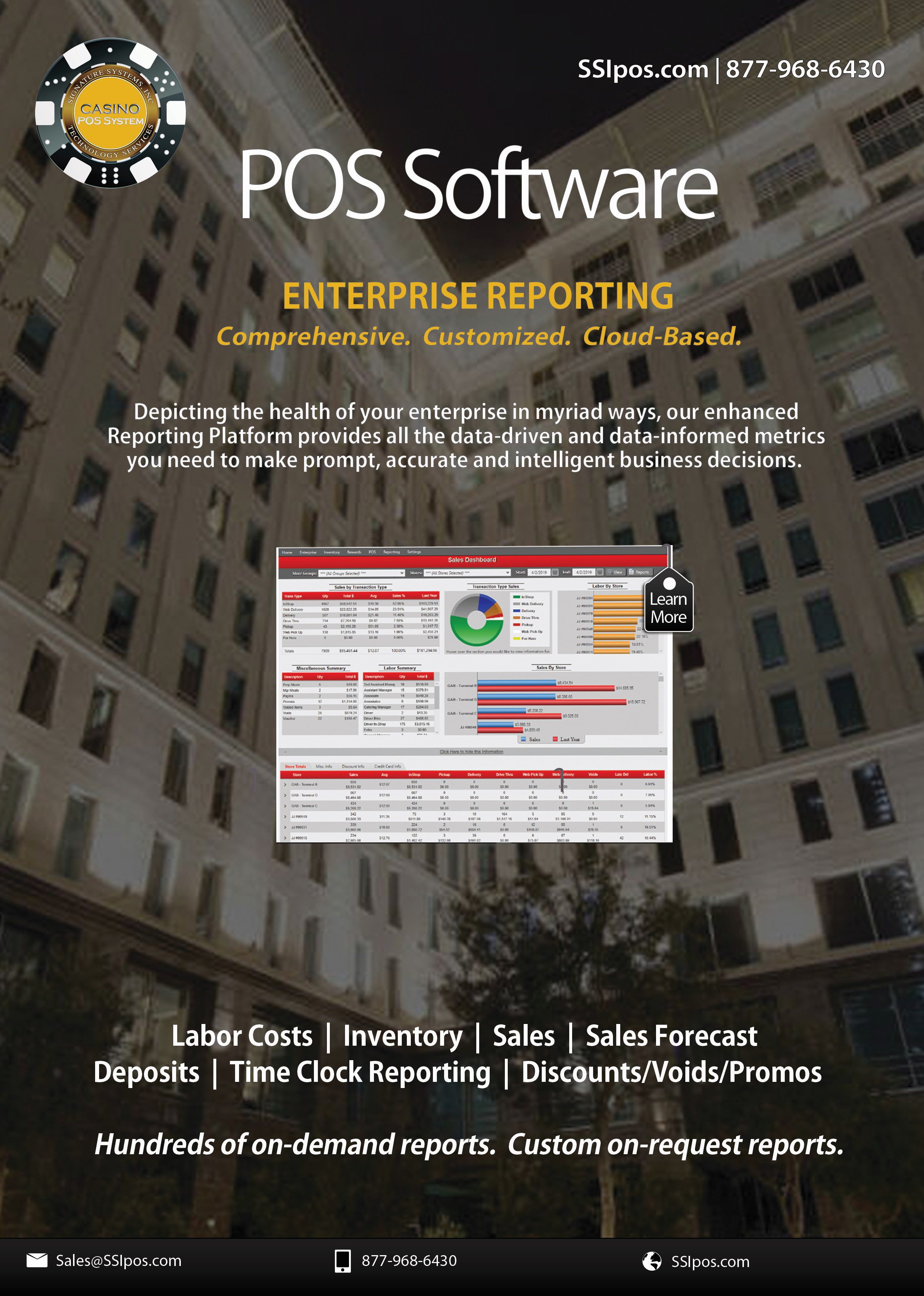
labor-overtime-prevention differentiator
Re-searched 2026-08-30 against what is now known to be the vendor's FULL public surface, which is TWO sites, not one. www.pdqpos.com is a single marketing page plus three legal pages, six press-release and project pages, and the 20-page 2025 Product Catalog PDF. ssipos.com -- a second vendor site, named as "Learn more at SSIpos.com" in PDQ's own 2025 press releases, missed by both the 2026-08-01 and the 2026-08-09 passes because each enumerated www.pdqpos.com only -- is a WordPress marketing page (robots.txt reads "User-Agent: * / Disallow:", i.e. nothing restricted; its Yoast sitemap index lists eight pages) plus seven 2019 flyer images, two of which carry legible screenshots of the running product. There is still no manual, help centre, admin guide, knowledge base or developer portal on either host. Labour is evidenced only through reporting. The 2019 Sales Dashboard shows a Labor Summary by job class and a Labor % per store, and the flyer names "Labor Costs" and "Time Clock Reporting" as reporting subject areas, so a POS time clock exists and feeds the reports. Nothing describes the clock's own behaviour or any rules engine on top of it: geofenced or mobile punch, offline punch, overtime prevention, state break compliance, fair-workweek and minor-labour rules, tip-pool computation and its audit trail, qualified-tips W-2 reporting, digital onboarding and I-9. PDQ is also not a scheduling product -- its partners Fourth/HotSchedules and Workday are, and the Fourth partner page describes schedule, sales and forecast data flowing between the two -- so several of these may be intentionally out of scope for the product rather than merely undocumented. This is a determination about PDQ's PUBLICATION, not about the product: the capability may well exist and be undocumented. Recorded at category level rather than per cell, because the gap is the same gap for every cell in the category and pretending otherwise would manufacture specificity the evidence does not have.
labor-break-compliance-by-state differentiator
Re-searched 2026-08-30 against what is now known to be the vendor's FULL public surface, which is TWO sites, not one. www.pdqpos.com is a single marketing page plus three legal pages, six press-release and project pages, and the 20-page 2025 Product Catalog PDF. ssipos.com -- a second vendor site, named as "Learn more at SSIpos.com" in PDQ's own 2025 press releases, missed by both the 2026-08-01 and the 2026-08-09 passes because each enumerated www.pdqpos.com only -- is a WordPress marketing page (robots.txt reads "User-Agent: * / Disallow:", i.e. nothing restricted; its Yoast sitemap index lists eight pages) plus seven 2019 flyer images, two of which carry legible screenshots of the running product. There is still no manual, help centre, admin guide, knowledge base or developer portal on either host. Labour is evidenced only through reporting. The 2019 Sales Dashboard shows a Labor Summary by job class and a Labor % per store, and the flyer names "Labor Costs" and "Time Clock Reporting" as reporting subject areas, so a POS time clock exists and feeds the reports. Nothing describes the clock's own behaviour or any rules engine on top of it: geofenced or mobile punch, offline punch, overtime prevention, state break compliance, fair-workweek and minor-labour rules, tip-pool computation and its audit trail, qualified-tips W-2 reporting, digital onboarding and I-9. PDQ is also not a scheduling product -- its partners Fourth/HotSchedules and Workday are, and the Fourth partner page describes schedule, sales and forecast data flowing between the two -- so several of these may be intentionally out of scope for the product rather than merely undocumented. This is a determination about PDQ's PUBLICATION, not about the product: the capability may well exist and be undocumented. Recorded at category level rather than per cell, because the gap is the same gap for every cell in the category and pretending otherwise would manufacture specificity the evidence does not have.
labor-fair-workweek-support
Re-searched 2026-08-30 against what is now known to be the vendor's FULL public surface, which is TWO sites, not one. www.pdqpos.com is a single marketing page plus three legal pages, six press-release and project pages, and the 20-page 2025 Product Catalog PDF. ssipos.com -- a second vendor site, named as "Learn more at SSIpos.com" in PDQ's own 2025 press releases, missed by both the 2026-08-01 and the 2026-08-09 passes because each enumerated www.pdqpos.com only -- is a WordPress marketing page (robots.txt reads "User-Agent: * / Disallow:", i.e. nothing restricted; its Yoast sitemap index lists eight pages) plus seven 2019 flyer images, two of which carry legible screenshots of the running product. There is still no manual, help centre, admin guide, knowledge base or developer portal on either host. Labour is evidenced only through reporting. The 2019 Sales Dashboard shows a Labor Summary by job class and a Labor % per store, and the flyer names "Labor Costs" and "Time Clock Reporting" as reporting subject areas, so a POS time clock exists and feeds the reports. Nothing describes the clock's own behaviour or any rules engine on top of it: geofenced or mobile punch, offline punch, overtime prevention, state break compliance, fair-workweek and minor-labour rules, tip-pool computation and its audit trail, qualified-tips W-2 reporting, digital onboarding and I-9. PDQ is also not a scheduling product -- its partners Fourth/HotSchedules and Workday are, and the Fourth partner page describes schedule, sales and forecast data flowing between the two -- so several of these may be intentionally out of scope for the product rather than merely undocumented. This is a determination about PDQ's PUBLICATION, not about the product: the capability may well exist and be undocumented. Recorded at category level rather than per cell, because the gap is the same gap for every cell in the category and pretending otherwise would manufacture specificity the evidence does not have.
labor-minor-labor-rules
Re-searched 2026-08-30 against what is now known to be the vendor's FULL public surface, which is TWO sites, not one. www.pdqpos.com is a single marketing page plus three legal pages, six press-release and project pages, and the 20-page 2025 Product Catalog PDF. ssipos.com -- a second vendor site, named as "Learn more at SSIpos.com" in PDQ's own 2025 press releases, missed by both the 2026-08-01 and the 2026-08-09 passes because each enumerated www.pdqpos.com only -- is a WordPress marketing page (robots.txt reads "User-Agent: * / Disallow:", i.e. nothing restricted; its Yoast sitemap index lists eight pages) plus seven 2019 flyer images, two of which carry legible screenshots of the running product. There is still no manual, help centre, admin guide, knowledge base or developer portal on either host. Labour is evidenced only through reporting. The 2019 Sales Dashboard shows a Labor Summary by job class and a Labor % per store, and the flyer names "Labor Costs" and "Time Clock Reporting" as reporting subject areas, so a POS time clock exists and feeds the reports. Nothing describes the clock's own behaviour or any rules engine on top of it: geofenced or mobile punch, offline punch, overtime prevention, state break compliance, fair-workweek and minor-labour rules, tip-pool computation and its audit trail, qualified-tips W-2 reporting, digital onboarding and I-9. PDQ is also not a scheduling product -- its partners Fourth/HotSchedules and Workday are, and the Fourth partner page describes schedule, sales and forecast data flowing between the two -- so several of these may be intentionally out of scope for the product rather than merely undocumented. This is a determination about PDQ's PUBLICATION, not about the product: the capability may well exist and be undocumented. Recorded at category level rather than per cell, because the gap is the same gap for every cell in the category and pretending otherwise would manufacture specificity the evidence does not have.
labor-tip-pooling-rules
Re-searched 2026-08-30 against what is now known to be the vendor's FULL public surface, which is TWO sites, not one. www.pdqpos.com is a single marketing page plus three legal pages, six press-release and project pages, and the 20-page 2025 Product Catalog PDF. ssipos.com -- a second vendor site, named as "Learn more at SSIpos.com" in PDQ's own 2025 press releases, missed by both the 2026-08-01 and the 2026-08-09 passes because each enumerated www.pdqpos.com only -- is a WordPress marketing page (robots.txt reads "User-Agent: * / Disallow:", i.e. nothing restricted; its Yoast sitemap index lists eight pages) plus seven 2019 flyer images, two of which carry legible screenshots of the running product. There is still no manual, help centre, admin guide, knowledge base or developer portal on either host. Labour is evidenced only through reporting. The 2019 Sales Dashboard shows a Labor Summary by job class and a Labor % per store, and the flyer names "Labor Costs" and "Time Clock Reporting" as reporting subject areas, so a POS time clock exists and feeds the reports. Nothing describes the clock's own behaviour or any rules engine on top of it: geofenced or mobile punch, offline punch, overtime prevention, state break compliance, fair-workweek and minor-labour rules, tip-pool computation and its audit trail, qualified-tips W-2 reporting, digital onboarding and I-9. PDQ is also not a scheduling product -- its partners Fourth/HotSchedules and Workday are, and the Fourth partner page describes schedule, sales and forecast data flowing between the two -- so several of these may be intentionally out of scope for the product rather than merely undocumented. This is a determination about PDQ's PUBLICATION, not about the product: the capability may well exist and be undocumented. Recorded at category level rather than per cell, because the gap is the same gap for every cell in the category and pretending otherwise would manufacture specificity the evidence does not have.
labor-tip-distribution-audit-trail
Re-searched 2026-08-30 against what is now known to be the vendor's FULL public surface, which is TWO sites, not one. www.pdqpos.com is a single marketing page plus three legal pages, six press-release and project pages, and the 20-page 2025 Product Catalog PDF. ssipos.com -- a second vendor site, named as "Learn more at SSIpos.com" in PDQ's own 2025 press releases, missed by both the 2026-08-01 and the 2026-08-09 passes because each enumerated www.pdqpos.com only -- is a WordPress marketing page (robots.txt reads "User-Agent: * / Disallow:", i.e. nothing restricted; its Yoast sitemap index lists eight pages) plus seven 2019 flyer images, two of which carry legible screenshots of the running product. There is still no manual, help centre, admin guide, knowledge base or developer portal on either host. Labour is evidenced only through reporting. The 2019 Sales Dashboard shows a Labor Summary by job class and a Labor % per store, and the flyer names "Labor Costs" and "Time Clock Reporting" as reporting subject areas, so a POS time clock exists and feeds the reports. Nothing describes the clock's own behaviour or any rules engine on top of it: geofenced or mobile punch, offline punch, overtime prevention, state break compliance, fair-workweek and minor-labour rules, tip-pool computation and its audit trail, qualified-tips W-2 reporting, digital onboarding and I-9. PDQ is also not a scheduling product -- its partners Fourth/HotSchedules and Workday are, and the Fourth partner page describes schedule, sales and forecast data flowing between the two -- so several of these may be intentionally out of scope for the product rather than merely undocumented. This is a determination about PDQ's PUBLICATION, not about the product: the capability may well exist and be undocumented. Recorded at category level rather than per cell, because the gap is the same gap for every cell in the category and pretending otherwise would manufacture specificity the evidence does not have.
labor-qualified-tips-w2-reporting differentiator
Re-searched 2026-08-30 against what is now known to be the vendor's FULL public surface, which is TWO sites, not one. www.pdqpos.com is a single marketing page plus three legal pages, six press-release and project pages, and the 20-page 2025 Product Catalog PDF. ssipos.com -- a second vendor site, named as "Learn more at SSIpos.com" in PDQ's own 2025 press releases, missed by both the 2026-08-01 and the 2026-08-09 passes because each enumerated www.pdqpos.com only -- is a WordPress marketing page (robots.txt reads "User-Agent: * / Disallow:", i.e. nothing restricted; its Yoast sitemap index lists eight pages) plus seven 2019 flyer images, two of which carry legible screenshots of the running product. There is still no manual, help centre, admin guide, knowledge base or developer portal on either host. Labour is evidenced only through reporting. The 2019 Sales Dashboard shows a Labor Summary by job class and a Labor % per store, and the flyer names "Labor Costs" and "Time Clock Reporting" as reporting subject areas, so a POS time clock exists and feeds the reports. Nothing describes the clock's own behaviour or any rules engine on top of it: geofenced or mobile punch, offline punch, overtime prevention, state break compliance, fair-workweek and minor-labour rules, tip-pool computation and its audit trail, qualified-tips W-2 reporting, digital onboarding and I-9. PDQ is also not a scheduling product -- its partners Fourth/HotSchedules and Workday are, and the Fourth partner page describes schedule, sales and forecast data flowing between the two -- so several of these may be intentionally out of scope for the product rather than merely undocumented. This is a determination about PDQ's PUBLICATION, not about the product: the capability may well exist and be undocumented. Recorded at category level rather than per cell, because the gap is the same gap for every cell in the category and pretending otherwise would manufacture specificity the evidence does not have.
labor-native-payroll differentiator
No first-party payroll product is marketed; Restaurant365 is the named payroll/HR partner.
labor-payroll-export-formats
No named payroll export format — not Gusto, not ADP, not Paychex, not a generic CSV spec — appears in any PDQ or partner document I could reach. The R365 partner page evidences an accounting/operations integration, not a payroll file export from PDQ. The dossier's own note concedes the bar is not met, then scores partial anyway. adversarially verified
labor-shift-swap-workflow differentiator
Shift swap is a HotSchedules capability in the partner integration, not documented as native to PDQ.
labor-digital-onboarding-i9
Re-searched 2026-08-30 against what is now known to be the vendor's FULL public surface, which is TWO sites, not one. www.pdqpos.com is a single marketing page plus three legal pages, six press-release and project pages, and the 20-page 2025 Product Catalog PDF. ssipos.com -- a second vendor site, named as "Learn more at SSIpos.com" in PDQ's own 2025 press releases, missed by both the 2026-08-01 and the 2026-08-09 passes because each enumerated www.pdqpos.com only -- is a WordPress marketing page (robots.txt reads "User-Agent: * / Disallow:", i.e. nothing restricted; its Yoast sitemap index lists eight pages) plus seven 2019 flyer images, two of which carry legible screenshots of the running product. There is still no manual, help centre, admin guide, knowledge base or developer portal on either host. Labour is evidenced only through reporting. The 2019 Sales Dashboard shows a Labor Summary by job class and a Labor % per store, and the flyer names "Labor Costs" and "Time Clock Reporting" as reporting subject areas, so a POS time clock exists and feeds the reports. Nothing describes the clock's own behaviour or any rules engine on top of it: geofenced or mobile punch, offline punch, overtime prevention, state break compliance, fair-workweek and minor-labour rules, tip-pool computation and its audit trail, qualified-tips W-2 reporting, digital onboarding and I-9. PDQ is also not a scheduling product -- its partners Fourth/HotSchedules and Workday are, and the Fourth partner page describes schedule, sales and forecast data flowing between the two -- so several of these may be intentionally out of scope for the product rather than merely undocumented. This is a determination about PDQ's PUBLICATION, not about the product: the capability may well exist and be undocumented. Recorded at category level rather than per cell, because the gap is the same gap for every cell in the category and pretending otherwise would manufacture specificity the evidence does not have.
labor-server-performance-metrics differentiator
Re-searched 2026-08-30 against what is now known to be the vendor's FULL public surface, which is TWO sites, not one. www.pdqpos.com is a single marketing page plus three legal pages, six press-release and project pages, and the 20-page 2025 Product Catalog PDF. ssipos.com -- a second vendor site, named as "Learn more at SSIpos.com" in PDQ's own 2025 press releases, missed by both the 2026-08-01 and the 2026-08-09 passes because each enumerated www.pdqpos.com only -- is a WordPress marketing page (robots.txt reads "User-Agent: * / Disallow:", i.e. nothing restricted; its Yoast sitemap index lists eight pages) plus seven 2019 flyer images, two of which carry legible screenshots of the running product. There is still no manual, help centre, admin guide, knowledge base or developer portal on either host. Labour is evidenced only through reporting. The 2019 Sales Dashboard shows a Labor Summary by job class and a Labor % per store, and the flyer names "Labor Costs" and "Time Clock Reporting" as reporting subject areas, so a POS time clock exists and feeds the reports. Nothing describes the clock's own behaviour or any rules engine on top of it: geofenced or mobile punch, offline punch, overtime prevention, state break compliance, fair-workweek and minor-labour rules, tip-pool computation and its audit trail, qualified-tips W-2 reporting, digital onboarding and I-9. PDQ is also not a scheduling product -- its partners Fourth/HotSchedules and Workday are, and the Fourth partner page describes schedule, sales and forecast data flowing between the two -- so several of these may be intentionally out of scope for the product rather than merely undocumented. This is a determination about PDQ's PUBLICATION, not about the product: the capability may well exist and be undocumented. Recorded at category level rather than per cell, because the gap is the same gap for every cell in the category and pretending otherwise would manufacture specificity the evidence does not have.
Inventory, purchasing & cost control
inventory-recipe-bom-costing
Re-searched 2026-08-30 against what is now known to be the vendor's FULL public surface, which is TWO sites, not one. www.pdqpos.com is a single marketing page plus three legal pages, six press-release and project pages, and the 20-page 2025 Product Catalog PDF. ssipos.com -- a second vendor site, named as "Learn more at SSIpos.com" in PDQ's own 2025 press releases, missed by both the 2026-08-01 and the 2026-08-09 passes because each enumerated www.pdqpos.com only -- is a WordPress marketing page (robots.txt reads "User-Agent: * / Disallow:", i.e. nothing restricted; its Yoast sitemap index lists eight pages) plus seven 2019 flyer images, two of which carry legible screenshots of the running product. There is still no manual, help centre, admin guide, knowledge base or developer portal on either host. A back-office Inventory module demonstrably exists -- "Inventory" is a top-level item on the nav bar in the 2019 back-office screenshot, and "Inventory" is named as a reporting subject area on the same flyer -- and that is the entire first-party evidence for this category. Not one of its features is described anywhere: recipe and BOM costing, unit conversions and yields, theoretical-versus-actual variance, 86 sync, count modes, offline mobile counts, vendor catalogs and EDI, invoice OCR, price-change alerts, par suggestions, waste logging, transfers, commissary, lot traceability, shelf life, partial-bottle pours and menu-margin linkage. The one document that describes inventory behaviour around PDQ is Yellow Dog's integration page, and it documents YELLOW DOG doing the work -- its ProcessSales application matching sales to items and adjusting on-hands -- which is evidence about the partner, not about PDQ's own module. This is a determination about PDQ's PUBLICATION, not about the product: the capability may well exist and be undocumented. Recorded at category level rather than per cell, because the gap is the same gap for every cell in the category and pretending otherwise would manufacture specificity the evidence does not have.
inventory-unit-conversion-yields
Re-searched 2026-08-30 against what is now known to be the vendor's FULL public surface, which is TWO sites, not one. www.pdqpos.com is a single marketing page plus three legal pages, six press-release and project pages, and the 20-page 2025 Product Catalog PDF. ssipos.com -- a second vendor site, named as "Learn more at SSIpos.com" in PDQ's own 2025 press releases, missed by both the 2026-08-01 and the 2026-08-09 passes because each enumerated www.pdqpos.com only -- is a WordPress marketing page (robots.txt reads "User-Agent: * / Disallow:", i.e. nothing restricted; its Yoast sitemap index lists eight pages) plus seven 2019 flyer images, two of which carry legible screenshots of the running product. There is still no manual, help centre, admin guide, knowledge base or developer portal on either host. A back-office Inventory module demonstrably exists -- "Inventory" is a top-level item on the nav bar in the 2019 back-office screenshot, and "Inventory" is named as a reporting subject area on the same flyer -- and that is the entire first-party evidence for this category. Not one of its features is described anywhere: recipe and BOM costing, unit conversions and yields, theoretical-versus-actual variance, 86 sync, count modes, offline mobile counts, vendor catalogs and EDI, invoice OCR, price-change alerts, par suggestions, waste logging, transfers, commissary, lot traceability, shelf life, partial-bottle pours and menu-margin linkage. The one document that describes inventory behaviour around PDQ is Yellow Dog's integration page, and it documents YELLOW DOG doing the work -- its ProcessSales application matching sales to items and adjusting on-hands -- which is evidence about the partner, not about PDQ's own module. This is a determination about PDQ's PUBLICATION, not about the product: the capability may well exist and be undocumented. Recorded at category level rather than per cell, because the gap is the same gap for every cell in the category and pretending otherwise would manufacture specificity the evidence does not have.
inventory-theoretical-vs-actual differentiator
Re-searched 2026-08-30 against what is now known to be the vendor's FULL public surface, which is TWO sites, not one. www.pdqpos.com is a single marketing page plus three legal pages, six press-release and project pages, and the 20-page 2025 Product Catalog PDF. ssipos.com -- a second vendor site, named as "Learn more at SSIpos.com" in PDQ's own 2025 press releases, missed by both the 2026-08-01 and the 2026-08-09 passes because each enumerated www.pdqpos.com only -- is a WordPress marketing page (robots.txt reads "User-Agent: * / Disallow:", i.e. nothing restricted; its Yoast sitemap index lists eight pages) plus seven 2019 flyer images, two of which carry legible screenshots of the running product. There is still no manual, help centre, admin guide, knowledge base or developer portal on either host. A back-office Inventory module demonstrably exists -- "Inventory" is a top-level item on the nav bar in the 2019 back-office screenshot, and "Inventory" is named as a reporting subject area on the same flyer -- and that is the entire first-party evidence for this category. Not one of its features is described anywhere: recipe and BOM costing, unit conversions and yields, theoretical-versus-actual variance, 86 sync, count modes, offline mobile counts, vendor catalogs and EDI, invoice OCR, price-change alerts, par suggestions, waste logging, transfers, commissary, lot traceability, shelf life, partial-bottle pours and menu-margin linkage. The one document that describes inventory behaviour around PDQ is Yellow Dog's integration page, and it documents YELLOW DOG doing the work -- its ProcessSales application matching sales to items and adjusting on-hands -- which is evidence about the partner, not about PDQ's own module. This is a determination about PDQ's PUBLICATION, not about the product: the capability may well exist and be undocumented. Recorded at category level rather than per cell, because the gap is the same gap for every cell in the category and pretending otherwise would manufacture specificity the evidence does not have.
inventory-realtime-depletion differentiator
Counter-signal: in the documented Yellow Dog integration PDQ transmits sales once daily at 9am and Yellow Dog's ProcessSales adjusts on-hands — a batch, partner-owned path.
inventory-86-auto-sync differentiator
Re-searched 2026-08-30 against what is now known to be the vendor's FULL public surface, which is TWO sites, not one. www.pdqpos.com is a single marketing page plus three legal pages, six press-release and project pages, and the 20-page 2025 Product Catalog PDF. ssipos.com -- a second vendor site, named as "Learn more at SSIpos.com" in PDQ's own 2025 press releases, missed by both the 2026-08-01 and the 2026-08-09 passes because each enumerated www.pdqpos.com only -- is a WordPress marketing page (robots.txt reads "User-Agent: * / Disallow:", i.e. nothing restricted; its Yoast sitemap index lists eight pages) plus seven 2019 flyer images, two of which carry legible screenshots of the running product. There is still no manual, help centre, admin guide, knowledge base or developer portal on either host. A back-office Inventory module demonstrably exists -- "Inventory" is a top-level item on the nav bar in the 2019 back-office screenshot, and "Inventory" is named as a reporting subject area on the same flyer -- and that is the entire first-party evidence for this category. Not one of its features is described anywhere: recipe and BOM costing, unit conversions and yields, theoretical-versus-actual variance, 86 sync, count modes, offline mobile counts, vendor catalogs and EDI, invoice OCR, price-change alerts, par suggestions, waste logging, transfers, commissary, lot traceability, shelf life, partial-bottle pours and menu-margin linkage. The one document that describes inventory behaviour around PDQ is Yellow Dog's integration page, and it documents YELLOW DOG doing the work -- its ProcessSales application matching sales to items and adjusting on-hands -- which is evidence about the partner, not about PDQ's own module. This is a determination about PDQ's PUBLICATION, not about the product: the capability may well exist and be undocumented. Recorded at category level rather than per cell, because the gap is the same gap for every cell in the category and pretending otherwise would manufacture specificity the evidence does not have.
inventory-count-modes
Re-searched 2026-08-30 against what is now known to be the vendor's FULL public surface, which is TWO sites, not one. www.pdqpos.com is a single marketing page plus three legal pages, six press-release and project pages, and the 20-page 2025 Product Catalog PDF. ssipos.com -- a second vendor site, named as "Learn more at SSIpos.com" in PDQ's own 2025 press releases, missed by both the 2026-08-01 and the 2026-08-09 passes because each enumerated www.pdqpos.com only -- is a WordPress marketing page (robots.txt reads "User-Agent: * / Disallow:", i.e. nothing restricted; its Yoast sitemap index lists eight pages) plus seven 2019 flyer images, two of which carry legible screenshots of the running product. There is still no manual, help centre, admin guide, knowledge base or developer portal on either host. A back-office Inventory module demonstrably exists -- "Inventory" is a top-level item on the nav bar in the 2019 back-office screenshot, and "Inventory" is named as a reporting subject area on the same flyer -- and that is the entire first-party evidence for this category. Not one of its features is described anywhere: recipe and BOM costing, unit conversions and yields, theoretical-versus-actual variance, 86 sync, count modes, offline mobile counts, vendor catalogs and EDI, invoice OCR, price-change alerts, par suggestions, waste logging, transfers, commissary, lot traceability, shelf life, partial-bottle pours and menu-margin linkage. The one document that describes inventory behaviour around PDQ is Yellow Dog's integration page, and it documents YELLOW DOG doing the work -- its ProcessSales application matching sales to items and adjusting on-hands -- which is evidence about the partner, not about PDQ's own module. This is a determination about PDQ's PUBLICATION, not about the product: the capability may well exist and be undocumented. Recorded at category level rather than per cell, because the gap is the same gap for every cell in the category and pretending otherwise would manufacture specificity the evidence does not have.
inventory-mobile-count-offline
Re-searched 2026-08-30 against what is now known to be the vendor's FULL public surface, which is TWO sites, not one. www.pdqpos.com is a single marketing page plus three legal pages, six press-release and project pages, and the 20-page 2025 Product Catalog PDF. ssipos.com -- a second vendor site, named as "Learn more at SSIpos.com" in PDQ's own 2025 press releases, missed by both the 2026-08-01 and the 2026-08-09 passes because each enumerated www.pdqpos.com only -- is a WordPress marketing page (robots.txt reads "User-Agent: * / Disallow:", i.e. nothing restricted; its Yoast sitemap index lists eight pages) plus seven 2019 flyer images, two of which carry legible screenshots of the running product. There is still no manual, help centre, admin guide, knowledge base or developer portal on either host. A back-office Inventory module demonstrably exists -- "Inventory" is a top-level item on the nav bar in the 2019 back-office screenshot, and "Inventory" is named as a reporting subject area on the same flyer -- and that is the entire first-party evidence for this category. Not one of its features is described anywhere: recipe and BOM costing, unit conversions and yields, theoretical-versus-actual variance, 86 sync, count modes, offline mobile counts, vendor catalogs and EDI, invoice OCR, price-change alerts, par suggestions, waste logging, transfers, commissary, lot traceability, shelf life, partial-bottle pours and menu-margin linkage. The one document that describes inventory behaviour around PDQ is Yellow Dog's integration page, and it documents YELLOW DOG doing the work -- its ProcessSales application matching sales to items and adjusting on-hands -- which is evidence about the partner, not about PDQ's own module. This is a determination about PDQ's PUBLICATION, not about the product: the capability may well exist and be undocumented. Recorded at category level rather than per cell, because the gap is the same gap for every cell in the category and pretending otherwise would manufacture specificity the evidence does not have.
inventory-vendor-catalogs-edi differentiator
Re-searched 2026-08-30 against what is now known to be the vendor's FULL public surface, which is TWO sites, not one. www.pdqpos.com is a single marketing page plus three legal pages, six press-release and project pages, and the 20-page 2025 Product Catalog PDF. ssipos.com -- a second vendor site, named as "Learn more at SSIpos.com" in PDQ's own 2025 press releases, missed by both the 2026-08-01 and the 2026-08-09 passes because each enumerated www.pdqpos.com only -- is a WordPress marketing page (robots.txt reads "User-Agent: * / Disallow:", i.e. nothing restricted; its Yoast sitemap index lists eight pages) plus seven 2019 flyer images, two of which carry legible screenshots of the running product. There is still no manual, help centre, admin guide, knowledge base or developer portal on either host. A back-office Inventory module demonstrably exists -- "Inventory" is a top-level item on the nav bar in the 2019 back-office screenshot, and "Inventory" is named as a reporting subject area on the same flyer -- and that is the entire first-party evidence for this category. Not one of its features is described anywhere: recipe and BOM costing, unit conversions and yields, theoretical-versus-actual variance, 86 sync, count modes, offline mobile counts, vendor catalogs and EDI, invoice OCR, price-change alerts, par suggestions, waste logging, transfers, commissary, lot traceability, shelf life, partial-bottle pours and menu-margin linkage. The one document that describes inventory behaviour around PDQ is Yellow Dog's integration page, and it documents YELLOW DOG doing the work -- its ProcessSales application matching sales to items and adjusting on-hands -- which is evidence about the partner, not about PDQ's own module. This is a determination about PDQ's PUBLICATION, not about the product: the capability may well exist and be undocumented. Recorded at category level rather than per cell, because the gap is the same gap for every cell in the category and pretending otherwise would manufacture specificity the evidence does not have.
inventory-invoice-ocr differentiator
Re-searched 2026-08-30 against what is now known to be the vendor's FULL public surface, which is TWO sites, not one. www.pdqpos.com is a single marketing page plus three legal pages, six press-release and project pages, and the 20-page 2025 Product Catalog PDF. ssipos.com -- a second vendor site, named as "Learn more at SSIpos.com" in PDQ's own 2025 press releases, missed by both the 2026-08-01 and the 2026-08-09 passes because each enumerated www.pdqpos.com only -- is a WordPress marketing page (robots.txt reads "User-Agent: * / Disallow:", i.e. nothing restricted; its Yoast sitemap index lists eight pages) plus seven 2019 flyer images, two of which carry legible screenshots of the running product. There is still no manual, help centre, admin guide, knowledge base or developer portal on either host. A back-office Inventory module demonstrably exists -- "Inventory" is a top-level item on the nav bar in the 2019 back-office screenshot, and "Inventory" is named as a reporting subject area on the same flyer -- and that is the entire first-party evidence for this category. Not one of its features is described anywhere: recipe and BOM costing, unit conversions and yields, theoretical-versus-actual variance, 86 sync, count modes, offline mobile counts, vendor catalogs and EDI, invoice OCR, price-change alerts, par suggestions, waste logging, transfers, commissary, lot traceability, shelf life, partial-bottle pours and menu-margin linkage. The one document that describes inventory behaviour around PDQ is Yellow Dog's integration page, and it documents YELLOW DOG doing the work -- its ProcessSales application matching sales to items and adjusting on-hands -- which is evidence about the partner, not about PDQ's own module. This is a determination about PDQ's PUBLICATION, not about the product: the capability may well exist and be undocumented. Recorded at category level rather than per cell, because the gap is the same gap for every cell in the category and pretending otherwise would manufacture specificity the evidence does not have.
inventory-price-change-alerts differentiator
Re-searched 2026-08-30 against what is now known to be the vendor's FULL public surface, which is TWO sites, not one. www.pdqpos.com is a single marketing page plus three legal pages, six press-release and project pages, and the 20-page 2025 Product Catalog PDF. ssipos.com -- a second vendor site, named as "Learn more at SSIpos.com" in PDQ's own 2025 press releases, missed by both the 2026-08-01 and the 2026-08-09 passes because each enumerated www.pdqpos.com only -- is a WordPress marketing page (robots.txt reads "User-Agent: * / Disallow:", i.e. nothing restricted; its Yoast sitemap index lists eight pages) plus seven 2019 flyer images, two of which carry legible screenshots of the running product. There is still no manual, help centre, admin guide, knowledge base or developer portal on either host. A back-office Inventory module demonstrably exists -- "Inventory" is a top-level item on the nav bar in the 2019 back-office screenshot, and "Inventory" is named as a reporting subject area on the same flyer -- and that is the entire first-party evidence for this category. Not one of its features is described anywhere: recipe and BOM costing, unit conversions and yields, theoretical-versus-actual variance, 86 sync, count modes, offline mobile counts, vendor catalogs and EDI, invoice OCR, price-change alerts, par suggestions, waste logging, transfers, commissary, lot traceability, shelf life, partial-bottle pours and menu-margin linkage. The one document that describes inventory behaviour around PDQ is Yellow Dog's integration page, and it documents YELLOW DOG doing the work -- its ProcessSales application matching sales to items and adjusting on-hands -- which is evidence about the partner, not about PDQ's own module. This is a determination about PDQ's PUBLICATION, not about the product: the capability may well exist and be undocumented. Recorded at category level rather than per cell, because the gap is the same gap for every cell in the category and pretending otherwise would manufacture specificity the evidence does not have.
inventory-par-auto-suggest differentiator
Re-searched 2026-08-30 against what is now known to be the vendor's FULL public surface, which is TWO sites, not one. www.pdqpos.com is a single marketing page plus three legal pages, six press-release and project pages, and the 20-page 2025 Product Catalog PDF. ssipos.com -- a second vendor site, named as "Learn more at SSIpos.com" in PDQ's own 2025 press releases, missed by both the 2026-08-01 and the 2026-08-09 passes because each enumerated www.pdqpos.com only -- is a WordPress marketing page (robots.txt reads "User-Agent: * / Disallow:", i.e. nothing restricted; its Yoast sitemap index lists eight pages) plus seven 2019 flyer images, two of which carry legible screenshots of the running product. There is still no manual, help centre, admin guide, knowledge base or developer portal on either host. A back-office Inventory module demonstrably exists -- "Inventory" is a top-level item on the nav bar in the 2019 back-office screenshot, and "Inventory" is named as a reporting subject area on the same flyer -- and that is the entire first-party evidence for this category. Not one of its features is described anywhere: recipe and BOM costing, unit conversions and yields, theoretical-versus-actual variance, 86 sync, count modes, offline mobile counts, vendor catalogs and EDI, invoice OCR, price-change alerts, par suggestions, waste logging, transfers, commissary, lot traceability, shelf life, partial-bottle pours and menu-margin linkage. The one document that describes inventory behaviour around PDQ is Yellow Dog's integration page, and it documents YELLOW DOG doing the work -- its ProcessSales application matching sales to items and adjusting on-hands -- which is evidence about the partner, not about PDQ's own module. This is a determination about PDQ's PUBLICATION, not about the product: the capability may well exist and be undocumented. Recorded at category level rather than per cell, because the gap is the same gap for every cell in the category and pretending otherwise would manufacture specificity the evidence does not have.
inventory-waste-logging
Re-searched 2026-08-30 against what is now known to be the vendor's FULL public surface, which is TWO sites, not one. www.pdqpos.com is a single marketing page plus three legal pages, six press-release and project pages, and the 20-page 2025 Product Catalog PDF. ssipos.com -- a second vendor site, named as "Learn more at SSIpos.com" in PDQ's own 2025 press releases, missed by both the 2026-08-01 and the 2026-08-09 passes because each enumerated www.pdqpos.com only -- is a WordPress marketing page (robots.txt reads "User-Agent: * / Disallow:", i.e. nothing restricted; its Yoast sitemap index lists eight pages) plus seven 2019 flyer images, two of which carry legible screenshots of the running product. There is still no manual, help centre, admin guide, knowledge base or developer portal on either host. A back-office Inventory module demonstrably exists -- "Inventory" is a top-level item on the nav bar in the 2019 back-office screenshot, and "Inventory" is named as a reporting subject area on the same flyer -- and that is the entire first-party evidence for this category. Not one of its features is described anywhere: recipe and BOM costing, unit conversions and yields, theoretical-versus-actual variance, 86 sync, count modes, offline mobile counts, vendor catalogs and EDI, invoice OCR, price-change alerts, par suggestions, waste logging, transfers, commissary, lot traceability, shelf life, partial-bottle pours and menu-margin linkage. The one document that describes inventory behaviour around PDQ is Yellow Dog's integration page, and it documents YELLOW DOG doing the work -- its ProcessSales application matching sales to items and adjusting on-hands -- which is evidence about the partner, not about PDQ's own module. This is a determination about PDQ's PUBLICATION, not about the product: the capability may well exist and be undocumented. Recorded at category level rather than per cell, because the gap is the same gap for every cell in the category and pretending otherwise would manufacture specificity the evidence does not have.
inventory-transfers
Re-searched 2026-08-30 against what is now known to be the vendor's FULL public surface, which is TWO sites, not one. www.pdqpos.com is a single marketing page plus three legal pages, six press-release and project pages, and the 20-page 2025 Product Catalog PDF. ssipos.com -- a second vendor site, named as "Learn more at SSIpos.com" in PDQ's own 2025 press releases, missed by both the 2026-08-01 and the 2026-08-09 passes because each enumerated www.pdqpos.com only -- is a WordPress marketing page (robots.txt reads "User-Agent: * / Disallow:", i.e. nothing restricted; its Yoast sitemap index lists eight pages) plus seven 2019 flyer images, two of which carry legible screenshots of the running product. There is still no manual, help centre, admin guide, knowledge base or developer portal on either host. A back-office Inventory module demonstrably exists -- "Inventory" is a top-level item on the nav bar in the 2019 back-office screenshot, and "Inventory" is named as a reporting subject area on the same flyer -- and that is the entire first-party evidence for this category. Not one of its features is described anywhere: recipe and BOM costing, unit conversions and yields, theoretical-versus-actual variance, 86 sync, count modes, offline mobile counts, vendor catalogs and EDI, invoice OCR, price-change alerts, par suggestions, waste logging, transfers, commissary, lot traceability, shelf life, partial-bottle pours and menu-margin linkage. The one document that describes inventory behaviour around PDQ is Yellow Dog's integration page, and it documents YELLOW DOG doing the work -- its ProcessSales application matching sales to items and adjusting on-hands -- which is evidence about the partner, not about PDQ's own module. This is a determination about PDQ's PUBLICATION, not about the product: the capability may well exist and be undocumented. Recorded at category level rather than per cell, because the gap is the same gap for every cell in the category and pretending otherwise would manufacture specificity the evidence does not have.
inventory-commissary
Re-searched 2026-08-30 against what is now known to be the vendor's FULL public surface, which is TWO sites, not one. www.pdqpos.com is a single marketing page plus three legal pages, six press-release and project pages, and the 20-page 2025 Product Catalog PDF. ssipos.com -- a second vendor site, named as "Learn more at SSIpos.com" in PDQ's own 2025 press releases, missed by both the 2026-08-01 and the 2026-08-09 passes because each enumerated www.pdqpos.com only -- is a WordPress marketing page (robots.txt reads "User-Agent: * / Disallow:", i.e. nothing restricted; its Yoast sitemap index lists eight pages) plus seven 2019 flyer images, two of which carry legible screenshots of the running product. There is still no manual, help centre, admin guide, knowledge base or developer portal on either host. A back-office Inventory module demonstrably exists -- "Inventory" is a top-level item on the nav bar in the 2019 back-office screenshot, and "Inventory" is named as a reporting subject area on the same flyer -- and that is the entire first-party evidence for this category. Not one of its features is described anywhere: recipe and BOM costing, unit conversions and yields, theoretical-versus-actual variance, 86 sync, count modes, offline mobile counts, vendor catalogs and EDI, invoice OCR, price-change alerts, par suggestions, waste logging, transfers, commissary, lot traceability, shelf life, partial-bottle pours and menu-margin linkage. The one document that describes inventory behaviour around PDQ is Yellow Dog's integration page, and it documents YELLOW DOG doing the work -- its ProcessSales application matching sales to items and adjusting on-hands -- which is evidence about the partner, not about PDQ's own module. This is a determination about PDQ's PUBLICATION, not about the product: the capability may well exist and be undocumented. Recorded at category level rather than per cell, because the gap is the same gap for every cell in the category and pretending otherwise would manufacture specificity the evidence does not have.
inventory-lot-traceability
Re-searched 2026-08-30 against what is now known to be the vendor's FULL public surface, which is TWO sites, not one. www.pdqpos.com is a single marketing page plus three legal pages, six press-release and project pages, and the 20-page 2025 Product Catalog PDF. ssipos.com -- a second vendor site, named as "Learn more at SSIpos.com" in PDQ's own 2025 press releases, missed by both the 2026-08-01 and the 2026-08-09 passes because each enumerated www.pdqpos.com only -- is a WordPress marketing page (robots.txt reads "User-Agent: * / Disallow:", i.e. nothing restricted; its Yoast sitemap index lists eight pages) plus seven 2019 flyer images, two of which carry legible screenshots of the running product. There is still no manual, help centre, admin guide, knowledge base or developer portal on either host. A back-office Inventory module demonstrably exists -- "Inventory" is a top-level item on the nav bar in the 2019 back-office screenshot, and "Inventory" is named as a reporting subject area on the same flyer -- and that is the entire first-party evidence for this category. Not one of its features is described anywhere: recipe and BOM costing, unit conversions and yields, theoretical-versus-actual variance, 86 sync, count modes, offline mobile counts, vendor catalogs and EDI, invoice OCR, price-change alerts, par suggestions, waste logging, transfers, commissary, lot traceability, shelf life, partial-bottle pours and menu-margin linkage. The one document that describes inventory behaviour around PDQ is Yellow Dog's integration page, and it documents YELLOW DOG doing the work -- its ProcessSales application matching sales to items and adjusting on-hands -- which is evidence about the partner, not about PDQ's own module. This is a determination about PDQ's PUBLICATION, not about the product: the capability may well exist and be undocumented. Recorded at category level rather than per cell, because the gap is the same gap for every cell in the category and pretending otherwise would manufacture specificity the evidence does not have.
inventory-shelf-life-expiry
Re-searched 2026-08-30 against what is now known to be the vendor's FULL public surface, which is TWO sites, not one. www.pdqpos.com is a single marketing page plus three legal pages, six press-release and project pages, and the 20-page 2025 Product Catalog PDF. ssipos.com -- a second vendor site, named as "Learn more at SSIpos.com" in PDQ's own 2025 press releases, missed by both the 2026-08-01 and the 2026-08-09 passes because each enumerated www.pdqpos.com only -- is a WordPress marketing page (robots.txt reads "User-Agent: * / Disallow:", i.e. nothing restricted; its Yoast sitemap index lists eight pages) plus seven 2019 flyer images, two of which carry legible screenshots of the running product. There is still no manual, help centre, admin guide, knowledge base or developer portal on either host. A back-office Inventory module demonstrably exists -- "Inventory" is a top-level item on the nav bar in the 2019 back-office screenshot, and "Inventory" is named as a reporting subject area on the same flyer -- and that is the entire first-party evidence for this category. Not one of its features is described anywhere: recipe and BOM costing, unit conversions and yields, theoretical-versus-actual variance, 86 sync, count modes, offline mobile counts, vendor catalogs and EDI, invoice OCR, price-change alerts, par suggestions, waste logging, transfers, commissary, lot traceability, shelf life, partial-bottle pours and menu-margin linkage. The one document that describes inventory behaviour around PDQ is Yellow Dog's integration page, and it documents YELLOW DOG doing the work -- its ProcessSales application matching sales to items and adjusting on-hands -- which is evidence about the partner, not about PDQ's own module. This is a determination about PDQ's PUBLICATION, not about the product: the capability may well exist and be undocumented. Recorded at category level rather than per cell, because the gap is the same gap for every cell in the category and pretending otherwise would manufacture specificity the evidence does not have.
inventory-bar-partial-bottle
Re-searched 2026-08-30 against what is now known to be the vendor's FULL public surface, which is TWO sites, not one. www.pdqpos.com is a single marketing page plus three legal pages, six press-release and project pages, and the 20-page 2025 Product Catalog PDF. ssipos.com -- a second vendor site, named as "Learn more at SSIpos.com" in PDQ's own 2025 press releases, missed by both the 2026-08-01 and the 2026-08-09 passes because each enumerated www.pdqpos.com only -- is a WordPress marketing page (robots.txt reads "User-Agent: * / Disallow:", i.e. nothing restricted; its Yoast sitemap index lists eight pages) plus seven 2019 flyer images, two of which carry legible screenshots of the running product. There is still no manual, help centre, admin guide, knowledge base or developer portal on either host. A back-office Inventory module demonstrably exists -- "Inventory" is a top-level item on the nav bar in the 2019 back-office screenshot, and "Inventory" is named as a reporting subject area on the same flyer -- and that is the entire first-party evidence for this category. Not one of its features is described anywhere: recipe and BOM costing, unit conversions and yields, theoretical-versus-actual variance, 86 sync, count modes, offline mobile counts, vendor catalogs and EDI, invoice OCR, price-change alerts, par suggestions, waste logging, transfers, commissary, lot traceability, shelf life, partial-bottle pours and menu-margin linkage. The one document that describes inventory behaviour around PDQ is Yellow Dog's integration page, and it documents YELLOW DOG doing the work -- its ProcessSales application matching sales to items and adjusting on-hands -- which is evidence about the partner, not about PDQ's own module. This is a determination about PDQ's PUBLICATION, not about the product: the capability may well exist and be undocumented. Recorded at category level rather than per cell, because the gap is the same gap for every cell in the category and pretending otherwise would manufacture specificity the evidence does not have.
inventory-cogs-gl-export
Upheld on the better source (Restaurant365's own PDQ partner page) rather than the SEO directory. Remains partial: the GL export is a property of R365, not of PDQ, and no PDQ-side mapping or file format is documented. https://www.restaurant365.com/partners/pdq-pos/ · retrieved 2026-08-01 adversarially verified
inventory-native-not-partner differentiator
Some native inventory exists (listed as a PDQ feature), but deep costing and on-hand management are documented as living in partners — Yellow Dog for casino/resort inventory, Restaurant365 for accounting and inventory. https://help.yellowdogsoftware.com/signaturesystemsinc · retrieved 2026-08-01
inventory-menu-margin-linkage differentiator
Re-searched 2026-08-30 against what is now known to be the vendor's FULL public surface, which is TWO sites, not one. www.pdqpos.com is a single marketing page plus three legal pages, six press-release and project pages, and the 20-page 2025 Product Catalog PDF. ssipos.com -- a second vendor site, named as "Learn more at SSIpos.com" in PDQ's own 2025 press releases, missed by both the 2026-08-01 and the 2026-08-09 passes because each enumerated www.pdqpos.com only -- is a WordPress marketing page (robots.txt reads "User-Agent: * / Disallow:", i.e. nothing restricted; its Yoast sitemap index lists eight pages) plus seven 2019 flyer images, two of which carry legible screenshots of the running product. There is still no manual, help centre, admin guide, knowledge base or developer portal on either host. A back-office Inventory module demonstrably exists -- "Inventory" is a top-level item on the nav bar in the 2019 back-office screenshot, and "Inventory" is named as a reporting subject area on the same flyer -- and that is the entire first-party evidence for this category. Not one of its features is described anywhere: recipe and BOM costing, unit conversions and yields, theoretical-versus-actual variance, 86 sync, count modes, offline mobile counts, vendor catalogs and EDI, invoice OCR, price-change alerts, par suggestions, waste logging, transfers, commissary, lot traceability, shelf life, partial-bottle pours and menu-margin linkage. The one document that describes inventory behaviour around PDQ is Yellow Dog's integration page, and it documents YELLOW DOG doing the work -- its ProcessSales application matching sales to items and adjusting on-hands -- which is evidence about the partner, not about PDQ's own module. This is a determination about PDQ's PUBLICATION, not about the product: the capability may well exist and be undocumented. Recorded at category level rather than per cell, because the gap is the same gap for every cell in the category and pretending otherwise would manufacture specificity the evidence does not have.
Reporting, BI & data access
reporting-realtime-dashboard
I fetched the cited press release. It says 'a natively integrated enterprise reporting mobile app' and the homepage says 'enterprise reporting suite, among the most complete and easiest to use in the industry'. Neither source contains the word real-time, states a refresh interval, or describes a dashboard. Counter-signal from the one piece of real integration documentation: PDQ posts sales to Yellow Dog once daily at 09:00, which is not a real-time posture. 'A reporting product exists' is partial; 'real-time dashboard' is unevidenced. https://www.pdqpos.com/newsarticles.aspx?rid=PR_000_live_louisiana&nb=true · retrieved 2026-08-01 adversarially verified
reporting-eod-closeout
The components exist and are visibly grouped for a close-out: the Store Totals grid gives sales, average ticket and a per-channel split per store; sibling tabs give "Discount Info" and "Credit Card Info" (tender detail); the Miscellaneous Summary carries voids, promos, pay-ins and vouchers; and the flyer's subject line names "Deposits". Shortfall: the claim wants ONE document reconciling gross sales, net sales, tax, tips, discounts, refunds, tender types and expected cash deposit. Nothing shown is that document -- tax, tips and refunds appear nowhere on the dashboard, the pieces sit on four separate tabs, and no EOD or close-out report is named anywhere in PDQ's public material. The artefact is a marketing flyer dated 2019 on ssipos.com (a second vendor site that the 2026-08-01 and 2026-08-09 passes never reached, because both enumerated www.pdqpos.com only); the screenshot inside it is of the running product, with a 4/2/2019 date range on screen. A screenshot is stronger than the prose around it but it is still a sales artefact, it is seven years old, and PDQ publishes no manual in which any of this is specified. Graded D on both counts. HOW IT WAS READ, because that is part of the evidence: the file is named "-lower-res" and is a 2MB JPEG of a print flyer, so the screenshot inside it was cropped and enlarged to be read at all. Panel headings, column headers and button captions come out cleanly at that magnification; small italic body rows are at the limit of the source resolution and are reported here only where a second, independent reading of the same string exists elsewhere on the page. https://ssipos.com/wp-content/uploads/2019/09/SSI-software-flyer-lower-res.jpg · retrieved 2026-08-30
reporting-pmix-modifier-level
Verified: the Yellow Dog page confirms PDQ's sales payload transmits 'Modifiers' and maps by 'Yellow Dog SKU and PDQ ItemNum', so modifier-level data demonstrably exists in the export. Partial is correct because no PMIX report itself is documented. https://help.yellowdogsoftware.com/signaturesystemsinc · retrieved 2026-08-01 adversarially verified
reporting-comps-voids-audit
The Sales Dashboard screenshot carries a "Miscellaneous Summary" panel whose rows are Emp Meals, Mgr Meals, Promos, Voided Items, Voids and Voucher, each with a quantity and a dollar total (a sixth row reads as PayIns and is at the limit of the image, so nothing here rests on it); the lower grid has a dedicated "Discount Info" tab beside "Store Totals", "Misc. Info" and "Credit Card Info"; and the flyer's subject line names "Discounts/Voids/Promos". Shortfall, and it is the whole substance of the claim: everything visible is an AGGREGATE. There is no employee attribution, no approving-manager column, no reason code and no timestamp anywhere in the screenshot, and no document describes an exception report. The record's separate finding that manager override is a per-user authenticated action (the catalog's fingerprint reader "at every login and manager override") establishes that an approver exists, not that the report names one. The artefact is a marketing flyer dated 2019 on ssipos.com (a second vendor site that the 2026-08-01 and 2026-08-09 passes never reached, because both enumerated www.pdqpos.com only); the screenshot inside it is of the running product, with a 4/2/2019 date range on screen. A screenshot is stronger than the prose around it but it is still a sales artefact, it is seven years old, and PDQ publishes no manual in which any of this is specified. Graded D on both counts. HOW IT WAS READ, because that is part of the evidence: the file is named "-lower-res" and is a 2MB JPEG of a print flyer, so the screenshot inside it was cropped and enlarged to be read at all. Panel headings, column headers and button captions come out cleanly at that magnification; small italic body rows are at the limit of the source resolution and are reported here only where a second, independent reading of the same string exists elsewhere on the page. https://ssipos.com/wp-content/uploads/2019/09/SSI-software-flyer-lower-res.jpg · retrieved 2026-08-30
reporting-cash-over-short
Re-searched 2026-08-30 against what is now known to be the vendor's FULL public surface, which is TWO sites, not one. www.pdqpos.com is a single marketing page plus three legal pages, six press-release and project pages, and the 20-page 2025 Product Catalog PDF. ssipos.com -- a second vendor site, named as "Learn more at SSIpos.com" in PDQ's own 2025 press releases, missed by both the 2026-08-01 and the 2026-08-09 passes because each enumerated www.pdqpos.com only -- is a WordPress marketing page (robots.txt reads "User-Agent: * / Disallow:", i.e. nothing restricted; its Yoast sitemap index lists eight pages) plus seven 2019 flyer images, two of which carry legible screenshots of the running product. There is still no manual, help centre, admin guide, knowledge base or developer portal on either host. Reporting is the one category where a screenshot of the running product exists, and the cells it could reach have been moved. What it cannot reach stays here. The 2019 POS Software flyer shows a Sales Dashboard with store-group and store pickers, a date range, a View button and a Reports button, and names the subject areas as "Labor Costs | Inventory | Sales | Sales Forecast | Deposits | Time Clock Reporting | Discounts/Voids/Promos", closing with "Hundreds of on-demand reports. Custom on-request reports." Nothing in it, or anywhere else on either host, addresses cash over/short per drawer, per-server scorecards, scheduled report delivery, bulk raw export to a customer-controlled destination, outbound webhooks, whether API and raw-data access are upcharged, which plan tier reporting sits behind, the retention window, anomaly alerting, natural-language query, or payroll-ready tip and tip-tax output. This is a determination about PDQ's PUBLICATION, not about the product: the capability may well exist and be undocumented. Recorded at category level rather than per cell, because the gap is the same gap for every cell in the category and pretending otherwise would manufacture specificity the evidence does not have.
reporting-labor-productivity
The Sales Dashboard screenshot shows a "Labor By Store" bar panel with a labour percentage against each store, a "Labor %" column on every row of the Store Totals grid, and a "Labor Summary" panel breaking labour cost down by job class, each with a headcount and a dollar total: 2nd Assistant Manager, Assistant Manager, Associate, Catering Manager, Driver, Driver Bike, Driver In-Shop and Extra are legible, the panel carries a scrollbar so the list is not complete, and two further rows are cut or too small to read and are not reported here. The flyer's subject line names "Labor Costs" and "Time Clock Reporting", so the figures come from the POS clock. Shortfall: the claim asks for sales per labour hour and labour percentage BY HOUR, BY DEPARTMENT and BY EMPLOYEE. What is evidenced is by STORE and by JOB CLASS. No hourly breakdown, no per-employee row and no SPLH figure appears anywhere. The artefact is a marketing flyer dated 2019 on ssipos.com (a second vendor site that the 2026-08-01 and 2026-08-09 passes never reached, because both enumerated www.pdqpos.com only); the screenshot inside it is of the running product, with a 4/2/2019 date range on screen. A screenshot is stronger than the prose around it but it is still a sales artefact, it is seven years old, and PDQ publishes no manual in which any of this is specified. Graded D on both counts. HOW IT WAS READ, because that is part of the evidence: the file is named "-lower-res" and is a 2MB JPEG of a print flyer, so the screenshot inside it was cropped and enlarged to be read at all. Panel headings, column headers and button captions come out cleanly at that magnification; small italic body rows are at the limit of the source resolution and are reported here only where a second, independent reading of the same string exists elsewhere on the page. https://ssipos.com/wp-content/uploads/2019/09/SSI-software-flyer-lower-res.jpg · retrieved 2026-08-30
reporting-server-scorecards differentiator
Re-searched 2026-08-30 against what is now known to be the vendor's FULL public surface, which is TWO sites, not one. www.pdqpos.com is a single marketing page plus three legal pages, six press-release and project pages, and the 20-page 2025 Product Catalog PDF. ssipos.com -- a second vendor site, named as "Learn more at SSIpos.com" in PDQ's own 2025 press releases, missed by both the 2026-08-01 and the 2026-08-09 passes because each enumerated www.pdqpos.com only -- is a WordPress marketing page (robots.txt reads "User-Agent: * / Disallow:", i.e. nothing restricted; its Yoast sitemap index lists eight pages) plus seven 2019 flyer images, two of which carry legible screenshots of the running product. There is still no manual, help centre, admin guide, knowledge base or developer portal on either host. Reporting is the one category where a screenshot of the running product exists, and the cells it could reach have been moved. What it cannot reach stays here. The 2019 POS Software flyer shows a Sales Dashboard with store-group and store pickers, a date range, a View button and a Reports button, and names the subject areas as "Labor Costs | Inventory | Sales | Sales Forecast | Deposits | Time Clock Reporting | Discounts/Voids/Promos", closing with "Hundreds of on-demand reports. Custom on-request reports." Nothing in it, or anywhere else on either host, addresses cash over/short per drawer, per-server scorecards, scheduled report delivery, bulk raw export to a customer-controlled destination, outbound webhooks, whether API and raw-data access are upcharged, which plan tier reporting sits behind, the retention window, anomaly alerting, natural-language query, or payroll-ready tip and tip-tax output. This is a determination about PDQ's PUBLICATION, not about the product: the capability may well exist and be undocumented. Recorded at category level rather than per cell, because the gap is the same gap for every cell in the category and pretending otherwise would manufacture specificity the evidence does not have.
reporting-channel-profitability differentiator
The dashboard's "Sales by Transaction Type" table splits revenue seven ways -- InShop, Web Delivery, Delivery, Drive Thru, Pickup, Web Pick Up, For Here -- with quantity, total, average ticket, share of sales and the same-period figure for Last Year, and the Store Totals grid repeats those channels as per-store columns. So revenue by fulfilment channel is real and is a first-class dimension. Shortfall, and it is what the claim is actually about: these are FULFILMENT MODES, not marketplaces. There is no per-marketplace row -- DoorDash and Uber Eats, which PDQ names as integrations, would both land inside a single "Web Delivery" bucket -- no commission field, and therefore no margin net of marketplace fees anywhere. The report answers "where did the order come from", not "what did it earn". The artefact is a marketing flyer dated 2019 on ssipos.com (a second vendor site that the 2026-08-01 and 2026-08-09 passes never reached, because both enumerated www.pdqpos.com only); the screenshot inside it is of the running product, with a 4/2/2019 date range on screen. A screenshot is stronger than the prose around it but it is still a sales artefact, it is seven years old, and PDQ publishes no manual in which any of this is specified. Graded D on both counts. HOW IT WAS READ, because that is part of the evidence: the file is named "-lower-res" and is a 2MB JPEG of a print flyer, so the screenshot inside it was cropped and enlarged to be read at all. Panel headings, column headers and button captions come out cleanly at that magnification; small italic body rows are at the limit of the source resolution and are reported here only where a second, independent reading of the same string exists elsewhere on the page. https://ssipos.com/wp-content/uploads/2019/09/SSI-software-flyer-lower-res.jpg · retrieved 2026-08-30
reporting-multiloc-drilldown differentiator
'PDQ Enterprise Reporting' is marketed for multi-unit operators; side-by-side comparison and transaction drill-down not documented. https://www.pdqpos.com/ · retrieved 2026-08-01
reporting-custom-report-builder differentiator
Assessed, unresolved -- REGRADED FROM `no` (grade D) ON 2026-08-31. The prior cell called itself "an affirmative absence, not a failure to find", resting on a two-item enumeration in the POS Software flyer on ssipos.com (2019): "Hundreds of on-demand reports. Custom on-request reports." The evidence rules license a `no` when the DOCS enumerate the alternatives and this is not among them, and a marketing flyer is not the docs -- a sales enumeration is the vendor choosing what to advertise on one page, not a statement of what the product does and does not do. It is also seven years old, and a builder could have shipped since without PDQ publishing anything. The evidence itself is unchanged and still points the same way, which is why it is recorded here rather than discarded: "Custom on-request reports" describes a report obtained by REQUESTING it from the vendor, and the flyer's dashboard screenshot of the running product shows only a Store Groups picker, a Stores picker, a date range, View and a Reports button, with no dimension, measure, filter or save surface. That corroborates the shape of a canned library with parameters, but store-and-date parameters over fixed reports are what this claim contrasts ITSELF against, so they do not satisfy a weaker half either and `partial` is not available. PDQ publishes no manual, admin guide or reporting documentation on either of its two sites (www.pdqpos.com and ssipos.com, both enumerated 2026-08-30), so nothing of documentation grade addresses the question in either direction. Source read: https://ssipos.com/wp-content/uploads/2019/09/SSI-software-flyer-lower-res.jpg
reporting-scheduled-delivery
Re-searched 2026-08-30 against what is now known to be the vendor's FULL public surface, which is TWO sites, not one. www.pdqpos.com is a single marketing page plus three legal pages, six press-release and project pages, and the 20-page 2025 Product Catalog PDF. ssipos.com -- a second vendor site, named as "Learn more at SSIpos.com" in PDQ's own 2025 press releases, missed by both the 2026-08-01 and the 2026-08-09 passes because each enumerated www.pdqpos.com only -- is a WordPress marketing page (robots.txt reads "User-Agent: * / Disallow:", i.e. nothing restricted; its Yoast sitemap index lists eight pages) plus seven 2019 flyer images, two of which carry legible screenshots of the running product. There is still no manual, help centre, admin guide, knowledge base or developer portal on either host. Reporting is the one category where a screenshot of the running product exists, and the cells it could reach have been moved. What it cannot reach stays here. The 2019 POS Software flyer shows a Sales Dashboard with store-group and store pickers, a date range, a View button and a Reports button, and names the subject areas as "Labor Costs | Inventory | Sales | Sales Forecast | Deposits | Time Clock Reporting | Discounts/Voids/Promos", closing with "Hundreds of on-demand reports. Custom on-request reports." Nothing in it, or anywhere else on either host, addresses cash over/short per drawer, per-server scorecards, scheduled report delivery, bulk raw export to a customer-controlled destination, outbound webhooks, whether API and raw-data access are upcharged, which plan tier reporting sits behind, the retention window, anomaly alerting, natural-language query, or payroll-ready tip and tip-tax output. This is a determination about PDQ's PUBLICATION, not about the product: the capability may well exist and be undocumented. Recorded at category level rather than per cell, because the gap is the same gap for every cell in the category and pretending otherwise would manufacture specificity the evidence does not have.
reporting-raw-warehouse-export differentiator
Re-searched 2026-08-30 against what is now known to be the vendor's FULL public surface, which is TWO sites, not one. www.pdqpos.com is a single marketing page plus three legal pages, six press-release and project pages, and the 20-page 2025 Product Catalog PDF. ssipos.com -- a second vendor site, named as "Learn more at SSIpos.com" in PDQ's own 2025 press releases, missed by both the 2026-08-01 and the 2026-08-09 passes because each enumerated www.pdqpos.com only -- is a WordPress marketing page (robots.txt reads "User-Agent: * / Disallow:", i.e. nothing restricted; its Yoast sitemap index lists eight pages) plus seven 2019 flyer images, two of which carry legible screenshots of the running product. There is still no manual, help centre, admin guide, knowledge base or developer portal on either host. Reporting is the one category where a screenshot of the running product exists, and the cells it could reach have been moved. What it cannot reach stays here. The 2019 POS Software flyer shows a Sales Dashboard with store-group and store pickers, a date range, a View button and a Reports button, and names the subject areas as "Labor Costs | Inventory | Sales | Sales Forecast | Deposits | Time Clock Reporting | Discounts/Voids/Promos", closing with "Hundreds of on-demand reports. Custom on-request reports." Nothing in it, or anywhere else on either host, addresses cash over/short per drawer, per-server scorecards, scheduled report delivery, bulk raw export to a customer-controlled destination, outbound webhooks, whether API and raw-data access are upcharged, which plan tier reporting sits behind, the retention window, anomaly alerting, natural-language query, or payroll-ready tip and tip-tax output. This is a determination about PDQ's PUBLICATION, not about the product: the capability may well exist and be undocumented. Recorded at category level rather than per cell, because the gap is the same gap for every cell in the category and pretending otherwise would manufacture specificity the evidence does not have.
reporting-public-api differentiator
No developer portal (developer.pdqpos.com does not resolve), no API reference, no self-serve credentials anywhere on the vendor's web presence.
reporting-webhooks differentiator
Re-searched 2026-08-30 against what is now known to be the vendor's FULL public surface, which is TWO sites, not one. www.pdqpos.com is a single marketing page plus three legal pages, six press-release and project pages, and the 20-page 2025 Product Catalog PDF. ssipos.com -- a second vendor site, named as "Learn more at SSIpos.com" in PDQ's own 2025 press releases, missed by both the 2026-08-01 and the 2026-08-09 passes because each enumerated www.pdqpos.com only -- is a WordPress marketing page (robots.txt reads "User-Agent: * / Disallow:", i.e. nothing restricted; its Yoast sitemap index lists eight pages) plus seven 2019 flyer images, two of which carry legible screenshots of the running product. There is still no manual, help centre, admin guide, knowledge base or developer portal on either host. Reporting is the one category where a screenshot of the running product exists, and the cells it could reach have been moved. What it cannot reach stays here. The 2019 POS Software flyer shows a Sales Dashboard with store-group and store pickers, a date range, a View button and a Reports button, and names the subject areas as "Labor Costs | Inventory | Sales | Sales Forecast | Deposits | Time Clock Reporting | Discounts/Voids/Promos", closing with "Hundreds of on-demand reports. Custom on-request reports." Nothing in it, or anywhere else on either host, addresses cash over/short per drawer, per-server scorecards, scheduled report delivery, bulk raw export to a customer-controlled destination, outbound webhooks, whether API and raw-data access are upcharged, which plan tier reporting sits behind, the retention window, anomaly alerting, natural-language query, or payroll-ready tip and tip-tax output. This is a determination about PDQ's PUBLICATION, not about the product: the capability may well exist and be undocumented. Recorded at category level rather than per cell, because the gap is the same gap for every cell in the category and pretending otherwise would manufacture specificity the evidence does not have.
reporting-api-not-upcharged differentiator
Re-searched 2026-08-30 against what is now known to be the vendor's FULL public surface, which is TWO sites, not one. www.pdqpos.com is a single marketing page plus three legal pages, six press-release and project pages, and the 20-page 2025 Product Catalog PDF. ssipos.com -- a second vendor site, named as "Learn more at SSIpos.com" in PDQ's own 2025 press releases, missed by both the 2026-08-01 and the 2026-08-09 passes because each enumerated www.pdqpos.com only -- is a WordPress marketing page (robots.txt reads "User-Agent: * / Disallow:", i.e. nothing restricted; its Yoast sitemap index lists eight pages) plus seven 2019 flyer images, two of which carry legible screenshots of the running product. There is still no manual, help centre, admin guide, knowledge base or developer portal on either host. Reporting is the one category where a screenshot of the running product exists, and the cells it could reach have been moved. What it cannot reach stays here. The 2019 POS Software flyer shows a Sales Dashboard with store-group and store pickers, a date range, a View button and a Reports button, and names the subject areas as "Labor Costs | Inventory | Sales | Sales Forecast | Deposits | Time Clock Reporting | Discounts/Voids/Promos", closing with "Hundreds of on-demand reports. Custom on-request reports." Nothing in it, or anywhere else on either host, addresses cash over/short per drawer, per-server scorecards, scheduled report delivery, bulk raw export to a customer-controlled destination, outbound webhooks, whether API and raw-data access are upcharged, which plan tier reporting sits behind, the retention window, anomaly alerting, natural-language query, or payroll-ready tip and tip-tax output. This is a determination about PDQ's PUBLICATION, not about the product: the capability may well exist and be undocumented. Recorded at category level rather than per cell, because the gap is the same gap for every cell in the category and pretending otherwise would manufacture specificity the evidence does not have.
reporting-tier-paywall differentiator
Re-searched 2026-08-30 against what is now known to be the vendor's FULL public surface, which is TWO sites, not one. www.pdqpos.com is a single marketing page plus three legal pages, six press-release and project pages, and the 20-page 2025 Product Catalog PDF. ssipos.com -- a second vendor site, named as "Learn more at SSIpos.com" in PDQ's own 2025 press releases, missed by both the 2026-08-01 and the 2026-08-09 passes because each enumerated www.pdqpos.com only -- is a WordPress marketing page (robots.txt reads "User-Agent: * / Disallow:", i.e. nothing restricted; its Yoast sitemap index lists eight pages) plus seven 2019 flyer images, two of which carry legible screenshots of the running product. There is still no manual, help centre, admin guide, knowledge base or developer portal on either host. Reporting is the one category where a screenshot of the running product exists, and the cells it could reach have been moved. What it cannot reach stays here. The 2019 POS Software flyer shows a Sales Dashboard with store-group and store pickers, a date range, a View button and a Reports button, and names the subject areas as "Labor Costs | Inventory | Sales | Sales Forecast | Deposits | Time Clock Reporting | Discounts/Voids/Promos", closing with "Hundreds of on-demand reports. Custom on-request reports." Nothing in it, or anywhere else on either host, addresses cash over/short per drawer, per-server scorecards, scheduled report delivery, bulk raw export to a customer-controlled destination, outbound webhooks, whether API and raw-data access are upcharged, which plan tier reporting sits behind, the retention window, anomaly alerting, natural-language query, or payroll-ready tip and tip-tax output. This is a determination about PDQ's PUBLICATION, not about the product: the capability may well exist and be undocumented. Recorded at category level rather than per cell, because the gap is the same gap for every cell in the category and pretending otherwise would manufacture specificity the evidence does not have.
reporting-history-retention differentiator
Re-searched 2026-08-30 against what is now known to be the vendor's FULL public surface, which is TWO sites, not one. www.pdqpos.com is a single marketing page plus three legal pages, six press-release and project pages, and the 20-page 2025 Product Catalog PDF. ssipos.com -- a second vendor site, named as "Learn more at SSIpos.com" in PDQ's own 2025 press releases, missed by both the 2026-08-01 and the 2026-08-09 passes because each enumerated www.pdqpos.com only -- is a WordPress marketing page (robots.txt reads "User-Agent: * / Disallow:", i.e. nothing restricted; its Yoast sitemap index lists eight pages) plus seven 2019 flyer images, two of which carry legible screenshots of the running product. There is still no manual, help centre, admin guide, knowledge base or developer portal on either host. Reporting is the one category where a screenshot of the running product exists, and the cells it could reach have been moved. What it cannot reach stays here. The 2019 POS Software flyer shows a Sales Dashboard with store-group and store pickers, a date range, a View button and a Reports button, and names the subject areas as "Labor Costs | Inventory | Sales | Sales Forecast | Deposits | Time Clock Reporting | Discounts/Voids/Promos", closing with "Hundreds of on-demand reports. Custom on-request reports." Nothing in it, or anywhere else on either host, addresses cash over/short per drawer, per-server scorecards, scheduled report delivery, bulk raw export to a customer-controlled destination, outbound webhooks, whether API and raw-data access are upcharged, which plan tier reporting sits behind, the retention window, anomaly alerting, natural-language query, or payroll-ready tip and tip-tax output. This is a determination about PDQ's PUBLICATION, not about the product: the capability may well exist and be undocumented. Recorded at category level rather than per cell, because the gap is the same gap for every cell in the category and pretending otherwise would manufacture specificity the evidence does not have.
reporting-anomaly-alerts differentiator
Re-searched 2026-08-30 against what is now known to be the vendor's FULL public surface, which is TWO sites, not one. www.pdqpos.com is a single marketing page plus three legal pages, six press-release and project pages, and the 20-page 2025 Product Catalog PDF. ssipos.com -- a second vendor site, named as "Learn more at SSIpos.com" in PDQ's own 2025 press releases, missed by both the 2026-08-01 and the 2026-08-09 passes because each enumerated www.pdqpos.com only -- is a WordPress marketing page (robots.txt reads "User-Agent: * / Disallow:", i.e. nothing restricted; its Yoast sitemap index lists eight pages) plus seven 2019 flyer images, two of which carry legible screenshots of the running product. There is still no manual, help centre, admin guide, knowledge base or developer portal on either host. Reporting is the one category where a screenshot of the running product exists, and the cells it could reach have been moved. What it cannot reach stays here. The 2019 POS Software flyer shows a Sales Dashboard with store-group and store pickers, a date range, a View button and a Reports button, and names the subject areas as "Labor Costs | Inventory | Sales | Sales Forecast | Deposits | Time Clock Reporting | Discounts/Voids/Promos", closing with "Hundreds of on-demand reports. Custom on-request reports." Nothing in it, or anywhere else on either host, addresses cash over/short per drawer, per-server scorecards, scheduled report delivery, bulk raw export to a customer-controlled destination, outbound webhooks, whether API and raw-data access are upcharged, which plan tier reporting sits behind, the retention window, anomaly alerting, natural-language query, or payroll-ready tip and tip-tax output. This is a determination about PDQ's PUBLICATION, not about the product: the capability may well exist and be undocumented. Recorded at category level rather than per cell, because the gap is the same gap for every cell in the category and pretending otherwise would manufacture specificity the evidence does not have.
reporting-nl-query
Re-searched 2026-08-30 against what is now known to be the vendor's FULL public surface, which is TWO sites, not one. www.pdqpos.com is a single marketing page plus three legal pages, six press-release and project pages, and the 20-page 2025 Product Catalog PDF. ssipos.com -- a second vendor site, named as "Learn more at SSIpos.com" in PDQ's own 2025 press releases, missed by both the 2026-08-01 and the 2026-08-09 passes because each enumerated www.pdqpos.com only -- is a WordPress marketing page (robots.txt reads "User-Agent: * / Disallow:", i.e. nothing restricted; its Yoast sitemap index lists eight pages) plus seven 2019 flyer images, two of which carry legible screenshots of the running product. There is still no manual, help centre, admin guide, knowledge base or developer portal on either host. Reporting is the one category where a screenshot of the running product exists, and the cells it could reach have been moved. What it cannot reach stays here. The 2019 POS Software flyer shows a Sales Dashboard with store-group and store pickers, a date range, a View button and a Reports button, and names the subject areas as "Labor Costs | Inventory | Sales | Sales Forecast | Deposits | Time Clock Reporting | Discounts/Voids/Promos", closing with "Hundreds of on-demand reports. Custom on-request reports." Nothing in it, or anywhere else on either host, addresses cash over/short per drawer, per-server scorecards, scheduled report delivery, bulk raw export to a customer-controlled destination, outbound webhooks, whether API and raw-data access are upcharged, which plan tier reporting sits behind, the retention window, anomaly alerting, natural-language query, or payroll-ready tip and tip-tax output. This is a determination about PDQ's PUBLICATION, not about the product: the capability may well exist and be undocumented. Recorded at category level rather than per cell, because the gap is the same gap for every cell in the category and pretending otherwise would manufacture specificity the evidence does not have.
reporting-guest-cohorts differentiator
The reporting suite is described as a 'Customer Data Management (CDM)' platform, implying guest-level analytics; no cohort or new-vs-returning reporting is documented. https://www.pdqpos.com/ · retrieved 2026-08-01
reporting-sales-forecast differentiator
The POS Software flyer names the reporting platform's subject areas in a single line -- "Labor Costs | Inventory | Sales | Sales Forecast | Deposits | Time Clock Reporting | Discounts/Voids/Promos" -- so a sales forecast is a named, shipped area of the Enterprise Reporting product rather than something inferred. Shortfall: that line is the whole of the evidence. No granularity is stated (the claim wants daypart or hourly), the forecast is not visible on the dashboard screenshot, and nothing shows it being consumed by a scheduling or ordering workflow. The artefact is a marketing flyer dated 2019 on ssipos.com (a second vendor site that the 2026-08-01 and 2026-08-09 passes never reached, because both enumerated www.pdqpos.com only); the screenshot inside it is of the running product, with a 4/2/2019 date range on screen. A screenshot is stronger than the prose around it but it is still a sales artefact, it is seven years old, and PDQ publishes no manual in which any of this is specified. Graded D on both counts. HOW IT WAS READ, because that is part of the evidence: the file is named "-lower-res" and is a 2MB JPEG of a print flyer, so the screenshot inside it was cropped and enlarged to be read at all. Panel headings, column headers and button captions come out cleanly at that magnification; small italic body rows are at the limit of the source resolution and are reported here only where a second, independent reading of the same string exists elsewhere on the page. https://ssipos.com/wp-content/uploads/2019/09/SSI-software-flyer-lower-res.jpg · retrieved 2026-08-30
reporting-tip-tax-compliance
Re-searched 2026-08-30 against what is now known to be the vendor's FULL public surface, which is TWO sites, not one. www.pdqpos.com is a single marketing page plus three legal pages, six press-release and project pages, and the 20-page 2025 Product Catalog PDF. ssipos.com -- a second vendor site, named as "Learn more at SSIpos.com" in PDQ's own 2025 press releases, missed by both the 2026-08-01 and the 2026-08-09 passes because each enumerated www.pdqpos.com only -- is a WordPress marketing page (robots.txt reads "User-Agent: * / Disallow:", i.e. nothing restricted; its Yoast sitemap index lists eight pages) plus seven 2019 flyer images, two of which carry legible screenshots of the running product. There is still no manual, help centre, admin guide, knowledge base or developer portal on either host. Reporting is the one category where a screenshot of the running product exists, and the cells it could reach have been moved. What it cannot reach stays here. The 2019 POS Software flyer shows a Sales Dashboard with store-group and store pickers, a date range, a View button and a Reports button, and names the subject areas as "Labor Costs | Inventory | Sales | Sales Forecast | Deposits | Time Clock Reporting | Discounts/Voids/Promos", closing with "Hundreds of on-demand reports. Custom on-request reports." Nothing in it, or anywhere else on either host, addresses cash over/short per drawer, per-server scorecards, scheduled report delivery, bulk raw export to a customer-controlled destination, outbound webhooks, whether API and raw-data access are upcharged, which plan tier reporting sits behind, the retention window, anomaly alerting, natural-language query, or payroll-ready tip and tip-tax output. This is a determination about PDQ's PUBLICATION, not about the product: the capability may well exist and be undocumented. Recorded at category level rather than per cell, because the gap is the same gap for every cell in the category and pretending otherwise would manufacture specificity the evidence does not have.
Multi-location, franchise & enterprise governance
multi-location-org-hierarchy
The Sales Dashboard's two leftmost controls are "Store Groups:" and "Stores:", both multi-select and both defaulting to "*** (All Groups Selected) ***" / "*** (All Stores Selected) ***", and the grid beneath rolls up stores from two visibly different brands at once (GAB Terminal B/C/D alongside JJ #90048, #90031, #90015). "Enterprise" is also a top-level item on the back-office nav bar. So an enterprise > store-group > store grouping exists as a real object that reporting is scoped to. Two shortfalls. First, reporting is the only scope shown -- nothing evidences permissions being scoped to a group, which is half the claim. Second, and it cuts against the reading: Yellow Dog's integration documentation says that in PDQ "normally each Property ... would be considered a separate instance", and that multiple Yellow Dog stores can be mapped to a single PDQ store -- an instance-per-property topology sits awkwardly beside a single enterprise tree, and no PDQ document reconciles them. The artefact is a marketing flyer dated 2019 on ssipos.com (a second vendor site that the 2026-08-01 and 2026-08-09 passes never reached, because both enumerated www.pdqpos.com only); the screenshot inside it is of the running product, with a 4/2/2019 date range on screen. A screenshot is stronger than the prose around it but it is still a sales artefact, it is seven years old, and PDQ publishes no manual in which any of this is specified. Graded D on both counts. HOW IT WAS READ, because that is part of the evidence: the file is named "-lower-res" and is a 2MB JPEG of a print flyer, so the screenshot inside it was cropped and enlarged to be read at all. Panel headings, column headers and button captions come out cleanly at that magnification; small italic body rows are at the limit of the source resolution and are reported here only where a second, independent reading of the same string exists elsewhere on the page. https://ssipos.com/wp-content/uploads/2019/09/SSI-software-flyer-lower-res.jpg · retrieved 2026-08-30
multi-location-central-menu-publish
Re-searched 2026-08-30 against what is now known to be the vendor's FULL public surface, which is TWO sites, not one. www.pdqpos.com is a single marketing page plus three legal pages, six press-release and project pages, and the 20-page 2025 Product Catalog PDF. ssipos.com -- a second vendor site, named as "Learn more at SSIpos.com" in PDQ's own 2025 press releases, missed by both the 2026-08-01 and the 2026-08-09 passes because each enumerated www.pdqpos.com only -- is a WordPress marketing page (robots.txt reads "User-Agent: * / Disallow:", i.e. nothing restricted; its Yoast sitemap index lists eight pages) plus seven 2019 flyer images, two of which carry legible screenshots of the running product. There is still no manual, help centre, admin guide, knowledge base or developer portal on either host. Multi-unit operation is real and its mechanics are unpublished. The 2019 dashboard proves cross-store rollup with a "Store Groups" picker above a "Stores" picker, and both sites market PDQ Enterprise Reporting to multi-unit operators; the catalog's About page says the product is "designed for independents, franchises and chains of all sizes". Against that, Yellow Dog's integration page states that in PDQ "normally each Property ... would be considered a separate instance", which is an instance-per-property topology rather than one tenant with many stores. Nothing published resolves that, and nothing describes central menu publishing, local override policy, price zones, scheduled publish, new-store templating, corporate-versus-franchisee roles, royalty calculation or collection, normalised item rollup, cross-location gift cards or loyalty, multi-jurisdiction tax, a config audit log or central labour policy. This is a determination about PDQ's PUBLICATION, not about the product: the capability may well exist and be undocumented. Recorded at category level rather than per cell, because the gap is the same gap for every cell in the category and pretending otherwise would manufacture specificity the evidence does not have.
multi-location-local-override-policy differentiator
Re-searched 2026-08-30 against what is now known to be the vendor's FULL public surface, which is TWO sites, not one. www.pdqpos.com is a single marketing page plus three legal pages, six press-release and project pages, and the 20-page 2025 Product Catalog PDF. ssipos.com -- a second vendor site, named as "Learn more at SSIpos.com" in PDQ's own 2025 press releases, missed by both the 2026-08-01 and the 2026-08-09 passes because each enumerated www.pdqpos.com only -- is a WordPress marketing page (robots.txt reads "User-Agent: * / Disallow:", i.e. nothing restricted; its Yoast sitemap index lists eight pages) plus seven 2019 flyer images, two of which carry legible screenshots of the running product. There is still no manual, help centre, admin guide, knowledge base or developer portal on either host. Multi-unit operation is real and its mechanics are unpublished. The 2019 dashboard proves cross-store rollup with a "Store Groups" picker above a "Stores" picker, and both sites market PDQ Enterprise Reporting to multi-unit operators; the catalog's About page says the product is "designed for independents, franchises and chains of all sizes". Against that, Yellow Dog's integration page states that in PDQ "normally each Property ... would be considered a separate instance", which is an instance-per-property topology rather than one tenant with many stores. Nothing published resolves that, and nothing describes central menu publishing, local override policy, price zones, scheduled publish, new-store templating, corporate-versus-franchisee roles, royalty calculation or collection, normalised item rollup, cross-location gift cards or loyalty, multi-jurisdiction tax, a config audit log or central labour policy. This is a determination about PDQ's PUBLICATION, not about the product: the capability may well exist and be undocumented. Recorded at category level rather than per cell, because the gap is the same gap for every cell in the category and pretending otherwise would manufacture specificity the evidence does not have.
multi-location-price-zones
Re-searched 2026-08-30 against what is now known to be the vendor's FULL public surface, which is TWO sites, not one. www.pdqpos.com is a single marketing page plus three legal pages, six press-release and project pages, and the 20-page 2025 Product Catalog PDF. ssipos.com -- a second vendor site, named as "Learn more at SSIpos.com" in PDQ's own 2025 press releases, missed by both the 2026-08-01 and the 2026-08-09 passes because each enumerated www.pdqpos.com only -- is a WordPress marketing page (robots.txt reads "User-Agent: * / Disallow:", i.e. nothing restricted; its Yoast sitemap index lists eight pages) plus seven 2019 flyer images, two of which carry legible screenshots of the running product. There is still no manual, help centre, admin guide, knowledge base or developer portal on either host. Multi-unit operation is real and its mechanics are unpublished. The 2019 dashboard proves cross-store rollup with a "Store Groups" picker above a "Stores" picker, and both sites market PDQ Enterprise Reporting to multi-unit operators; the catalog's About page says the product is "designed for independents, franchises and chains of all sizes". Against that, Yellow Dog's integration page states that in PDQ "normally each Property ... would be considered a separate instance", which is an instance-per-property topology rather than one tenant with many stores. Nothing published resolves that, and nothing describes central menu publishing, local override policy, price zones, scheduled publish, new-store templating, corporate-versus-franchisee roles, royalty calculation or collection, normalised item rollup, cross-location gift cards or loyalty, multi-jurisdiction tax, a config audit log or central labour policy. This is a determination about PDQ's PUBLICATION, not about the product: the capability may well exist and be undocumented. Recorded at category level rather than per cell, because the gap is the same gap for every cell in the category and pretending otherwise would manufacture specificity the evidence does not have.
multi-location-scheduled-publish differentiator
Re-searched 2026-08-30 against what is now known to be the vendor's FULL public surface, which is TWO sites, not one. www.pdqpos.com is a single marketing page plus three legal pages, six press-release and project pages, and the 20-page 2025 Product Catalog PDF. ssipos.com -- a second vendor site, named as "Learn more at SSIpos.com" in PDQ's own 2025 press releases, missed by both the 2026-08-01 and the 2026-08-09 passes because each enumerated www.pdqpos.com only -- is a WordPress marketing page (robots.txt reads "User-Agent: * / Disallow:", i.e. nothing restricted; its Yoast sitemap index lists eight pages) plus seven 2019 flyer images, two of which carry legible screenshots of the running product. There is still no manual, help centre, admin guide, knowledge base or developer portal on either host. Multi-unit operation is real and its mechanics are unpublished. The 2019 dashboard proves cross-store rollup with a "Store Groups" picker above a "Stores" picker, and both sites market PDQ Enterprise Reporting to multi-unit operators; the catalog's About page says the product is "designed for independents, franchises and chains of all sizes". Against that, Yellow Dog's integration page states that in PDQ "normally each Property ... would be considered a separate instance", which is an instance-per-property topology rather than one tenant with many stores. Nothing published resolves that, and nothing describes central menu publishing, local override policy, price zones, scheduled publish, new-store templating, corporate-versus-franchisee roles, royalty calculation or collection, normalised item rollup, cross-location gift cards or loyalty, multi-jurisdiction tax, a config audit log or central labour policy. This is a determination about PDQ's PUBLICATION, not about the product: the capability may well exist and be undocumented. Recorded at category level rather than per cell, because the gap is the same gap for every cell in the category and pretending otherwise would manufacture specificity the evidence does not have.
multi-location-new-store-template differentiator
Re-searched 2026-08-30 against what is now known to be the vendor's FULL public surface, which is TWO sites, not one. www.pdqpos.com is a single marketing page plus three legal pages, six press-release and project pages, and the 20-page 2025 Product Catalog PDF. ssipos.com -- a second vendor site, named as "Learn more at SSIpos.com" in PDQ's own 2025 press releases, missed by both the 2026-08-01 and the 2026-08-09 passes because each enumerated www.pdqpos.com only -- is a WordPress marketing page (robots.txt reads "User-Agent: * / Disallow:", i.e. nothing restricted; its Yoast sitemap index lists eight pages) plus seven 2019 flyer images, two of which carry legible screenshots of the running product. There is still no manual, help centre, admin guide, knowledge base or developer portal on either host. Multi-unit operation is real and its mechanics are unpublished. The 2019 dashboard proves cross-store rollup with a "Store Groups" picker above a "Stores" picker, and both sites market PDQ Enterprise Reporting to multi-unit operators; the catalog's About page says the product is "designed for independents, franchises and chains of all sizes". Against that, Yellow Dog's integration page states that in PDQ "normally each Property ... would be considered a separate instance", which is an instance-per-property topology rather than one tenant with many stores. Nothing published resolves that, and nothing describes central menu publishing, local override policy, price zones, scheduled publish, new-store templating, corporate-versus-franchisee roles, royalty calculation or collection, normalised item rollup, cross-location gift cards or loyalty, multi-jurisdiction tax, a config audit log or central labour policy. This is a determination about PDQ's PUBLICATION, not about the product: the capability may well exist and be undocumented. Recorded at category level rather than per cell, because the gap is the same gap for every cell in the category and pretending otherwise would manufacture specificity the evidence does not have.
multi-location-corp-vs-franchisee-roles differentiator
Re-searched 2026-08-30 against what is now known to be the vendor's FULL public surface, which is TWO sites, not one. www.pdqpos.com is a single marketing page plus three legal pages, six press-release and project pages, and the 20-page 2025 Product Catalog PDF. ssipos.com -- a second vendor site, named as "Learn more at SSIpos.com" in PDQ's own 2025 press releases, missed by both the 2026-08-01 and the 2026-08-09 passes because each enumerated www.pdqpos.com only -- is a WordPress marketing page (robots.txt reads "User-Agent: * / Disallow:", i.e. nothing restricted; its Yoast sitemap index lists eight pages) plus seven 2019 flyer images, two of which carry legible screenshots of the running product. There is still no manual, help centre, admin guide, knowledge base or developer portal on either host. Multi-unit operation is real and its mechanics are unpublished. The 2019 dashboard proves cross-store rollup with a "Store Groups" picker above a "Stores" picker, and both sites market PDQ Enterprise Reporting to multi-unit operators; the catalog's About page says the product is "designed for independents, franchises and chains of all sizes". Against that, Yellow Dog's integration page states that in PDQ "normally each Property ... would be considered a separate instance", which is an instance-per-property topology rather than one tenant with many stores. Nothing published resolves that, and nothing describes central menu publishing, local override policy, price zones, scheduled publish, new-store templating, corporate-versus-franchisee roles, royalty calculation or collection, normalised item rollup, cross-location gift cards or loyalty, multi-jurisdiction tax, a config audit log or central labour policy. This is a determination about PDQ's PUBLICATION, not about the product: the capability may well exist and be undocumented. Recorded at category level rather than per cell, because the gap is the same gap for every cell in the category and pretending otherwise would manufacture specificity the evidence does not have.
multi-location-royalty-calculation differentiator
Re-searched 2026-08-30 against what is now known to be the vendor's FULL public surface, which is TWO sites, not one. www.pdqpos.com is a single marketing page plus three legal pages, six press-release and project pages, and the 20-page 2025 Product Catalog PDF. ssipos.com -- a second vendor site, named as "Learn more at SSIpos.com" in PDQ's own 2025 press releases, missed by both the 2026-08-01 and the 2026-08-09 passes because each enumerated www.pdqpos.com only -- is a WordPress marketing page (robots.txt reads "User-Agent: * / Disallow:", i.e. nothing restricted; its Yoast sitemap index lists eight pages) plus seven 2019 flyer images, two of which carry legible screenshots of the running product. There is still no manual, help centre, admin guide, knowledge base or developer portal on either host. Multi-unit operation is real and its mechanics are unpublished. The 2019 dashboard proves cross-store rollup with a "Store Groups" picker above a "Stores" picker, and both sites market PDQ Enterprise Reporting to multi-unit operators; the catalog's About page says the product is "designed for independents, franchises and chains of all sizes". Against that, Yellow Dog's integration page states that in PDQ "normally each Property ... would be considered a separate instance", which is an instance-per-property topology rather than one tenant with many stores. Nothing published resolves that, and nothing describes central menu publishing, local override policy, price zones, scheduled publish, new-store templating, corporate-versus-franchisee roles, royalty calculation or collection, normalised item rollup, cross-location gift cards or loyalty, multi-jurisdiction tax, a config audit log or central labour policy. This is a determination about PDQ's PUBLICATION, not about the product: the capability may well exist and be undocumented. Recorded at category level rather than per cell, because the gap is the same gap for every cell in the category and pretending otherwise would manufacture specificity the evidence does not have.
multi-location-royalty-collection
Re-searched 2026-08-30 against what is now known to be the vendor's FULL public surface, which is TWO sites, not one. www.pdqpos.com is a single marketing page plus three legal pages, six press-release and project pages, and the 20-page 2025 Product Catalog PDF. ssipos.com -- a second vendor site, named as "Learn more at SSIpos.com" in PDQ's own 2025 press releases, missed by both the 2026-08-01 and the 2026-08-09 passes because each enumerated www.pdqpos.com only -- is a WordPress marketing page (robots.txt reads "User-Agent: * / Disallow:", i.e. nothing restricted; its Yoast sitemap index lists eight pages) plus seven 2019 flyer images, two of which carry legible screenshots of the running product. There is still no manual, help centre, admin guide, knowledge base or developer portal on either host. Multi-unit operation is real and its mechanics are unpublished. The 2019 dashboard proves cross-store rollup with a "Store Groups" picker above a "Stores" picker, and both sites market PDQ Enterprise Reporting to multi-unit operators; the catalog's About page says the product is "designed for independents, franchises and chains of all sizes". Against that, Yellow Dog's integration page states that in PDQ "normally each Property ... would be considered a separate instance", which is an instance-per-property topology rather than one tenant with many stores. Nothing published resolves that, and nothing describes central menu publishing, local override policy, price zones, scheduled publish, new-store templating, corporate-versus-franchisee roles, royalty calculation or collection, normalised item rollup, cross-location gift cards or loyalty, multi-jurisdiction tax, a config audit log or central labour policy. This is a determination about PDQ's PUBLICATION, not about the product: the capability may well exist and be undocumented. Recorded at category level rather than per cell, because the gap is the same gap for every cell in the category and pretending otherwise would manufacture specificity the evidence does not have.
multi-location-consolidated-reporting
PDQ Enterprise Reporting is positioned for multi-unit above-store reporting; the specific aggregations, ranking and variance flags are not documented. https://www.pdqpos.com/ · retrieved 2026-08-01
multi-location-normalized-item-rollup differentiator
Re-searched 2026-08-30 against what is now known to be the vendor's FULL public surface, which is TWO sites, not one. www.pdqpos.com is a single marketing page plus three legal pages, six press-release and project pages, and the 20-page 2025 Product Catalog PDF. ssipos.com -- a second vendor site, named as "Learn more at SSIpos.com" in PDQ's own 2025 press releases, missed by both the 2026-08-01 and the 2026-08-09 passes because each enumerated www.pdqpos.com only -- is a WordPress marketing page (robots.txt reads "User-Agent: * / Disallow:", i.e. nothing restricted; its Yoast sitemap index lists eight pages) plus seven 2019 flyer images, two of which carry legible screenshots of the running product. There is still no manual, help centre, admin guide, knowledge base or developer portal on either host. Multi-unit operation is real and its mechanics are unpublished. The 2019 dashboard proves cross-store rollup with a "Store Groups" picker above a "Stores" picker, and both sites market PDQ Enterprise Reporting to multi-unit operators; the catalog's About page says the product is "designed for independents, franchises and chains of all sizes". Against that, Yellow Dog's integration page states that in PDQ "normally each Property ... would be considered a separate instance", which is an instance-per-property topology rather than one tenant with many stores. Nothing published resolves that, and nothing describes central menu publishing, local override policy, price zones, scheduled publish, new-store templating, corporate-versus-franchisee roles, royalty calculation or collection, normalised item rollup, cross-location gift cards or loyalty, multi-jurisdiction tax, a config audit log or central labour policy. This is a determination about PDQ's PUBLICATION, not about the product: the capability may well exist and be undocumented. Recorded at category level rather than per cell, because the gap is the same gap for every cell in the category and pretending otherwise would manufacture specificity the evidence does not have.
multi-location-cross-location-giftcard
Re-searched 2026-08-30 against what is now known to be the vendor's FULL public surface, which is TWO sites, not one. www.pdqpos.com is a single marketing page plus three legal pages, six press-release and project pages, and the 20-page 2025 Product Catalog PDF. ssipos.com -- a second vendor site, named as "Learn more at SSIpos.com" in PDQ's own 2025 press releases, missed by both the 2026-08-01 and the 2026-08-09 passes because each enumerated www.pdqpos.com only -- is a WordPress marketing page (robots.txt reads "User-Agent: * / Disallow:", i.e. nothing restricted; its Yoast sitemap index lists eight pages) plus seven 2019 flyer images, two of which carry legible screenshots of the running product. There is still no manual, help centre, admin guide, knowledge base or developer portal on either host. Multi-unit operation is real and its mechanics are unpublished. The 2019 dashboard proves cross-store rollup with a "Store Groups" picker above a "Stores" picker, and both sites market PDQ Enterprise Reporting to multi-unit operators; the catalog's About page says the product is "designed for independents, franchises and chains of all sizes". Against that, Yellow Dog's integration page states that in PDQ "normally each Property ... would be considered a separate instance", which is an instance-per-property topology rather than one tenant with many stores. Nothing published resolves that, and nothing describes central menu publishing, local override policy, price zones, scheduled publish, new-store templating, corporate-versus-franchisee roles, royalty calculation or collection, normalised item rollup, cross-location gift cards or loyalty, multi-jurisdiction tax, a config audit log or central labour policy. This is a determination about PDQ's PUBLICATION, not about the product: the capability may well exist and be undocumented. Recorded at category level rather than per cell, because the gap is the same gap for every cell in the category and pretending otherwise would manufacture specificity the evidence does not have.
multi-location-cross-location-loyalty
Re-searched 2026-08-30 against what is now known to be the vendor's FULL public surface, which is TWO sites, not one. www.pdqpos.com is a single marketing page plus three legal pages, six press-release and project pages, and the 20-page 2025 Product Catalog PDF. ssipos.com -- a second vendor site, named as "Learn more at SSIpos.com" in PDQ's own 2025 press releases, missed by both the 2026-08-01 and the 2026-08-09 passes because each enumerated www.pdqpos.com only -- is a WordPress marketing page (robots.txt reads "User-Agent: * / Disallow:", i.e. nothing restricted; its Yoast sitemap index lists eight pages) plus seven 2019 flyer images, two of which carry legible screenshots of the running product. There is still no manual, help centre, admin guide, knowledge base or developer portal on either host. Multi-unit operation is real and its mechanics are unpublished. The 2019 dashboard proves cross-store rollup with a "Store Groups" picker above a "Stores" picker, and both sites market PDQ Enterprise Reporting to multi-unit operators; the catalog's About page says the product is "designed for independents, franchises and chains of all sizes". Against that, Yellow Dog's integration page states that in PDQ "normally each Property ... would be considered a separate instance", which is an instance-per-property topology rather than one tenant with many stores. Nothing published resolves that, and nothing describes central menu publishing, local override policy, price zones, scheduled publish, new-store templating, corporate-versus-franchisee roles, royalty calculation or collection, normalised item rollup, cross-location gift cards or loyalty, multi-jurisdiction tax, a config audit log or central labour policy. This is a determination about PDQ's PUBLICATION, not about the product: the capability may well exist and be undocumented. Recorded at category level rather than per cell, because the gap is the same gap for every cell in the category and pretending otherwise would manufacture specificity the evidence does not have.
multi-location-multi-brand differentiator
Casino deployments span 'all profit centers', which is revenue centers rather than distinct brands with separate receipts and branding.
multi-location-multi-tax-jurisdiction
Re-searched 2026-08-30 against what is now known to be the vendor's FULL public surface, which is TWO sites, not one. www.pdqpos.com is a single marketing page plus three legal pages, six press-release and project pages, and the 20-page 2025 Product Catalog PDF. ssipos.com -- a second vendor site, named as "Learn more at SSIpos.com" in PDQ's own 2025 press releases, missed by both the 2026-08-01 and the 2026-08-09 passes because each enumerated www.pdqpos.com only -- is a WordPress marketing page (robots.txt reads "User-Agent: * / Disallow:", i.e. nothing restricted; its Yoast sitemap index lists eight pages) plus seven 2019 flyer images, two of which carry legible screenshots of the running product. There is still no manual, help centre, admin guide, knowledge base or developer portal on either host. Multi-unit operation is real and its mechanics are unpublished. The 2019 dashboard proves cross-store rollup with a "Store Groups" picker above a "Stores" picker, and both sites market PDQ Enterprise Reporting to multi-unit operators; the catalog's About page says the product is "designed for independents, franchises and chains of all sizes". Against that, Yellow Dog's integration page states that in PDQ "normally each Property ... would be considered a separate instance", which is an instance-per-property topology rather than one tenant with many stores. Nothing published resolves that, and nothing describes central menu publishing, local override policy, price zones, scheduled publish, new-store templating, corporate-versus-franchisee roles, royalty calculation or collection, normalised item rollup, cross-location gift cards or loyalty, multi-jurisdiction tax, a config audit log or central labour policy. This is a determination about PDQ's PUBLICATION, not about the product: the capability may well exist and be undocumented. Recorded at category level rather than per cell, because the gap is the same gap for every cell in the category and pretending otherwise would manufacture specificity the evidence does not have.
multi-location-config-audit-log differentiator
Re-searched 2026-08-30 against what is now known to be the vendor's FULL public surface, which is TWO sites, not one. www.pdqpos.com is a single marketing page plus three legal pages, six press-release and project pages, and the 20-page 2025 Product Catalog PDF. ssipos.com -- a second vendor site, named as "Learn more at SSIpos.com" in PDQ's own 2025 press releases, missed by both the 2026-08-01 and the 2026-08-09 passes because each enumerated www.pdqpos.com only -- is a WordPress marketing page (robots.txt reads "User-Agent: * / Disallow:", i.e. nothing restricted; its Yoast sitemap index lists eight pages) plus seven 2019 flyer images, two of which carry legible screenshots of the running product. There is still no manual, help centre, admin guide, knowledge base or developer portal on either host. Multi-unit operation is real and its mechanics are unpublished. The 2019 dashboard proves cross-store rollup with a "Store Groups" picker above a "Stores" picker, and both sites market PDQ Enterprise Reporting to multi-unit operators; the catalog's About page says the product is "designed for independents, franchises and chains of all sizes". Against that, Yellow Dog's integration page states that in PDQ "normally each Property ... would be considered a separate instance", which is an instance-per-property topology rather than one tenant with many stores. Nothing published resolves that, and nothing describes central menu publishing, local override policy, price zones, scheduled publish, new-store templating, corporate-versus-franchisee roles, royalty calculation or collection, normalised item rollup, cross-location gift cards or loyalty, multi-jurisdiction tax, a config audit log or central labour policy. This is a determination about PDQ's PUBLICATION, not about the product: the capability may well exist and be undocumented. Recorded at category level rather than per cell, because the gap is the same gap for every cell in the category and pretending otherwise would manufacture specificity the evidence does not have.
multi-location-enterprise-api differentiator
No public API of any kind is documented.
multi-location-central-labor-policy
Re-searched 2026-08-30 against what is now known to be the vendor's FULL public surface, which is TWO sites, not one. www.pdqpos.com is a single marketing page plus three legal pages, six press-release and project pages, and the 20-page 2025 Product Catalog PDF. ssipos.com -- a second vendor site, named as "Learn more at SSIpos.com" in PDQ's own 2025 press releases, missed by both the 2026-08-01 and the 2026-08-09 passes because each enumerated www.pdqpos.com only -- is a WordPress marketing page (robots.txt reads "User-Agent: * / Disallow:", i.e. nothing restricted; its Yoast sitemap index lists eight pages) plus seven 2019 flyer images, two of which carry legible screenshots of the running product. There is still no manual, help centre, admin guide, knowledge base or developer portal on either host. Multi-unit operation is real and its mechanics are unpublished. The 2019 dashboard proves cross-store rollup with a "Store Groups" picker above a "Stores" picker, and both sites market PDQ Enterprise Reporting to multi-unit operators; the catalog's About page says the product is "designed for independents, franchises and chains of all sizes". Against that, Yellow Dog's integration page states that in PDQ "normally each Property ... would be considered a separate instance", which is an instance-per-property topology rather than one tenant with many stores. Nothing published resolves that, and nothing describes central menu publishing, local override policy, price zones, scheduled publish, new-store templating, corporate-versus-franchisee roles, royalty calculation or collection, normalised item rollup, cross-location gift cards or loyalty, multi-jurisdiction tax, a config audit log or central labour policy. This is a determination about PDQ's PUBLICATION, not about the product: the capability may well exist and be undocumented. Recorded at category level rather than per cell, because the gap is the same gap for every cell in the category and pretending otherwise would manufacture specificity the evidence does not have.
Hardware & physical footprint
hardware-commodity-devices differentiator
CORRECTED: the previous note said "nothing indicates the software runs on operator-purchased iPads or generic Android tablets", which was true of www.pdqpos.com and the 2025 catalog but false of the vendor's other site. ssipos.com states it plainly under ALL-ENCOMPASSING HARDWARE: "We're also hardware agnostic, so our software can run on your existing hardware!" Shortfall, and it is most of the claim: that single sentence is the entire evidence. No supported-device list, no client OS or minimum specification, and no named third-party terminal appears anywhere -- while the 2025 Product Catalog markets roughly 25 first-party SKUs and the same ssipos.com paragraph sells a first-party all-in-one, tablet and kiosk line. "Your existing hardware" most naturally reads as the operator's incumbent terminals at migration, which is not the same as buying commodity iPads or Android tablets from a third party today. https://ssipos.com/ · retrieved 2026-08-30
hardware-os-platforms
No client OS, minimum version, or device spec is named in the catalog or on the site.
hardware-handheld-purpose-built
8-inch and 10-inch purpose-built tablets with gorilla glass, IP65 rating, weather-resistant build, WiFi and Bluetooth. IP rating published; no drop rating; integrated card reader not confirmed on the tablets. https://www.pdqpos.com/assets/PDQ_SSI_Product_Catalog_2025.pdf · retrieved 2026-08-01
hardware-handheld-battery-swap differentiator
Multi-tablet docking stations (5 tablets) and printer dock chargers are catalogued, but no battery life figure or swap capability is published.
hardware-handheld-lte
The catalog is now retrievable and extracts cleanly, and the '4G or 5G Models Available' string is real: it appears twice, once under the 8-INCH TABLET (also 'gorilla glass touch screen, IP65 rating, wifi connectivity, bluetooth connectivity') and once under the 10-INCH TABLET. So cellular-capable handhelds exist as ordered variants. The shortfall is what the claim actually asks for: nothing states the cellular radio acts as a fallback when store Wi-Fi drops, no failover behaviour, carrier, or data plan is described, and it is a purchase-time model choice rather than a documented redundancy feature. Partial, with the shortfall named. The former citation, /pdq-pos-hardware-catalog/, now 301s to the homepage and has been withdrawn. https://www.pdqpos.com/assets/PDQ_SSI_Product_Catalog_2025.pdf · retrieved 2026-08-09 adversarially verified
hardware-offline-mode
Offline operation is never mentioned in the catalog or on the site, and no degradation matrix is published.
hardware-kds
Same unverifiable-PDF problem, and worse: I found no independent corroboration of a first-party PDQ KDS/bump-bar SKU. Trade coverage of PDQ hardware enumerates 'all-in-one, tablet and self-serve kiosk POS... customer-facing video display units, integrated digital menu boards and camera systems' — VDU there means customer-facing display, not kitchen display. A first-party KDS is plausible but unconfirmed outside a document I could not read. https://www.fbtechreview.com/pdq-signature-systems · retrieved 2026-08-01 · not refetchable · site policy · graded B when read adversarially verified
hardware-kiosk differentiator
Re-evidenced on 2026-08-09 after the previously cited /pdq-pos-hardware-catalog/ page was deleted. The 2025 catalog now extracts and devotes four consecutive pages, each headed 'KIOSKS', to named models: FREESTANDING KIOSK ('Take payments in any environment... anti-theft screws'), OUTDOOR KIOSK ('Self-ordering from the car or on foot... built to withstand rain, heat and freezing temperatures'), CASH KIOSK ('Receive and disburse payments via cash... operate completely unattended') and DESKTOP KIOSK ('the same great user experience of a freestanding kiosk in a more compact model'). That covers both freestanding and countertop form factors with integrated payment, including cash. A separate catalog entry describes a THREE-IN-ONE DISPLAY serving as 'a POS, customer display and self-order kiosk'. The Live! Casino Louisiana release (still live) independently names 'self-serve kiosks with multiple tenders'. ADA/WCAG conformance remains unpublished - no VPAT or ACR anywhere - and no kiosk runs a documented shared menu engine statement, so that leg is inferred from it being the same POS product. https://www.pdqpos.com/assets/PDQ_SSI_Product_Catalog_2025.pdf · retrieved 2026-08-09 adversarially verified
hardware-drive-thru
Outdoor kiosk supports 'self-ordering from the car'; integrated digital menu boards and a DigiVue signage PC driving up to four displays at 300ft. No speaker/headset integration or speed-of-service timers documented. https://www.pdqpos.com/assets/PDQ_SSI_Product_Catalog_2025.pdf · retrieved 2026-08-01
hardware-printer-compatibility
Epson label printer named; thermal receipt printer 'can be connected via serial, USB or ethernet to integrate with any system'; impact printer and mobile hip printer offered. Multi-manufacturer ESC/POS support is implied, not stated, and no compatibility list is published. https://www.pdqpos.com/assets/PDQ_SSI_Product_Catalog_2025.pdf · retrieved 2026-08-01
hardware-peripherals
Cash drawer and mini cash drawer, barcode scanner with charge base, pole display, video pole display, 8-inch touch rear display, pin pad mount, fingerprint reader. No scales for by-weight items and no published compatibility list. https://www.pdqpos.com/assets/PDQ_SSI_Product_Catalog_2025.pdf · retrieved 2026-08-01
hardware-p2pe-terminal
Evidence reduces to the marketing adjective 'among the most secure in the industry' applied to card-swipe pinpads. No PCI PTS device listing, no validated P2PE listing, no merchant SAQ type. There is also a substantive counter-signal the dossier under-weighted: the terminals are described as card-swipe pinpads and NFC/Apple Pay/Google Pay is never named anywhere, which argues against a modern P2PE-validated terminal fleet. adversarially verified
hardware-tap-to-phone differentiator
Re-searched 2026-08-30 against what is now known to be the vendor's FULL public surface, which is TWO sites, not one. www.pdqpos.com is a single marketing page plus three legal pages, six press-release and project pages, and the 20-page 2025 Product Catalog PDF. ssipos.com -- a second vendor site, named as "Learn more at SSIpos.com" in PDQ's own 2025 press releases, missed by both the 2026-08-01 and the 2026-08-09 passes because each enumerated www.pdqpos.com only -- is a WordPress marketing page (robots.txt reads "User-Agent: * / Disallow:", i.e. nothing restricted; its Yoast sitemap index lists eight pages) plus seven 2019 flyer images, two of which carry legible screenshots of the running product. There is still no manual, help centre, admin guide, knowledge base or developer portal on either host. The 2025 Product Catalog is the strongest artefact this record has for hardware -- it enumerates roughly 25 SKUs across tablets, counter stations, displays, peripherals, VDUs/KDS, printers, QSR add-ons and four kiosk models -- and the cells it can settle have been settled elsewhere in this record. It enumerates PRODUCTS, never SPECIFICATIONS or COMMERCIAL TERMS: no model number, no OS, no radio, no price, no lease-versus-purchase statement, no post-cancellation usage term, and no statement about running the software on a member of staff's own phone. ssipos.com adds one sentence in the other direction -- "We're also hardware agnostic, so our software can run on your existing hardware!" -- which is recorded on `hardware-commodity-devices` and is too thin to carry a device-level or contractual claim. This is a determination about PDQ's PUBLICATION, not about the product: the capability may well exist and be undocumented. Recorded at category level rather than per cell, because the gap is the same gap for every cell in the category and pretending otherwise would manufacture specificity the evidence does not have.
hardware-pricing-transparency differentiator
The 2025 Product Catalog enumerates roughly 25 hardware SKUs with descriptive copy and zero prices; no price appears on any SKU or anywhere on the site. https://www.pdqpos.com/assets/PDQ_SSI_Product_Catalog_2025.pdf · retrieved 2026-08-01
hardware-ownership-vs-lease differentiator
Re-searched 2026-08-30 against what is now known to be the vendor's FULL public surface, which is TWO sites, not one. www.pdqpos.com is a single marketing page plus three legal pages, six press-release and project pages, and the 20-page 2025 Product Catalog PDF. ssipos.com -- a second vendor site, named as "Learn more at SSIpos.com" in PDQ's own 2025 press releases, missed by both the 2026-08-01 and the 2026-08-09 passes because each enumerated www.pdqpos.com only -- is a WordPress marketing page (robots.txt reads "User-Agent: * / Disallow:", i.e. nothing restricted; its Yoast sitemap index lists eight pages) plus seven 2019 flyer images, two of which carry legible screenshots of the running product. There is still no manual, help centre, admin guide, knowledge base or developer portal on either host. The 2025 Product Catalog is the strongest artefact this record has for hardware -- it enumerates roughly 25 SKUs across tablets, counter stations, displays, peripherals, VDUs/KDS, printers, QSR add-ons and four kiosk models -- and the cells it can settle have been settled elsewhere in this record. It enumerates PRODUCTS, never SPECIFICATIONS or COMMERCIAL TERMS: no model number, no OS, no radio, no price, no lease-versus-purchase statement, no post-cancellation usage term, and no statement about running the software on a member of staff's own phone. ssipos.com adds one sentence in the other direction -- "We're also hardware agnostic, so our software can run on your existing hardware!" -- which is recorded on `hardware-commodity-devices` and is too thin to carry a device-level or contractual claim. This is a determination about PDQ's PUBLICATION, not about the product: the capability may well exist and be undocumented. Recorded at category level rather than per cell, because the gap is the same gap for every cell in the category and pretending otherwise would manufacture specificity the evidence does not have.
hardware-usable-after-churn differentiator
Re-searched 2026-08-30 against what is now known to be the vendor's FULL public surface, which is TWO sites, not one. www.pdqpos.com is a single marketing page plus three legal pages, six press-release and project pages, and the 20-page 2025 Product Catalog PDF. ssipos.com -- a second vendor site, named as "Learn more at SSIpos.com" in PDQ's own 2025 press releases, missed by both the 2026-08-01 and the 2026-08-09 passes because each enumerated www.pdqpos.com only -- is a WordPress marketing page (robots.txt reads "User-Agent: * / Disallow:", i.e. nothing restricted; its Yoast sitemap index lists eight pages) plus seven 2019 flyer images, two of which carry legible screenshots of the running product. There is still no manual, help centre, admin guide, knowledge base or developer portal on either host. The 2025 Product Catalog is the strongest artefact this record has for hardware -- it enumerates roughly 25 SKUs across tablets, counter stations, displays, peripherals, VDUs/KDS, printers, QSR add-ons and four kiosk models -- and the cells it can settle have been settled elsewhere in this record. It enumerates PRODUCTS, never SPECIFICATIONS or COMMERCIAL TERMS: no model number, no OS, no radio, no price, no lease-versus-purchase statement, no post-cancellation usage term, and no statement about running the software on a member of staff's own phone. ssipos.com adds one sentence in the other direction -- "We're also hardware agnostic, so our software can run on your existing hardware!" -- which is recorded on `hardware-commodity-devices` and is too thin to carry a device-level or contractual claim. This is a determination about PDQ's PUBLICATION, not about the product: the capability may well exist and be undocumented. Recorded at category level rather than per cell, because the gap is the same gap for every cell in the category and pretending otherwise would manufacture specificity the evidence does not have.
hardware-rma-sla differentiator
The catalog's REPAIRS page is four marketing bullets in full: 'Hardware can be repaired by PDQ technicians / Turn-around times in days, not weeks / Hot-swap available for most products / Some repairs can be performed remotely'. The homepage adds that PDQ POS is 'backed by an industry-leading warranty' with no term stated. So there is a posture and a hot-swap offer but no warranty length, no advance-exchange guarantee and no numeric turnaround; PDQ publishes no terms document covering hardware service, and the terms-of-use page does not address it. https://www.pdqpos.com/assets/PDQ_SSI_Product_Catalog_2025.pdf · retrieved 2026-08-09 adversarially verified
hardware-byod
Re-searched 2026-08-30 against what is now known to be the vendor's FULL public surface, which is TWO sites, not one. www.pdqpos.com is a single marketing page plus three legal pages, six press-release and project pages, and the 20-page 2025 Product Catalog PDF. ssipos.com -- a second vendor site, named as "Learn more at SSIpos.com" in PDQ's own 2025 press releases, missed by both the 2026-08-01 and the 2026-08-09 passes because each enumerated www.pdqpos.com only -- is a WordPress marketing page (robots.txt reads "User-Agent: * / Disallow:", i.e. nothing restricted; its Yoast sitemap index lists eight pages) plus seven 2019 flyer images, two of which carry legible screenshots of the running product. There is still no manual, help centre, admin guide, knowledge base or developer portal on either host. The 2025 Product Catalog is the strongest artefact this record has for hardware -- it enumerates roughly 25 SKUs across tablets, counter stations, displays, peripherals, VDUs/KDS, printers, QSR add-ons and four kiosk models -- and the cells it can settle have been settled elsewhere in this record. It enumerates PRODUCTS, never SPECIFICATIONS or COMMERCIAL TERMS: no model number, no OS, no radio, no price, no lease-versus-purchase statement, no post-cancellation usage term, and no statement about running the software on a member of staff's own phone. ssipos.com adds one sentence in the other direction -- "We're also hardware agnostic, so our software can run on your existing hardware!" -- which is recorded on `hardware-commodity-devices` and is too thin to carry a device-level or contractual claim. This is a determination about PDQ's PUBLICATION, not about the product: the capability may well exist and be undocumented. Recorded at category level rather than per cell, because the gap is the same gap for every cell in the category and pretending otherwise would manufacture specificity the evidence does not have.
hardware-remote-device-management differentiator
Only signal is 'some repairs can be performed remotely'; no device-management console is documented.
hardware-callerid-integration
CORRECTED: the previous note called caller ID a "notable gap ... never mentioned in the catalog or on the site", which held for the artefacts then in hand and does not hold now. The order-entry screenshot on the Signature Systems overview flyer puts a red "Phone" key in the top-left corner of the order screen, the most prominent position on it, captioned "(Hold For Call History)". So a telephony/call-history function is a first-class POS control, which fits the pizza-and-delivery positioning. Shortfalls: the claim wants the customer record and order history to POP on an INCOMING call, and what is evidenced is an operator-initiated key held to open history -- the opposite interaction. No caller-ID hardware, telephony provider or integration is named anywhere, and no documentation describes the flow. The artefact is a marketing flyer dated 2019 on ssipos.com (a second vendor site that the 2026-08-01 and 2026-08-09 passes never reached, because both enumerated www.pdqpos.com only); the screenshot inside it is of the running product, with a 4/2/2019 date range on screen. A screenshot is stronger than the prose around it but it is still a sales artefact, it is seven years old, and PDQ publishes no manual in which any of this is specified. Graded D on both counts. HOW IT WAS READ, because that is part of the evidence: the file is named "-lower-res" and is a 2MB JPEG of a print flyer, so the screenshot inside it was cropped and enlarged to be read at all. Panel headings, column headers and button captions come out cleanly at that magnification; small italic body rows are at the limit of the source resolution and are reported here only where a second, independent reading of the same string exists elsewhere on the page. https://ssipos.com/wp-content/uploads/2019/09/SSI-SSI-flyer-lower-res.jpg · retrieved 2026-08-30
Integrations, API & extensibility
extensibility-public-api-docs
developer.pdqpos.com and support.pdqpos.com do not resolve; the site has no /api, /developers, or documentation route. No API reference is readable without a sales call. Upheld on 2026-08-30 against new evidence that cuts the other way and does not reach it: the vendor asserts "value-added integrations via RESTful APIs" in the About-SSI boilerplate of all four 2025 press releases on www.pdqpos.com, and ssipos.com's AWARD-WINNING SOFTWARE panel says "RESTful APIs". Those assert that APIs EXIST. This claim is about whether their DOCUMENTATION is public, and it is not -- so the record now calls PDQ partner-gated rather than API-less, while this cell stays `no`.
extensibility-api-access-cost differentiator
Re-searched 2026-08-30 against what is now known to be the vendor's FULL public surface, which is TWO sites, not one. www.pdqpos.com is a single marketing page plus three legal pages, six press-release and project pages, and the 20-page 2025 Product Catalog PDF. ssipos.com -- a second vendor site, named as "Learn more at SSIpos.com" in PDQ's own 2025 press releases, missed by both the 2026-08-01 and the 2026-08-09 passes because each enumerated www.pdqpos.com only -- is a WordPress marketing page (robots.txt reads "User-Agent: * / Disallow:", i.e. nothing restricted; its Yoast sitemap index lists eight pages) plus seven 2019 flyer images, two of which carry legible screenshots of the running product. There is still no manual, help centre, admin guide, knowledge base or developer portal on either host. The finding here has changed shape and is worth stating precisely. It is no longer right to say PDQ has no APIs: the About-SSI boilerplate in all four 2025 press releases claims "value-added integrations via RESTful APIs", ssipos.com's software panel says "RESTful APIs", and Yellow Dog documents a working two-way integration in which PDQ is issued an API user and credentials, posts sales daily at 9am, corrects them by PUT, and pulls item data every 15 minutes. What is absent is PUBLIC access: developer.pdqpos.com, developers.pdqpos.com, api.pdqpos.com and portal.pdqpos.com do not resolve, ssipos.com has no developer route, and no reference, sandbox, OAuth flow, webhook contract, rate limit, versioning policy or partner programme terms are published anywhere. `product.yaml` now records this as partner-gated rather than none. So these cells are unknown because access is behind a sales conversation, which is a different fact from the capability being absent. This is a determination about PDQ's PUBLICATION, not about the product: the capability may well exist and be undocumented. Recorded at category level rather than per cell, because the gap is the same gap for every cell in the category and pretending otherwise would manufacture specificity the evidence does not have.
extensibility-partner-revshare
No public partner program terms exist despite the '100+ integrations' claim.
extensibility-free-sandbox differentiator
Re-searched 2026-08-30 against what is now known to be the vendor's FULL public surface, which is TWO sites, not one. www.pdqpos.com is a single marketing page plus three legal pages, six press-release and project pages, and the 20-page 2025 Product Catalog PDF. ssipos.com -- a second vendor site, named as "Learn more at SSIpos.com" in PDQ's own 2025 press releases, missed by both the 2026-08-01 and the 2026-08-09 passes because each enumerated www.pdqpos.com only -- is a WordPress marketing page (robots.txt reads "User-Agent: * / Disallow:", i.e. nothing restricted; its Yoast sitemap index lists eight pages) plus seven 2019 flyer images, two of which carry legible screenshots of the running product. There is still no manual, help centre, admin guide, knowledge base or developer portal on either host. The finding here has changed shape and is worth stating precisely. It is no longer right to say PDQ has no APIs: the About-SSI boilerplate in all four 2025 press releases claims "value-added integrations via RESTful APIs", ssipos.com's software panel says "RESTful APIs", and Yellow Dog documents a working two-way integration in which PDQ is issued an API user and credentials, posts sales daily at 9am, corrects them by PUT, and pulls item data every 15 minutes. What is absent is PUBLIC access: developer.pdqpos.com, developers.pdqpos.com, api.pdqpos.com and portal.pdqpos.com do not resolve, ssipos.com has no developer route, and no reference, sandbox, OAuth flow, webhook contract, rate limit, versioning policy or partner programme terms are published anywhere. `product.yaml` now records this as partner-gated rather than none. So these cells are unknown because access is behind a sales conversation, which is a different fact from the capability being absent. This is a determination about PDQ's PUBLICATION, not about the product: the capability may well exist and be undocumented. Recorded at category level rather than per cell, because the gap is the same gap for every cell in the category and pretending otherwise would manufacture specificity the evidence does not have.
extensibility-oauth-partner-apps
Re-searched 2026-08-30 against what is now known to be the vendor's FULL public surface, which is TWO sites, not one. www.pdqpos.com is a single marketing page plus three legal pages, six press-release and project pages, and the 20-page 2025 Product Catalog PDF. ssipos.com -- a second vendor site, named as "Learn more at SSIpos.com" in PDQ's own 2025 press releases, missed by both the 2026-08-01 and the 2026-08-09 passes because each enumerated www.pdqpos.com only -- is a WordPress marketing page (robots.txt reads "User-Agent: * / Disallow:", i.e. nothing restricted; its Yoast sitemap index lists eight pages) plus seven 2019 flyer images, two of which carry legible screenshots of the running product. There is still no manual, help centre, admin guide, knowledge base or developer portal on either host. The finding here has changed shape and is worth stating precisely. It is no longer right to say PDQ has no APIs: the About-SSI boilerplate in all four 2025 press releases claims "value-added integrations via RESTful APIs", ssipos.com's software panel says "RESTful APIs", and Yellow Dog documents a working two-way integration in which PDQ is issued an API user and credentials, posts sales daily at 9am, corrects them by PUT, and pulls item data every 15 minutes. What is absent is PUBLIC access: developer.pdqpos.com, developers.pdqpos.com, api.pdqpos.com and portal.pdqpos.com do not resolve, ssipos.com has no developer route, and no reference, sandbox, OAuth flow, webhook contract, rate limit, versioning policy or partner programme terms are published anywhere. `product.yaml` now records this as partner-gated rather than none. So these cells are unknown because access is behind a sales conversation, which is a different fact from the capability being absent. This is a determination about PDQ's PUBLICATION, not about the product: the capability may well exist and be undocumented. Recorded at category level rather than per cell, because the gap is the same gap for every cell in the category and pretending otherwise would manufacture specificity the evidence does not have.
extensibility-webhooks-push
The one documented integration pattern is PDQ polling and posting to a partner's API on a schedule, not PDQ pushing events.
extensibility-webhook-reliability differentiator
Re-searched 2026-08-30 against what is now known to be the vendor's FULL public surface, which is TWO sites, not one. www.pdqpos.com is a single marketing page plus three legal pages, six press-release and project pages, and the 20-page 2025 Product Catalog PDF. ssipos.com -- a second vendor site, named as "Learn more at SSIpos.com" in PDQ's own 2025 press releases, missed by both the 2026-08-01 and the 2026-08-09 passes because each enumerated www.pdqpos.com only -- is a WordPress marketing page (robots.txt reads "User-Agent: * / Disallow:", i.e. nothing restricted; its Yoast sitemap index lists eight pages) plus seven 2019 flyer images, two of which carry legible screenshots of the running product. There is still no manual, help centre, admin guide, knowledge base or developer portal on either host. The finding here has changed shape and is worth stating precisely. It is no longer right to say PDQ has no APIs: the About-SSI boilerplate in all four 2025 press releases claims "value-added integrations via RESTful APIs", ssipos.com's software panel says "RESTful APIs", and Yellow Dog documents a working two-way integration in which PDQ is issued an API user and credentials, posts sales daily at 9am, corrects them by PUT, and pulls item data every 15 minutes. What is absent is PUBLIC access: developer.pdqpos.com, developers.pdqpos.com, api.pdqpos.com and portal.pdqpos.com do not resolve, ssipos.com has no developer route, and no reference, sandbox, OAuth flow, webhook contract, rate limit, versioning policy or partner programme terms are published anywhere. `product.yaml` now records this as partner-gated rather than none. So these cells are unknown because access is behind a sales conversation, which is a different fact from the capability being absent. This is a determination about PDQ's PUBLICATION, not about the product: the capability may well exist and be undocumented. Recorded at category level rather than per cell, because the gap is the same gap for every cell in the category and pretending otherwise would manufacture specificity the evidence does not have.
extensibility-order-injection-api
Upheld but on different evidence than cited. The topbusinesssoftware directory should be discarded; the homepage independently names 'PDQ Third Party Fulfillment (3PF)' alongside 'DoorDash/Uber Eats integration', which establishes that an inbound order path exists. The partial is correct precisely because it is a private partner path, not a public write API — no endpoint, auth model, or payload is documented anywhere. https://www.pdqpos.com/ · retrieved 2026-08-01 adversarially verified
extensibility-menu-write-api differentiator
Upheld, same correction as above: the pull cadence is 15 minutes with automatic nightly refresh, not a manual-only refresh. The conclusion (a pull-and-cache model, no documented live menu write API) survives, but the vs_reference line characterising PDQ's integration path as 'a once-daily 9am batch sales push with manual terminal refresh for menu changes' is half wrong — the 9am daily figure applies to outbound sales only. adversarially verified
extensibility-data-symmetry differentiator
Re-searched 2026-08-30 against what is now known to be the vendor's FULL public surface, which is TWO sites, not one. www.pdqpos.com is a single marketing page plus three legal pages, six press-release and project pages, and the 20-page 2025 Product Catalog PDF. ssipos.com -- a second vendor site, named as "Learn more at SSIpos.com" in PDQ's own 2025 press releases, missed by both the 2026-08-01 and the 2026-08-09 passes because each enumerated www.pdqpos.com only -- is a WordPress marketing page (robots.txt reads "User-Agent: * / Disallow:", i.e. nothing restricted; its Yoast sitemap index lists eight pages) plus seven 2019 flyer images, two of which carry legible screenshots of the running product. There is still no manual, help centre, admin guide, knowledge base or developer portal on either host. The finding here has changed shape and is worth stating precisely. It is no longer right to say PDQ has no APIs: the About-SSI boilerplate in all four 2025 press releases claims "value-added integrations via RESTful APIs", ssipos.com's software panel says "RESTful APIs", and Yellow Dog documents a working two-way integration in which PDQ is issued an API user and credentials, posts sales daily at 9am, corrects them by PUT, and pulls item data every 15 minutes. What is absent is PUBLIC access: developer.pdqpos.com, developers.pdqpos.com, api.pdqpos.com and portal.pdqpos.com do not resolve, ssipos.com has no developer route, and no reference, sandbox, OAuth flow, webhook contract, rate limit, versioning policy or partner programme terms are published anywhere. `product.yaml` now records this as partner-gated rather than none. So these cells are unknown because access is behind a sales conversation, which is a different fact from the capability being absent. This is a determination about PDQ's PUBLICATION, not about the product: the capability may well exist and be undocumented. Recorded at category level rather than per cell, because the gap is the same gap for every cell in the category and pretending otherwise would manufacture specificity the evidence does not have.
extensibility-published-rate-limits
No public API documentation exists, therefore no published rate limits.
extensibility-doordash-preferred differentiator
Verified independently. The 2026 DPIP cohort is Checkmate, Chowly, Deliverect, Otter, PAR, Qu, Square, Stream, Toast, UrbanPiper, assessed as of 8 May 2026; PDQ is absent. This is a genuine affirmative-absence 'no' — the list enumerates the alternative, which is the standard required. https://about.doordash.com/en-us/news/doordash-preferred-integrations-program-2026 · retrieved 2026-08-01 adversarially verified
extensibility-first-party-delivery-integrations differentiator
DoorDash and Uber Eats claimed as direct integrations in the PDQ Delivery Toolkit / 3PF. Grubhub is never named, and no certification is evidenced. https://www.pdqpos.com/ · retrieved 2026-08-01
extensibility-middleware-compatibility
Sole source is topbusinesssoftware.com, a scraped SEO aggregator whose integration lists are recycled from vendor feature taxonomies. Neither Olo nor ItsaCheckmate lists PDQ POS in its own supported-POS documentation as far as I could find, and PDQ publishes no integrations marketplace. This is exactly the low-quality-directory evidence the ground rules exclude. adversarially verified
extensibility-accounting-connectors
Upheld, and the evidence is stronger than the dossier claimed. Restaurant365 maintains a dedicated PDQ POS partner page, which is materially better than the SEO directory cited. Still partial: QuickBooks Online is unconfirmed and no journal-entry or GL mapping is documented on either side. https://www.restaurant365.com/partners/pdq-pos/ · retrieved 2026-08-01 adversarially verified
extensibility-payroll-export
Same defect as labor-payroll-export-formats, and the Fourth page I fetched describes only schedule/sales/forecast flow — it documents no payroll export from PDQ. adversarially verified
extensibility-bi-data-warehouse differentiator
Re-searched 2026-08-30 against what is now known to be the vendor's FULL public surface, which is TWO sites, not one. www.pdqpos.com is a single marketing page plus three legal pages, six press-release and project pages, and the 20-page 2025 Product Catalog PDF. ssipos.com -- a second vendor site, named as "Learn more at SSIpos.com" in PDQ's own 2025 press releases, missed by both the 2026-08-01 and the 2026-08-09 passes because each enumerated www.pdqpos.com only -- is a WordPress marketing page (robots.txt reads "User-Agent: * / Disallow:", i.e. nothing restricted; its Yoast sitemap index lists eight pages) plus seven 2019 flyer images, two of which carry legible screenshots of the running product. There is still no manual, help centre, admin guide, knowledge base or developer portal on either host. The finding here has changed shape and is worth stating precisely. It is no longer right to say PDQ has no APIs: the About-SSI boilerplate in all four 2025 press releases claims "value-added integrations via RESTful APIs", ssipos.com's software panel says "RESTful APIs", and Yellow Dog documents a working two-way integration in which PDQ is issued an API user and credentials, posts sales daily at 9am, corrects them by PUT, and pulls item data every 15 minutes. What is absent is PUBLIC access: developer.pdqpos.com, developers.pdqpos.com, api.pdqpos.com and portal.pdqpos.com do not resolve, ssipos.com has no developer route, and no reference, sandbox, OAuth flow, webhook contract, rate limit, versioning policy or partner programme terms are published anywhere. `product.yaml` now records this as partner-gated rather than none. So these cells are unknown because access is behind a sales conversation, which is a different fact from the capability being absent. This is a determination about PDQ's PUBLICATION, not about the product: the capability may well exist and be undocumented. Recorded at category level rather than per cell, because the gap is the same gap for every cell in the category and pretending otherwise would manufacture specificity the evidence does not have.
extensibility-app-marketplace
PDQ publishes no marketplace. SCOPE CORRECTION 2026-08-30: this note previously said "PDQ's entire public web surface was enumerated on 2026-08-09", which was wrong -- that enumeration covered www.pdqpos.com only, and the vendor runs a second site, ssipos.com, named in its own press releases. ssipos.com has been enumerated now (robots.txt is "User-Agent: * / Disallow:", a Yoast sitemap index listing eight pages, no marketplace route) and the verdict is unchanged: what it publishes is a static logo-and-name list of integration partners under "Our Integrations", not a browsable, self-serve marketplace with listings. www.pdqpos.com is one page of 110,963 bytes whose every navigation anchor is a #fragment into itself; the only other real paths are /privacypolicy.aspx, /smsprivacypolicy.aspx, /termsofuse.aspx, /newsarticles.aspx and /ProjectDetail.aspx plus the catalog PDF, and fabricated control paths return genuine 404s so status is informative. No support., docs., api., developer. or portal. subdomain resolves. The homepage advertises 'More than one hundred software integrations' and the catalog's OUR INTEGRATIONS page is an unlabelled logo wall ending 'AND MANY MORE!' - so integrations exist but no named, browsable, self-install directory is published anywhere. https://www.pdqpos.com/ · retrieved 2026-08-09 adversarially verified
extensibility-custom-fields-scripting
Re-searched 2026-08-30 against what is now known to be the vendor's FULL public surface, which is TWO sites, not one. www.pdqpos.com is a single marketing page plus three legal pages, six press-release and project pages, and the 20-page 2025 Product Catalog PDF. ssipos.com -- a second vendor site, named as "Learn more at SSIpos.com" in PDQ's own 2025 press releases, missed by both the 2026-08-01 and the 2026-08-09 passes because each enumerated www.pdqpos.com only -- is a WordPress marketing page (robots.txt reads "User-Agent: * / Disallow:", i.e. nothing restricted; its Yoast sitemap index lists eight pages) plus seven 2019 flyer images, two of which carry legible screenshots of the running product. There is still no manual, help centre, admin guide, knowledge base or developer portal on either host. The finding here has changed shape and is worth stating precisely. It is no longer right to say PDQ has no APIs: the About-SSI boilerplate in all four 2025 press releases claims "value-added integrations via RESTful APIs", ssipos.com's software panel says "RESTful APIs", and Yellow Dog documents a working two-way integration in which PDQ is issued an API user and credentials, posts sales daily at 9am, corrects them by PUT, and pulls item data every 15 minutes. What is absent is PUBLIC access: developer.pdqpos.com, developers.pdqpos.com, api.pdqpos.com and portal.pdqpos.com do not resolve, ssipos.com has no developer route, and no reference, sandbox, OAuth flow, webhook contract, rate limit, versioning policy or partner programme terms are published anywhere. `product.yaml` now records this as partner-gated rather than none. So these cells are unknown because access is behind a sales conversation, which is a different fact from the capability being absent. This is a determination about PDQ's PUBLICATION, not about the product: the capability may well exist and be undocumented. Recorded at category level rather than per cell, because the gap is the same gap for every cell in the category and pretending otherwise would manufacture specificity the evidence does not have.
extensibility-headless-embedded
Re-searched 2026-08-30 against what is now known to be the vendor's FULL public surface, which is TWO sites, not one. www.pdqpos.com is a single marketing page plus three legal pages, six press-release and project pages, and the 20-page 2025 Product Catalog PDF. ssipos.com -- a second vendor site, named as "Learn more at SSIpos.com" in PDQ's own 2025 press releases, missed by both the 2026-08-01 and the 2026-08-09 passes because each enumerated www.pdqpos.com only -- is a WordPress marketing page (robots.txt reads "User-Agent: * / Disallow:", i.e. nothing restricted; its Yoast sitemap index lists eight pages) plus seven 2019 flyer images, two of which carry legible screenshots of the running product. There is still no manual, help centre, admin guide, knowledge base or developer portal on either host. The finding here has changed shape and is worth stating precisely. It is no longer right to say PDQ has no APIs: the About-SSI boilerplate in all four 2025 press releases claims "value-added integrations via RESTful APIs", ssipos.com's software panel says "RESTful APIs", and Yellow Dog documents a working two-way integration in which PDQ is issued an API user and credentials, posts sales daily at 9am, corrects them by PUT, and pulls item data every 15 minutes. What is absent is PUBLIC access: developer.pdqpos.com, developers.pdqpos.com, api.pdqpos.com and portal.pdqpos.com do not resolve, ssipos.com has no developer route, and no reference, sandbox, OAuth flow, webhook contract, rate limit, versioning policy or partner programme terms are published anywhere. `product.yaml` now records this as partner-gated rather than none. So these cells are unknown because access is behind a sales conversation, which is a different fact from the capability being absent. This is a determination about PDQ's PUBLICATION, not about the product: the capability may well exist and be undocumented. Recorded at category level rather than per cell, because the gap is the same gap for every cell in the category and pretending otherwise would manufacture specificity the evidence does not have.
extensibility-api-versioning-deprecation
No public API, therefore no changelog or deprecation policy is published.
extensibility-data-portability-exit differentiator
Neither the Terms of Use nor the Privacy Policy addresses export at contract end.
Reliability, offline & operations
reliability-offline-order-entry
Never mentioned. Software Advice describes deployment as 'cloud and hybrid', which hints at on-premise capability, but offline behavior is undocumented.
reliability-offline-card-auth differentiator
Re-searched 2026-08-30 against what is now known to be the vendor's FULL public surface, which is TWO sites, not one. www.pdqpos.com is a single marketing page plus three legal pages, six press-release and project pages, and the 20-page 2025 Product Catalog PDF. ssipos.com -- a second vendor site, named as "Learn more at SSIpos.com" in PDQ's own 2025 press releases, missed by both the 2026-08-01 and the 2026-08-09 passes because each enumerated www.pdqpos.com only -- is a WordPress marketing page (robots.txt reads "User-Agent: * / Disallow:", i.e. nothing restricted; its Yoast sitemap index lists eight pages) plus seven 2019 flyer images, two of which carry legible screenshots of the running product. There is still no manual, help centre, admin guide, knowledge base or developer portal on either host. Two things are well established here and neither is what these cells ask. Support is documented in unusual detail for this vendor -- "24x7x365", "100% US-based", and a 2019 flyer claiming an 11-second average time to answer, 95% resolution on the initial call, tiered support on every shift and on-site support as needed -- and security is asserted at length ("PCI DSS Level 1 Compliant Service Provider", "PCI QIR Certified", vulnerability and penetration testing, SAQ simplification). What is documented nowhere is the system's behaviour when things break: offline card authorisation and who carries the decline liability, degraded LAN operation across multiple terminals, offline KDS and printing, printer fallback, sync conflict handling, incident postmortems, backup and restore, and failover of the terminal role. ssipos.com markets "Secure Cloud/Server/Hybrid Platforms", which implies on-premise capability and is not a degradation matrix. This is a determination about PDQ's PUBLICATION, not about the product: the capability may well exist and be undocumented. Recorded at category level rather than per cell, because the gap is the same gap for every cell in the category and pretending otherwise would manufacture specificity the evidence does not have.
reliability-offline-decline-liability differentiator
Re-searched 2026-08-30 against what is now known to be the vendor's FULL public surface, which is TWO sites, not one. www.pdqpos.com is a single marketing page plus three legal pages, six press-release and project pages, and the 20-page 2025 Product Catalog PDF. ssipos.com -- a second vendor site, named as "Learn more at SSIpos.com" in PDQ's own 2025 press releases, missed by both the 2026-08-01 and the 2026-08-09 passes because each enumerated www.pdqpos.com only -- is a WordPress marketing page (robots.txt reads "User-Agent: * / Disallow:", i.e. nothing restricted; its Yoast sitemap index lists eight pages) plus seven 2019 flyer images, two of which carry legible screenshots of the running product. There is still no manual, help centre, admin guide, knowledge base or developer portal on either host. Two things are well established here and neither is what these cells ask. Support is documented in unusual detail for this vendor -- "24x7x365", "100% US-based", and a 2019 flyer claiming an 11-second average time to answer, 95% resolution on the initial call, tiered support on every shift and on-site support as needed -- and security is asserted at length ("PCI DSS Level 1 Compliant Service Provider", "PCI QIR Certified", vulnerability and penetration testing, SAQ simplification). What is documented nowhere is the system's behaviour when things break: offline card authorisation and who carries the decline liability, degraded LAN operation across multiple terminals, offline KDS and printing, printer fallback, sync conflict handling, incident postmortems, backup and restore, and failover of the terminal role. ssipos.com markets "Secure Cloud/Server/Hybrid Platforms", which implies on-premise capability and is not a degradation matrix. This is a determination about PDQ's PUBLICATION, not about the product: the capability may well exist and be undocumented. Recorded at category level rather than per cell, because the gap is the same gap for every cell in the category and pretending otherwise would manufacture specificity the evidence does not have.
reliability-lan-degraded-multi-terminal differentiator
Re-searched 2026-08-30 against what is now known to be the vendor's FULL public surface, which is TWO sites, not one. www.pdqpos.com is a single marketing page plus three legal pages, six press-release and project pages, and the 20-page 2025 Product Catalog PDF. ssipos.com -- a second vendor site, named as "Learn more at SSIpos.com" in PDQ's own 2025 press releases, missed by both the 2026-08-01 and the 2026-08-09 passes because each enumerated www.pdqpos.com only -- is a WordPress marketing page (robots.txt reads "User-Agent: * / Disallow:", i.e. nothing restricted; its Yoast sitemap index lists eight pages) plus seven 2019 flyer images, two of which carry legible screenshots of the running product. There is still no manual, help centre, admin guide, knowledge base or developer portal on either host. Two things are well established here and neither is what these cells ask. Support is documented in unusual detail for this vendor -- "24x7x365", "100% US-based", and a 2019 flyer claiming an 11-second average time to answer, 95% resolution on the initial call, tiered support on every shift and on-site support as needed -- and security is asserted at length ("PCI DSS Level 1 Compliant Service Provider", "PCI QIR Certified", vulnerability and penetration testing, SAQ simplification). What is documented nowhere is the system's behaviour when things break: offline card authorisation and who carries the decline liability, degraded LAN operation across multiple terminals, offline KDS and printing, printer fallback, sync conflict handling, incident postmortems, backup and restore, and failover of the terminal role. ssipos.com markets "Secure Cloud/Server/Hybrid Platforms", which implies on-premise capability and is not a degradation matrix. This is a determination about PDQ's PUBLICATION, not about the product: the capability may well exist and be undocumented. Recorded at category level rather than per cell, because the gap is the same gap for every cell in the category and pretending otherwise would manufacture specificity the evidence does not have.
reliability-local-transaction-engine differentiator
The claim requires that the VENDOR document a local/on-premise transaction engine. Re-checked against first-party material: the live site, the 2025 product catalog and the archived PDQ Pay, Why PDQ and Features pages contain no instance of 'offline', 'outage', 'redundan' or 'internet' in an architectural sense. Architecture is only inferable, and only from third parties: PDQ's own feature overview separates POS 'Back Office' from a 'Cloud-Reporting Service' and marks inventory reporting '(w/cloud service)', and Yellow Dog's help docs describe PDQ posting sales in a once-daily 09:00 batch with terminals needing manual refresh — both consistent with a store-resident system, neither a vendor statement about a transaction engine surviving WAN loss. Inference is not documentation; unknown, with no url. adversarially verified
reliability-offline-kds-printing
Re-searched 2026-08-30 against what is now known to be the vendor's FULL public surface, which is TWO sites, not one. www.pdqpos.com is a single marketing page plus three legal pages, six press-release and project pages, and the 20-page 2025 Product Catalog PDF. ssipos.com -- a second vendor site, named as "Learn more at SSIpos.com" in PDQ's own 2025 press releases, missed by both the 2026-08-01 and the 2026-08-09 passes because each enumerated www.pdqpos.com only -- is a WordPress marketing page (robots.txt reads "User-Agent: * / Disallow:", i.e. nothing restricted; its Yoast sitemap index lists eight pages) plus seven 2019 flyer images, two of which carry legible screenshots of the running product. There is still no manual, help centre, admin guide, knowledge base or developer portal on either host. Two things are well established here and neither is what these cells ask. Support is documented in unusual detail for this vendor -- "24x7x365", "100% US-based", and a 2019 flyer claiming an 11-second average time to answer, 95% resolution on the initial call, tiered support on every shift and on-site support as needed -- and security is asserted at length ("PCI DSS Level 1 Compliant Service Provider", "PCI QIR Certified", vulnerability and penetration testing, SAQ simplification). What is documented nowhere is the system's behaviour when things break: offline card authorisation and who carries the decline liability, degraded LAN operation across multiple terminals, offline KDS and printing, printer fallback, sync conflict handling, incident postmortems, backup and restore, and failover of the terminal role. ssipos.com markets "Secure Cloud/Server/Hybrid Platforms", which implies on-premise capability and is not a degradation matrix. This is a determination about PDQ's PUBLICATION, not about the product: the capability may well exist and be undocumented. Recorded at category level rather than per cell, because the gap is the same gap for every cell in the category and pretending otherwise would manufacture specificity the evidence does not have.
reliability-printer-fallback
Re-searched 2026-08-30 against what is now known to be the vendor's FULL public surface, which is TWO sites, not one. www.pdqpos.com is a single marketing page plus three legal pages, six press-release and project pages, and the 20-page 2025 Product Catalog PDF. ssipos.com -- a second vendor site, named as "Learn more at SSIpos.com" in PDQ's own 2025 press releases, missed by both the 2026-08-01 and the 2026-08-09 passes because each enumerated www.pdqpos.com only -- is a WordPress marketing page (robots.txt reads "User-Agent: * / Disallow:", i.e. nothing restricted; its Yoast sitemap index lists eight pages) plus seven 2019 flyer images, two of which carry legible screenshots of the running product. There is still no manual, help centre, admin guide, knowledge base or developer portal on either host. Two things are well established here and neither is what these cells ask. Support is documented in unusual detail for this vendor -- "24x7x365", "100% US-based", and a 2019 flyer claiming an 11-second average time to answer, 95% resolution on the initial call, tiered support on every shift and on-site support as needed -- and security is asserted at length ("PCI DSS Level 1 Compliant Service Provider", "PCI QIR Certified", vulnerability and penetration testing, SAQ simplification). What is documented nowhere is the system's behaviour when things break: offline card authorisation and who carries the decline liability, degraded LAN operation across multiple terminals, offline KDS and printing, printer fallback, sync conflict handling, incident postmortems, backup and restore, and failover of the terminal role. ssipos.com markets "Secure Cloud/Server/Hybrid Platforms", which implies on-premise capability and is not a degradation matrix. This is a determination about PDQ's PUBLICATION, not about the product: the capability may well exist and be undocumented. Recorded at category level rather than per cell, because the gap is the same gap for every cell in the category and pretending otherwise would manufacture specificity the evidence does not have.
reliability-sync-conflict-handling
Re-searched 2026-08-30 against what is now known to be the vendor's FULL public surface, which is TWO sites, not one. www.pdqpos.com is a single marketing page plus three legal pages, six press-release and project pages, and the 20-page 2025 Product Catalog PDF. ssipos.com -- a second vendor site, named as "Learn more at SSIpos.com" in PDQ's own 2025 press releases, missed by both the 2026-08-01 and the 2026-08-09 passes because each enumerated www.pdqpos.com only -- is a WordPress marketing page (robots.txt reads "User-Agent: * / Disallow:", i.e. nothing restricted; its Yoast sitemap index lists eight pages) plus seven 2019 flyer images, two of which carry legible screenshots of the running product. There is still no manual, help centre, admin guide, knowledge base or developer portal on either host. Two things are well established here and neither is what these cells ask. Support is documented in unusual detail for this vendor -- "24x7x365", "100% US-based", and a 2019 flyer claiming an 11-second average time to answer, 95% resolution on the initial call, tiered support on every shift and on-site support as needed -- and security is asserted at length ("PCI DSS Level 1 Compliant Service Provider", "PCI QIR Certified", vulnerability and penetration testing, SAQ simplification). What is documented nowhere is the system's behaviour when things break: offline card authorisation and who carries the decline liability, degraded LAN operation across multiple terminals, offline KDS and printing, printer fallback, sync conflict handling, incident postmortems, backup and restore, and failover of the terminal role. ssipos.com markets "Secure Cloud/Server/Hybrid Platforms", which implies on-premise capability and is not a degradation matrix. This is a determination about PDQ's PUBLICATION, not about the product: the capability may well exist and be undocumented. Recorded at category level rather than per cell, because the gap is the same gap for every cell in the category and pretending otherwise would manufacture specificity the evidence does not have.
reliability-offline-feature-matrix
No offline feature matrix is published; offline operation is not discussed anywhere in the vendor's public materials.
reliability-public-status-page
status.pdqpos.com does not resolve and no status page is linked from the site or footer. Absence of a discoverable page, not a vendor statement of absence.
reliability-contractual-uptime-sla differentiator
No public MSA. Consistent with the broader finding that no restaurant POS vendor was found publishing a customer-facing uptime SLA with credits.
reliability-incident-postmortems
Re-searched 2026-08-30 against what is now known to be the vendor's FULL public surface, which is TWO sites, not one. www.pdqpos.com is a single marketing page plus three legal pages, six press-release and project pages, and the 20-page 2025 Product Catalog PDF. ssipos.com -- a second vendor site, named as "Learn more at SSIpos.com" in PDQ's own 2025 press releases, missed by both the 2026-08-01 and the 2026-08-09 passes because each enumerated www.pdqpos.com only -- is a WordPress marketing page (robots.txt reads "User-Agent: * / Disallow:", i.e. nothing restricted; its Yoast sitemap index lists eight pages) plus seven 2019 flyer images, two of which carry legible screenshots of the running product. There is still no manual, help centre, admin guide, knowledge base or developer portal on either host. Two things are well established here and neither is what these cells ask. Support is documented in unusual detail for this vendor -- "24x7x365", "100% US-based", and a 2019 flyer claiming an 11-second average time to answer, 95% resolution on the initial call, tiered support on every shift and on-site support as needed -- and security is asserted at length ("PCI DSS Level 1 Compliant Service Provider", "PCI QIR Certified", vulnerability and penetration testing, SAQ simplification). What is documented nowhere is the system's behaviour when things break: offline card authorisation and who carries the decline liability, degraded LAN operation across multiple terminals, offline KDS and printing, printer fallback, sync conflict handling, incident postmortems, backup and restore, and failover of the terminal role. ssipos.com markets "Secure Cloud/Server/Hybrid Platforms", which implies on-premise capability and is not a degradation matrix. This is a determination about PDQ's PUBLICATION, not about the product: the capability may well exist and be undocumented. Recorded at category level rather than per cell, because the gap is the same gap for every cell in the category and pretending otherwise would manufacture specificity the evidence does not have.
reliability-247-live-support
I verified the homepage verbatim: '24x7x365, live in-house team', '100% US-based'. This is a first-party claim about the vendor's own service delivery, presented as standard rather than a premium tier, which is the appropriate evidence class for a support-hours cell. The 2015 contradicting review is a data point about execution, not about the offering. https://www.pdqpos.com/ · retrieved 2026-08-01 adversarially verified
reliability-onsite-install differentiator
I verified the quote exists — 'The installer who came on-site was professional, knew the system thoroughly and stayed until everything was fully up and running' — but the sole evidence is one anonymous review on a lead-generation directory. The vendor itself does not document on-site installation as a standard included service, and no statement of scope or cost exists. One review is not a vendor commitment. https://softwarefinder.com/retail/pdq-pos/reviews · retrieved 2026-08-01 adversarially verified
reliability-menu-build-service differentiator
The POS Hardware flyer lists "CUSTOM MENU (with updates at no added cost!)" as an attribute of the ALL-IN-ONE POS, which puts the menu build on the vendor's side of the line and prices ongoing changes at zero. Corroborating, from the vendor's press-release boilerplate: "expert project management, onsite training and education", and Sycuan Casino Resort's VP of IT saying Signature Systems "was able to work with us to re-create all of the functionality, customizations, and integrations that had been built over that 8-year span ... over the course of just a few months". Shortfall: no document states that the INITIAL menu build is included in onboarding, or at what price -- PDQ publishes no implementation, menu-build or onboarding fee at all (see `commercial-implementation-fee-published`), so "at no added cost" is an unpriced marketing phrase against an unpublished base. The artefact is a marketing flyer dated 2019 on ssipos.com (a second vendor site that the 2026-08-01 and 2026-08-09 passes never reached, because both enumerated www.pdqpos.com only); the screenshot inside it is of the running product, with a 4/2/2019 date range on screen. A screenshot is stronger than the prose around it but it is still a sales artefact, it is seven years old, and PDQ publishes no manual in which any of this is specified. Graded D on both counts. HOW IT WAS READ, because that is part of the evidence: the file is named "-lower-res" and is a 2MB JPEG of a print flyer, so the screenshot inside it was cropped and enlarged to be read at all. Panel headings, column headers and button captions come out cleanly at that magnification; small italic body rows are at the limit of the source resolution and are reported here only where a second, independent reading of the same string exists elsewhere on the page. https://ssipos.com/wp-content/uploads/2019/09/SSI-hardware-flyer-lower-res.jpg · retrieved 2026-08-30
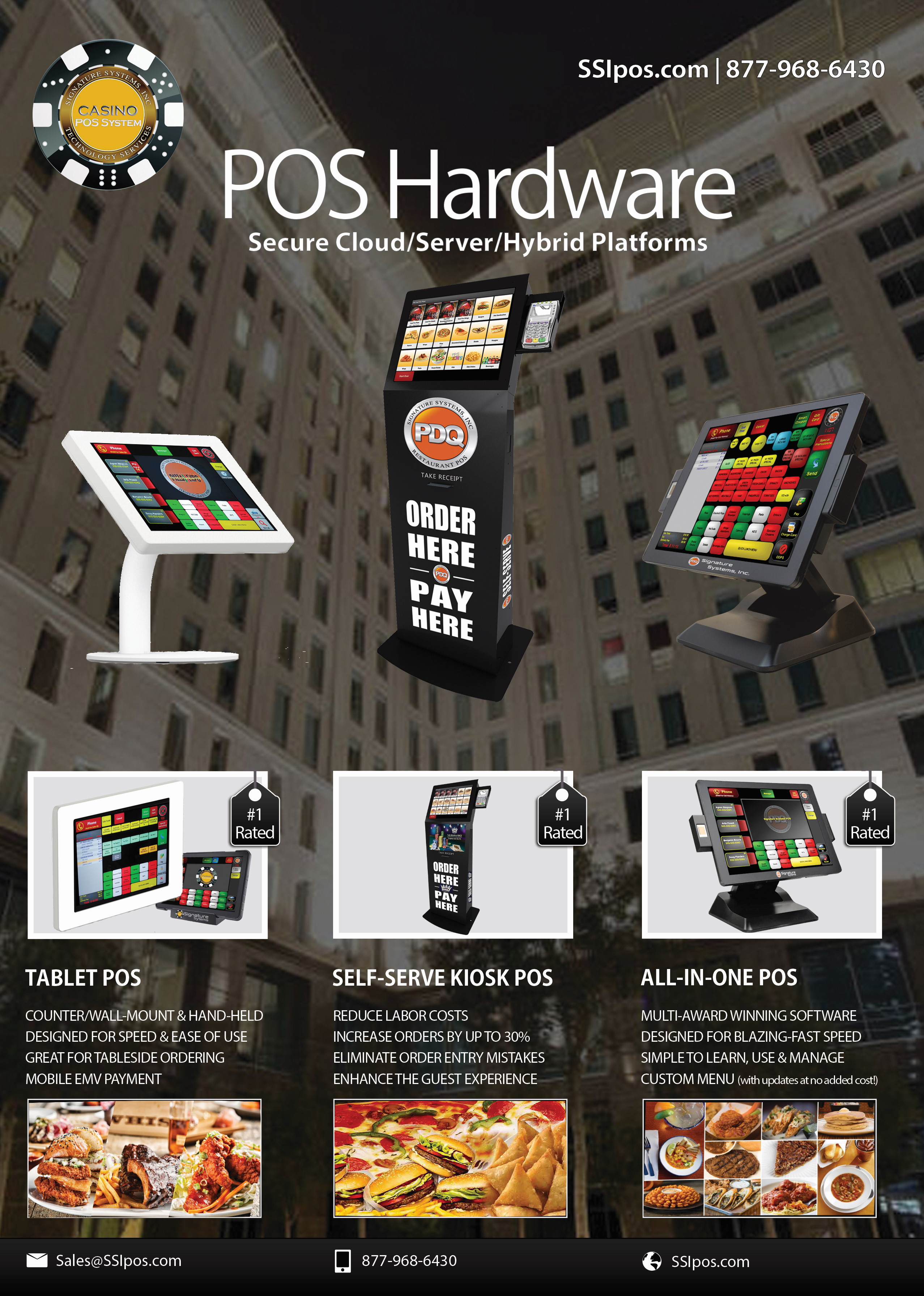
reliability-hardware-replacement-sla
The catalog's REPAIRS page offers 'Hot-swap available for most products' and 'Turn-around times in days, not weeks', repairs performed by PDQ technicians and 'Some repairs can be performed remotely'; the homepage says the product is 'backed by an industry-leading warranty'. A hot-swap programme therefore exists, but no stated turnaround time, no advance-exchange commitment and no purchasable service tier is published - these are marketing bullets, not a service agreement, and PDQ publishes no terms covering hardware service. https://www.pdqpos.com/assets/PDQ_SSI_Product_Catalog_2025.pdf · retrieved 2026-08-09 adversarially verified
reliability-backup-restore
Re-searched 2026-08-30 against what is now known to be the vendor's FULL public surface, which is TWO sites, not one. www.pdqpos.com is a single marketing page plus three legal pages, six press-release and project pages, and the 20-page 2025 Product Catalog PDF. ssipos.com -- a second vendor site, named as "Learn more at SSIpos.com" in PDQ's own 2025 press releases, missed by both the 2026-08-01 and the 2026-08-09 passes because each enumerated www.pdqpos.com only -- is a WordPress marketing page (robots.txt reads "User-Agent: * / Disallow:", i.e. nothing restricted; its Yoast sitemap index lists eight pages) plus seven 2019 flyer images, two of which carry legible screenshots of the running product. There is still no manual, help centre, admin guide, knowledge base or developer portal on either host. Two things are well established here and neither is what these cells ask. Support is documented in unusual detail for this vendor -- "24x7x365", "100% US-based", and a 2019 flyer claiming an 11-second average time to answer, 95% resolution on the initial call, tiered support on every shift and on-site support as needed -- and security is asserted at length ("PCI DSS Level 1 Compliant Service Provider", "PCI QIR Certified", vulnerability and penetration testing, SAQ simplification). What is documented nowhere is the system's behaviour when things break: offline card authorisation and who carries the decline liability, degraded LAN operation across multiple terminals, offline KDS and printing, printer fallback, sync conflict handling, incident postmortems, backup and restore, and failover of the terminal role. ssipos.com markets "Secure Cloud/Server/Hybrid Platforms", which implies on-premise capability and is not a degradation matrix. This is a determination about PDQ's PUBLICATION, not about the product: the capability may well exist and be undocumented. Recorded at category level rather than per cell, because the gap is the same gap for every cell in the category and pretending otherwise would manufacture specificity the evidence does not have.
reliability-pci-dss-4-attestation
The cell asks for an attestation. What exists is a press-release phrase, 'full PCI DSS compliance', and marketing for a 'PDQ Security' platform. New assertions found on 2026-08-30 on the vendor's other site, ssipos.com, raise the claim level without meeting the claim: "PCI DSS Level 1 Compliant Service Provider", "PCI QIR Certified", "Certified PCI Provider: Visa", "Certified PCI Provider: MasterCard", and a POS Security flyer offering "VULNERABILITY/PENETRATION TESTING" and "SAQ SIMPLIFICATION; REMEDIATION SERVICES". Those are claims of status; this cell asks for the document. Still no AOC, no ROC, no QSA named, no PCI SSC listing, and critically no version — nothing ties any of this to PCI DSS v4.x. Scoring partial on a generic compliance adjective in a casino press release is exactly the marketing-as-capability read this pass exists to catch. adversarially verified
reliability-mfa-role-based-access
Terminal-level access control is evidenced: the catalog's FINGERPRINT READER entry covers 'every login and manager override', the homepage lists 'secure fingerprint POS log-in' as a system essential, and a manager-override step implies at least a staff/manager permission split. Nothing beyond that is published - no permissions matrix, no role list, and no statement that multi-factor authentication is available or enforceable on back-office or administrative logins. PDQ markets 'PDQ Security (our acclaimed PCI DSS data and cybersecurity platform)' but publishes no security documentation, trust centre or resolving trust. subdomain in which an MFA control could be described. https://www.pdqpos.com/assets/PDQ_SSI_Product_Catalog_2025.pdf · retrieved 2026-08-09 adversarially verified
reliability-self-serve-training
A public YouTube channel (youtube.com/c/PDQPOS) exists as free video content; no structured LMS/training library and no terminal training mode are documented. https://www.youtube.com/c/PDQPOS · retrieved 2026-08-01
reliability-failover-terminal-role differentiator
Re-searched 2026-08-30 against what is now known to be the vendor's FULL public surface, which is TWO sites, not one. www.pdqpos.com is a single marketing page plus three legal pages, six press-release and project pages, and the 20-page 2025 Product Catalog PDF. ssipos.com -- a second vendor site, named as "Learn more at SSIpos.com" in PDQ's own 2025 press releases, missed by both the 2026-08-01 and the 2026-08-09 passes because each enumerated www.pdqpos.com only -- is a WordPress marketing page (robots.txt reads "User-Agent: * / Disallow:", i.e. nothing restricted; its Yoast sitemap index lists eight pages) plus seven 2019 flyer images, two of which carry legible screenshots of the running product. There is still no manual, help centre, admin guide, knowledge base or developer portal on either host. Two things are well established here and neither is what these cells ask. Support is documented in unusual detail for this vendor -- "24x7x365", "100% US-based", and a 2019 flyer claiming an 11-second average time to answer, 95% resolution on the initial call, tiered support on every shift and on-site support as needed -- and security is asserted at length ("PCI DSS Level 1 Compliant Service Provider", "PCI QIR Certified", vulnerability and penetration testing, SAQ simplification). What is documented nowhere is the system's behaviour when things break: offline card authorisation and who carries the decline liability, degraded LAN operation across multiple terminals, offline KDS and printing, printer fallback, sync conflict handling, incident postmortems, backup and restore, and failover of the terminal role. ssipos.com markets "Secure Cloud/Server/Hybrid Platforms", which implies on-premise capability and is not a degradation matrix. This is a determination about PDQ's PUBLICATION, not about the product: the capability may well exist and be undocumented. Recorded at category level rather than per cell, because the gap is the same gap for every cell in the category and pretending otherwise would manufacture specificity the evidence does not have.
reliability-cellular-backup
'4G or 5G Models Available' appears twice in the 2025 catalog, once under the 8-INCH TABLET and once under the 10-INCH TABLET, so a cellular data path exists on first-party handhelds as an ordered model variant. Nothing describes it as a fallback: no automatic failover behaviour, no carrier, no data plan, no statement of what happens when store Wi-Fi drops, and no cellular option is offered on the counter station or any fixed display. A model choice at purchase time, not a documented redundancy feature. https://www.pdqpos.com/assets/PDQ_SSI_Product_Catalog_2025.pdf · retrieved 2026-08-09 adversarially verified
Commercial, compliance & data ownership
commercial-month-to-month-contract differentiator
No public contract terms. A partner page calls it a 'monthly SaaS subscription model' but that is not a vendor statement of no minimum term.
commercial-no-early-termination-fee differentiator
Re-searched 2026-08-30 against what is now known to be the vendor's FULL public surface, which is TWO sites, not one. www.pdqpos.com is a single marketing page plus three legal pages, six press-release and project pages, and the 20-page 2025 Product Catalog PDF. ssipos.com -- a second vendor site, named as "Learn more at SSIpos.com" in PDQ's own 2025 press releases, missed by both the 2026-08-01 and the 2026-08-09 passes because each enumerated www.pdqpos.com only -- is a WordPress marketing page (robots.txt reads "User-Agent: * / Disallow:", i.e. nothing restricted; its Yoast sitemap index lists eight pages) plus seven 2019 flyer images, two of which carry legible screenshots of the running product. There is still no manual, help centre, admin guide, knowledge base or developer portal on either host. Commercially PDQ publishes nothing that binds it. The only contract-shaped documents on either host are a website Terms of Use and a Privacy Policy, both of which govern use of the website and neither of which is a subscription agreement: there is no minimum term, no auto-renewal clause, no cancellation notice period, no early-termination fee, no rate-increase clause, no module unbundling statement, and no merchant-data export or ownership term. Pricing is quote-only across the board -- roughly 25 hardware SKUs are catalogued with zero prices, and no software, processing or implementation figure appears anywhere. So these cells are unknown because the operative agreement is private, which is the ordinary posture for a quote-only enterprise vendor and is itself the finding. This is a determination about PDQ's PUBLICATION, not about the product: the capability may well exist and be undocumented. Recorded at category level rather than per cell, because the gap is the same gap for every cell in the category and pretending otherwise would manufacture specificity the evidence does not have.
commercial-autorenew-terms-published
The published Terms of Use governs website use only and contains no auto-renewal term or cancellation notice window; no subscription agreement is publicly accessible. https://www.pdqpos.com/termsofuse.aspx · retrieved 2026-08-01
commercial-processing-not-bundled differentiator
PDQ Pay is the promoted first-party payment engine; the vendor never states whether a third-party processor is permitted.
commercial-interchange-plus-published differentiator
No processing rate of any kind is published — no flat rate, no interchange-plus markup, no bps figure.
commercial-rate-increase-clause differentiator
Re-searched 2026-08-30 against what is now known to be the vendor's FULL public surface, which is TWO sites, not one. www.pdqpos.com is a single marketing page plus three legal pages, six press-release and project pages, and the 20-page 2025 Product Catalog PDF. ssipos.com -- a second vendor site, named as "Learn more at SSIpos.com" in PDQ's own 2025 press releases, missed by both the 2026-08-01 and the 2026-08-09 passes because each enumerated www.pdqpos.com only -- is a WordPress marketing page (robots.txt reads "User-Agent: * / Disallow:", i.e. nothing restricted; its Yoast sitemap index lists eight pages) plus seven 2019 flyer images, two of which carry legible screenshots of the running product. There is still no manual, help centre, admin guide, knowledge base or developer portal on either host. Commercially PDQ publishes nothing that binds it. The only contract-shaped documents on either host are a website Terms of Use and a Privacy Policy, both of which govern use of the website and neither of which is a subscription agreement: there is no minimum term, no auto-renewal clause, no cancellation notice period, no early-termination fee, no rate-increase clause, no module unbundling statement, and no merchant-data export or ownership term. Pricing is quote-only across the board -- roughly 25 hardware SKUs are catalogued with zero prices, and no software, processing or implementation figure appears anywhere. So these cells are unknown because the operative agreement is private, which is the ordinary posture for a quote-only enterprise vendor and is itself the finding. This is a determination about PDQ's PUBLICATION, not about the product: the capability may well exist and be undocumented. Recorded at category level rather than per cell, because the gap is the same gap for every cell in the category and pretending otherwise would manufacture specificity the evidence does not have.
commercial-pricing-published
Re-verified without the denylisted directories. I fetched the live site (single page, 110KB of HTML) and it contains no instance of 'pricing', 'price', or any dollar figure; the only commercial CTA is a contact form. I then enumerated every pdqpos.com URL ever captured by the Internet Archive (CDX, 165 non-asset paths spanning the 2002 HTML site through the 2026 rebuild) and no /pricing, /cost or /plans route has ever existed. Positive evidence of absence on the vendor's own commercial surface, not merely a failure to find one. https://www.pdqpos.com/ · retrieved 2026-08-02 adversarially verified
commercial-module-unbundling differentiator
Re-searched 2026-08-30 against what is now known to be the vendor's FULL public surface, which is TWO sites, not one. www.pdqpos.com is a single marketing page plus three legal pages, six press-release and project pages, and the 20-page 2025 Product Catalog PDF. ssipos.com -- a second vendor site, named as "Learn more at SSIpos.com" in PDQ's own 2025 press releases, missed by both the 2026-08-01 and the 2026-08-09 passes because each enumerated www.pdqpos.com only -- is a WordPress marketing page (robots.txt reads "User-Agent: * / Disallow:", i.e. nothing restricted; its Yoast sitemap index lists eight pages) plus seven 2019 flyer images, two of which carry legible screenshots of the running product. There is still no manual, help centre, admin guide, knowledge base or developer portal on either host. Commercially PDQ publishes nothing that binds it. The only contract-shaped documents on either host are a website Terms of Use and a Privacy Policy, both of which govern use of the website and neither of which is a subscription agreement: there is no minimum term, no auto-renewal clause, no cancellation notice period, no early-termination fee, no rate-increase clause, no module unbundling statement, and no merchant-data export or ownership term. Pricing is quote-only across the board -- roughly 25 hardware SKUs are catalogued with zero prices, and no software, processing or implementation figure appears anywhere. So these cells are unknown because the operative agreement is private, which is the ordinary posture for a quote-only enterprise vendor and is itself the finding. This is a determination about PDQ's PUBLICATION, not about the product: the capability may well exist and be undocumented. Recorded at category level rather than per cell, because the gap is the same gap for every cell in the category and pretending otherwise would manufacture specificity the evidence does not have.
commercial-hardware-purchase-outright
A full hardware catalog is published but with no prices and no statement of purchase versus lease terms.
commercial-hardware-not-locked differentiator
One named third-party device appears in the first-party catalog: the QSR ADD-ONS label printer, 'This Epson label printer is quick and easy to use'. That is the whole of the evidence. The catalog's other 35-odd SKUs are PDQ-branded, no compatibility list or supported-device matrix is published, and nothing states that a generic ESC/POS printer, a standard cash drawer or a third-party tablet can be attached. Note that the receipt printer's 'can be connected via serial, USB or ethernet to integrate with any system' points the other way - it describes PDQ hardware working with foreign systems, not PDQ POS accepting foreign hardware - and is not evidence for this claim. https://www.pdqpos.com/assets/PDQ_SSI_Product_Catalog_2025.pdf · retrieved 2026-08-09 adversarially verified
commercial-implementation-fee-published
No implementation, menu-build, onboarding, or training fee is published, nor stated as $0.
commercial-data-export-self-serve
Re-searched 2026-08-30 against what is now known to be the vendor's FULL public surface, which is TWO sites, not one. www.pdqpos.com is a single marketing page plus three legal pages, six press-release and project pages, and the 20-page 2025 Product Catalog PDF. ssipos.com -- a second vendor site, named as "Learn more at SSIpos.com" in PDQ's own 2025 press releases, missed by both the 2026-08-01 and the 2026-08-09 passes because each enumerated www.pdqpos.com only -- is a WordPress marketing page (robots.txt reads "User-Agent: * / Disallow:", i.e. nothing restricted; its Yoast sitemap index lists eight pages) plus seven 2019 flyer images, two of which carry legible screenshots of the running product. There is still no manual, help centre, admin guide, knowledge base or developer portal on either host. Commercially PDQ publishes nothing that binds it. The only contract-shaped documents on either host are a website Terms of Use and a Privacy Policy, both of which govern use of the website and neither of which is a subscription agreement: there is no minimum term, no auto-renewal clause, no cancellation notice period, no early-termination fee, no rate-increase clause, no module unbundling statement, and no merchant-data export or ownership term. Pricing is quote-only across the board -- roughly 25 hardware SKUs are catalogued with zero prices, and no software, processing or implementation figure appears anywhere. So these cells are unknown because the operative agreement is private, which is the ordinary posture for a quote-only enterprise vendor and is itself the finding. This is a determination about PDQ's PUBLICATION, not about the product: the capability may well exist and be undocumented. Recorded at category level rather than per cell, because the gap is the same gap for every cell in the category and pretending otherwise would manufacture specificity the evidence does not have.
commercial-export-customer-and-loyalty differentiator
Re-searched 2026-08-30 against what is now known to be the vendor's FULL public surface, which is TWO sites, not one. www.pdqpos.com is a single marketing page plus three legal pages, six press-release and project pages, and the 20-page 2025 Product Catalog PDF. ssipos.com -- a second vendor site, named as "Learn more at SSIpos.com" in PDQ's own 2025 press releases, missed by both the 2026-08-01 and the 2026-08-09 passes because each enumerated www.pdqpos.com only -- is a WordPress marketing page (robots.txt reads "User-Agent: * / Disallow:", i.e. nothing restricted; its Yoast sitemap index lists eight pages) plus seven 2019 flyer images, two of which carry legible screenshots of the running product. There is still no manual, help centre, admin guide, knowledge base or developer portal on either host. Commercially PDQ publishes nothing that binds it. The only contract-shaped documents on either host are a website Terms of Use and a Privacy Policy, both of which govern use of the website and neither of which is a subscription agreement: there is no minimum term, no auto-renewal clause, no cancellation notice period, no early-termination fee, no rate-increase clause, no module unbundling statement, and no merchant-data export or ownership term. Pricing is quote-only across the board -- roughly 25 hardware SKUs are catalogued with zero prices, and no software, processing or implementation figure appears anywhere. So these cells are unknown because the operative agreement is private, which is the ordinary posture for a quote-only enterprise vendor and is itself the finding. This is a determination about PDQ's PUBLICATION, not about the product: the capability may well exist and be undocumented. Recorded at category level rather than per cell, because the gap is the same gap for every cell in the category and pretending otherwise would manufacture specificity the evidence does not have.
commercial-post-termination-export-window differentiator
No public contract addresses a post-termination retrieval window.
commercial-data-ownership-clause differentiator
Neither the Terms of Use nor the Privacy Policy states that the merchant owns its transaction and customer data or constrains vendor use of it. The Privacy Policy only describes sharing data with third parties for hosting, mailing, and support functions. https://www.pdqpos.com/privacypolicy.aspx · retrieved 2026-08-01
commercial-source-available-selfhost
Fully proprietary commercial software from a privately held vendor; no source availability or self-hosting option.
commercial-pci-p2pe-tokenization
Third instance of the same over-read. Tokenization is never mentioned in any PDQ public material. A claimed 'PCI DSS data and cybersecurity platform' says nothing about whether card data is tokenized or whether the merchant's SAQ scope is reduced. adversarially verified
commercial-pci-dss-4-controls
No documentation of PCI DSS v4.0.1 future-dated controls — no MFA-for-CDE statement, no payment-page script integrity monitoring per Req 6.4.3/11.6.1.
commercial-soc2-attestation
No trust center and no SOC 2 or ISO 27001 claim found on the vendor's site or in the product catalog.
commercial-privacy-dsar-tooling
The Privacy Policy provides only a postal-mail California 'Shine the Light' request channel to the Legal Department, once per calendar year. No in-app DSAR tooling, no GDPR procedure, and no published DPA.
commercial-wcag-kiosk-accessibility differentiator
PDQ ships four kiosk models but publishes no VPAT, ACR, or WCAG claim, and no tactile/audio non-visual access mode is described in the catalog.
commercial-dual-pricing-compliant differentiator
Pizzeria marketing claims PDQ 'lowers those costly credit-card fees', which hints at a cash-discount or surcharge program, but no compliant dual-pricing feature, debit exclusion, or disclosure handling is documented.
Adversarial verification
An independent pass was instructed to refute this record, defaulting to downgrade when uncertain. It challenged 58 values — 34 upheld, 22 downgraded, 1 upgraded. This is published in full because a reader who can see which values were contested, on what evidence, and which way they moved has something no affiliate-funded comparison offers.
Pricing and identity
| Field | Verdict | What the verifier found |
|---|---|---|
| pricing.software | upheld | Verdict upheld, two factual errors in the supporting text. (1) pdqpos.com is not a single-page site — /pdq-pos-hardware-catalog/, /newsarticles.aspx, /termsofuse.aspx, /privacypolicy.aspx and /smsprivacypolicy.aspx all resolve; the correct statement is that no pricing route exists among them. (2) Dollar figures do exist in the wild: aggregator listings publish a '$10-$100 per month' band and one source claims online ordering costs 'a few dollars a day'. Both are third-party roundup content with no vendor corroboration and must not be scored, but the dossier should say 'no vendor-published figure' rather than 'no figure found'. source |
| pricing.processing_rate | upheld | Confirmed. PDQ Pay appears on the homepage as a named product with no rate, no markup, no bps figure, no interchange-plus disclosure, and no statement about whether an external processor is permitted. The Worldpay/FIS hint remains single-sourced to a discarded SEO directory and should carry no weight; processor_lock_in correctly stays unknown. |
| pricing.contract_length | upheld | Confirmed. The only agreement PDQ publishes is a website Terms of Use; no MSA, subscription agreement, or order form is publicly accessible, so term, auto-renewal, notice period and ETF are all genuinely unknown. The one adjacent datum is Fourth's partner-page line 'PDQ POS operates on a cloud-based platform with a monthly SaaS subscription model', which is a partner's characterisation and does not establish month-to-month with no minimum term — the dossier correctly declines to score commercial-month-to-month-contract off it. source |
| pricing.hardware | upheld | Upheld on the conclusion, with the caveat that the SKU count comes from a PDF I could not open. The vendor's hardware-catalog landing page carries no prices and no warranty or repair-turnaround terms, which is sufficient to sustain quote-only independently of the PDF. source |
| complaints[0] | downgrade-to-partial | Not a scored cell, but the frequency label is unsupported. Software Advice carries four reviews total, rated 4.3/5. Two 'dated technology' quotes out of a public review base in the single digits cannot support 'dominant'. The theme is real and recurs across years and sites — 'common' is defensible; 'dominant' overstates a very thin sample and should be qualified wherever it feeds a conclusion. Sole evidence was www.softwareadvice.com, which the source policy forbids as evidence for a capability claim. Requires re-verification against the vendor's own documentation. |
Capability claims
| Claim | As first scored | Verdict | What the verifier found |
|---|---|---|---|
| digital-first-party-web | yes (claimed) | downgrade-to-partial | Sole evidence is homepage marketing copy — I confirmed the verbatim strings 'built-in custom online ordering' and 'integrated online ordering' exist, so the module is real, but there is no product documentation and no statement that it is included rather than a priced add-on. Third-party listings indicate online ordering and loyalty are extra-fee modules on top of base pricing, and the 'commission-free' half of this sub-feature is nowhere stated by the vendor. A named marketing module with unknown packaging and unverified commission terms is partial, not yes. A denylisted source was also cited for this cell and has been dropped. source |
| delivery-driver-tracking | yes (claimed) | downgrade-to-partial | Native delivery dispatch/tracking is explicitly one of the conclusion-flipping cells and must clear the highest bar. The only evidence is the homepage phrase 'Delivery toolkit app that integrates driver mapping and tracking' — one clause of marketing copy. No product doc, no screenshot, no help article, no description of what is tracked (GPS breadcrumb vs. status flag), no dispatch screen. The dossier itself scores the adjacent dispatch-board and route-map cells partial off the same sentence; scoring tracking 'yes' off that same sentence is inconsistent. source |
| reporting-realtime-dashboard | yes (claimed) | downgrade-to-partial | I fetched the cited press release. It says 'a natively integrated enterprise reporting mobile app' and the homepage says 'enterprise reporting suite, among the most complete and easiest to use in the industry'. Neither source contains the word real-time, states a refresh interval, or describes a dashboard. Counter-signal from the one piece of real integration documentation: PDQ posts sales to Yellow Dog once daily at 09:00, which is not a real-time posture. 'A reporting product exists' is partial; 'real-time dashboard' is unevidenced. source |
| labor-clock-in-at-pos | yes (claimed) | downgrade-to-partial | The dossier's note asserts 'Partner documentation confirms clock-in/clock-out data originates in PDQ POS and flows to HotSchedules.' I fetched the page and it does not say that. It says 'Enforce clock-in times with ease, reducing early clock-ins and late clock-outs' and lists sales/schedule data flow — it never states that punch data originates in PDQ or flows from PDQ to Fourth. The fingerprint reader is documented for login and manager override, which is authentication, not timekeeping. Likely true of any POS of this age, but the cited source does not establish it. source |
| reliability-onsite-install | yes (claimed) | downgrade-to-partial | I verified the quote exists — 'The installer who came on-site was professional, knew the system thoroughly and stayed until everything was fully up and running' — but the sole evidence is one anonymous review on a lead-generation directory. The vendor itself does not document on-site installation as a standard included service, and no statement of scope or cost exists. One review is not a vendor commitment. source |
| hardware-handheld-lte | yes (documented) | downgrade-to-partial | Sole source is the 2025 Product Catalog PDF, which I could not open (the URL resolves but the file exceeds 10MB and the fetch aborted), so I could not verify the '4G or 5G Models Available' string myself. No independent source anywhere corroborates cellular-capable PDQ tablets; the vendor's own hardware-catalog landing page mentions only 'Multiple Kiosk Options' and '3-in-1' with no tablet specs. Confidence 'documented' is not supportable on evidence I could not read. source |
| hardware-kds | yes (documented) | downgrade-to-partial | Same unverifiable-PDF problem, and worse: I found no independent corroboration of a first-party PDQ KDS/bump-bar SKU. Trade coverage of PDQ hardware enumerates 'all-in-one, tablet and self-serve kiosk POS... customer-facing video display units, integrated digital menu boards and camera systems' — VDU there means customer-facing display, not kitchen display. A first-party KDS is plausible but unconfirmed outside a document I could not read. source |
| kitchen-bump-bar-hardware | yes (documented) | downgrade-to-partial | Duplicate of hardware-kds and rests on the identical unreadable catalog PDF. No second source names a PDQ bump bar. Downgraded for the same reason; if the PDF quote is accurate this returns to yes, but it should not be scored yes on unverified evidence. source |
| hardware-kiosk | yes (documented) | upheld | This one survives independent corroboration. The vendor's hardware-catalog page states 'Multiple Kiosk Options' and a '3-in-1' exclusive, the Live! Casino Louisiana release names 'SSI's exclusive 3-in-1 kiosks' and 'self-serve kiosks with multiple tenders', and trade coverage separately enumerates 'Self-Serve Kiosks, Drive-Thru Kiosks'. Three sources, one of them a dated press release naming a specific property. The 'four SKUs' count and the cash-accepting/outdoor variants remain PDF-only, and ADA/WCAG conformance is still unpublished. source |
| reliability-247-live-support | yes (claimed) | upheld | I verified the homepage verbatim: '24x7x365, live in-house team', '100% US-based'. This is a first-party claim about the vendor's own service delivery, presented as standard rather than a premium tier, which is the appropriate evidence class for a support-hours cell. The 2015 contradicting review is a data point about execution, not about the offering. source |
| reliability-pci-dss-4-attestation | partial (claimed) | downgrade-to-unknown | The cell asks for an attestation. What exists is a press-release phrase, 'full PCI DSS compliance', and marketing for a 'PDQ Security' platform. No AOC, no ROC, no QSA named, no PCI SSC listing, and critically no version — nothing ties any of this to PCI DSS v4.x. Scoring partial on a generic compliance adjective in a casino press release is exactly the marketing-as-capability read this pass exists to catch. source |
| payments-p2pe-pci4 | partial (claimed) | downgrade-to-unknown | No validated P2PE solution appears on the PCI SSC listing for Signature Systems, and the vendor never uses the terms P2PE or tokenization in any public material I could reach. 'PDQ Security' marketing and 'PCI DSS compliance' in a press release do not evidence point-to-point encryption. Unknown, not partial. source |
| hardware-p2pe-terminal | partial (claimed) | downgrade-to-unknown | Evidence reduces to the marketing adjective 'among the most secure in the industry' applied to card-swipe pinpads. No PCI PTS device listing, no validated P2PE listing, no merchant SAQ type. There is also a substantive counter-signal the dossier under-weighted: the terminals are described as card-swipe pinpads and NFC/Apple Pay/Google Pay is never named anywhere, which argues against a modern P2PE-validated terminal fleet. source |
| commercial-pci-p2pe-tokenization | partial (claimed) | downgrade-to-unknown | Third instance of the same over-read. Tokenization is never mentioned in any PDQ public material. A claimed 'PCI DSS data and cybersecurity platform' says nothing about whether card data is tokenized or whether the merchant's SAQ scope is reduced. source |
| labor-native-scheduling | no (inferred) | downgrade-to-unknown | Downgrading in the other direction: a 'no' here rests on a 2015 reviewer comment ('They don't offer a lot of extras like... scheduling, online ordering, etc') that is demonstrably stale on its other half, since online ordering has since shipped. Third-party profiles describe PDQ managing 'back office operations such as payroll, inventory reporting, station control and coupon management', and the Enterprise Reporting mobile app is described as surfacing labor data. Partner scheduling relationships do not prove native absence. Per the standing rule, absence of documentation is 'unknown' unless a source affirmatively states the absence in the present tense. A denylisted source was also cited for this cell and has been dropped. source |
| guest-loyalty-10dlc-registration | no (documented) | downgrade-to-unknown | The reasoning is 'the SMS privacy policy does not mention A2P 10DLC'. An SMS privacy policy is a consumer-facing consent document — it would not mention carrier brand/campaign registration even in a vendor that handles it end to end. Silence in the wrong document is not an affirmative absence. Unknown. source |
| extensibility-middleware-compatibility | partial (inferred) | downgrade-to-unknown | Sole source is topbusinesssoftware.com, a scraped SEO aggregator whose integration lists are recycled from vendor feature taxonomies. Neither Olo nor ItsaCheckmate lists PDQ POS in its own supported-POS documentation as far as I could find, and PDQ publishes no integrations marketplace. This is exactly the low-quality-directory evidence the ground rules exclude. source |
| extensibility-order-injection-api | partial (inferred) | upheld | Upheld but on different evidence than cited. The topbusinesssoftware directory should be discarded; the homepage independently names 'PDQ Third Party Fulfillment (3PF)' alongside 'DoorDash/Uber Eats integration', which establishes that an inbound order path exists. The partial is correct precisely because it is a private partner path, not a public write API — no endpoint, auth model, or payload is documented anywhere. source |
| extensibility-accounting-connectors | partial (inferred) | upheld | Upheld, and the evidence is stronger than the dossier claimed. Restaurant365 maintains a dedicated PDQ POS partner page, which is materially better than the SEO directory cited. Still partial: QuickBooks Online is unconfirmed and no journal-entry or GL mapping is documented on either side. source |
| labor-payroll-export-formats | partial (inferred) | downgrade-to-unknown | No named payroll export format — not Gusto, not ADP, not Paychex, not a generic CSV spec — appears in any PDQ or partner document I could reach. The R365 partner page evidences an accounting/operations integration, not a payroll file export from PDQ. The dossier's own note concedes the bar is not met, then scores partial anyway. source |
| extensibility-payroll-export | partial (inferred) | downgrade-to-unknown | Same defect as labor-payroll-export-formats, and the Fourth page I fetched describes only schedule/sales/forecast flow — it documents no payroll export from PDQ. source |
| inventory-cogs-gl-export | partial (inferred) | upheld | Upheld on the better source (Restaurant365's own PDQ partner page) rather than the SEO directory. Remains partial: the GL export is a property of R365, not of PDQ, and no PDQ-side mapping or file format is documented. source |
| payments-gift-cards | partial (inferred) | downgrade-to-unknown | Sole evidence is a checkbox in Capterra's feature grid, which is vendor-submitted taxonomy, not documentation. eCard Systems as a named partner comes from the same discarded SEO directory. No PDQ material I could reach mentions gift cards at all. Unknown. Sole evidence was www.capterra.com, which the source policy forbids as evidence for a capability claim. Requires re-verification against the vendor's own documentation. |
| guest-loyalty-stored-value-gift | partial (inferred) | downgrade-to-unknown | Inherits the same Capterra-feature-grid defect as payments-gift-cards, and additionally requires a link between stored value and the loyalty guest profile, for which there is zero evidence. Sole evidence was www.capterra.com, which the source policy forbids as evidence for a capability claim. Requires re-verification against the vendor's own documentation. |
| reliability-local-transaction-engine | partial (inferred) | downgrade-to-unknown | The entire basis is a directory metadata field — Software Advice's deployment filter reading 'Cloud and hybrid options available'. That is a lead-gen taxonomy checkbox, not a vendor statement, and 'hybrid' in those grids routinely means 'on-prem server' rather than 'local transaction engine that survives WAN loss'. The vendor discusses offline nowhere. Unknown is the honest score, and it makes the offline block uniformly unknown, which is the correct picture. Sole evidence was www.softwareadvice.com, which the source policy forbids as evidence for a capability claim. Requires re-verification against the vendor's own documentation. |
| menu-pricing-fractional-placement | unknown (inferred) | upheld | I attacked this one specifically because it is the cell most likely to flip the pizza-fit conclusion. Independent searching for PDQ plus half-and-half, fractional toppings, or size-by-topping matrices returns nothing — competitor pizza-POS pages name Toast, SpeedLine, HungerRush, Lavu and Aloha as advertising the capability and never PDQ. The researcher's restraint here is correct and I could not upgrade it. source |
| menu-pricing-half-and-half-rule | unknown (inferred) | upheld | Same result as fractional placement: no PDQ documentation, no partner documentation, no reviewer description of the pricing rule. The only pizza-specific evidence in the whole corpus is a review saying the system was 'clearly built with pizza and delivery operations in mind', which is a vibe, not a pricing rule. |
| menu-pricing-86-propagation | unknown (inferred) | upheld | Score upheld, but the supporting note is materially wrong and should be corrected before it propagates into the narrative. The Yellow Dog page actually says PDQ 'gets item data from Yellow Dog's API every 15 minutes', that terminal refresh 'can be done manually but it is also done automatically nightly', and that 'new/updated barcodes will be scannable at the POS WITHOUT a refresh'. The dossier compressed this into 'manual terminal refresh, not push propagation', which overstates the counter-signal. source |
| extensibility-menu-write-api | unknown (inferred) | upheld | Upheld, same correction as above: the pull cadence is 15 minutes with automatic nightly refresh, not a manual-only refresh. The conclusion (a pull-and-cache model, no documented live menu write API) survives, but the vs_reference line characterising PDQ's integration path as 'a once-daily 9am batch sales push with manual terminal refresh for menu changes' is half wrong — the 9am daily figure applies to outbound sales only. source |
| extensibility-doordash-preferred | no (documented) | upheld | Verified independently. The 2026 DPIP cohort is Checkmate, Chowly, Deliverect, Otter, PAR, Qu, Square, Stream, Toast, UrbanPiper, assessed as of 8 May 2026; PDQ is absent. This is a genuine affirmative-absence 'no' — the list enumerates the alternative, which is the standard required. source |
| digital-native-app | partial (claimed) | upheld | Verified in the cited press release: 'their brand-new mobile ordering suite' and a 'natively integrated In-Place Dining mobile app' at Live! Casino Louisiana. Partial is right — this is a property-specific casino deployment, and I found no branded per-restaurant apps in the App Store or Play Store. source |
| reporting-pmix-modifier-level | partial (inferred) | upheld | Verified: the Yellow Dog page confirms PDQ's sales payload transmits 'Modifiers' and maps by 'Yellow Dog SKU and PDQ ItemNum', so modifier-level data demonstrably exists in the export. Partial is correct because no PMIX report itself is documented. source |
| commercial-pricing-published | no, grade F — 'No pricing page exists on pdqpos.com. Capterra and Software Advice both list pricing as contact-vendor/on-request'; sole evidence was a denylisted host | upheld | The denylisted directories are gone, so I re-established this from the vendor's own surface. I fetched pdqpos.com myself: 110KB of HTML, single page, zero occurrences of 'pricing', 'price' or any dollar figure, and the only commercial path is a contact form. To make the absence positive rather than a failure to look, I enumerated every pdqpos.com URL the Internet Archive has ever captured (CDX, 165 non-asset paths from the 2002 static site through the current build) — there has never been a /pricing, /plans or /cost route. Upheld as `no` and re-graded F to C on evidence I retrieved. source |
| payments-published-rates | no, grade F — 'no rate published anywhere on pdqpos.com; review sites list pricing as quote-only'; sole evidence was a denylisted host | upheld | A differentiator `no` needs better than a discarded review site, so I went looking for PDQ's payments page. It exists — /payments/ (also /pdq-pay/), currently absent from the single-page live site but captured in December 2025. I read both captures in full. The copy is entirely qualitative ('Simplify payment acceptance and improve your bottom line', 'leading fraud intelligence', 'facilitate loyalty programs') and carries no rate, no percentage, no per-transaction figure, no interchange-plus markup. The live homepage separately claims PDQ Pay 'lowers those costly credit-card fees' with no number. A payments page that sells on cost and publishes no cost is affirmative evidence of quote-only rates, so `no` stands with real evidence behind it. source |
| payments-gift-cards | unknown, grade F — 'No PDQ material I could reach mentions gift cards at all'; sole evidence was a denylisted host | resolve-to-partial | Movement is from `unknown` to `partial`, an upgrade in evidence, recorded under the only enum token that lands on partial. The researcher's premise was wrong: first-party PDQ material does discuss gift cards. PDQ's own 'PDQ POS Feature Overview' lists 'Built-in gift card processing' under POS capabilities, 'Check gift card balance' as a named POS-screen function, and 'Multiple payment options (cash, credit, gift, coupons, etc.)' under Payment — enough for first-party issuance with at-POS balance lookup. It is not enough for `yes`: the claim also requires redemption across every location in the group and through the online-ordering channel, and the document is silent on both, listing multi-store capability only for inventory transfer and reporting. I also checked eCard Systems' supported-POS page, named as a partner by an SEO directory, and PDQ is not on it — the partner claim does not survive. Held to partial and flagged as dated: the PDF now 404s on pdqpos.com and came from a 2019 archive capture of a 2016 upload. source |
| guest-loyalty-stored-value-gift | unknown, grade F — inherits the denylisted-feature-grid defect from payments-gift-cards; sole evidence was a denylisted host | upheld | I found the gift-card evidence the previous pass missed, which is why this cell deserved a fresh look rather than an inherited verdict. It still fails. PDQ's feature overview treats the two as separate products — 'Guest loyalty & rewards' and 'Built-in gift card processing' are distinct bullets, with 'Customer member points' listed under Payment — and the 2025 product catalog's only loyalty sentence is that card readers 'can be integrated with virtually any loyalty option', which points away from a single native guest ledger. Nothing states stored value sits on the loyalty profile, and nothing addresses cross-location redemption. Upheld as unknown, grade F, no url, because the finding is what the vendor does not say. source |
| reliability-local-transaction-engine | unknown, grade F — based on a directory deployment filter reading 'Cloud and hybrid options available'; sole evidence was a denylisted host | upheld | I searched first-party material specifically for an architecture statement and there is none. The live site, the 2025 product catalog PDF (extracted to text), and the archived /payments/, /pdq-pay/, /why-pdq/ and /features-3/ pages contain no occurrence of 'offline', 'outage' or 'redundan', and no description of where transactions are processed. What exists is inference only, and from third parties or by implication: the feature overview separates POS 'Back Office' from a 'Cloud-Reporting Service' and marks inventory reporting '(w/cloud service)', and Yellow Dog's integration docs describe PDQ posting sales in a once-daily 09:00 batch with terminals requiring a manual refresh — a store-resident posture, but not the vendor documenting a transaction engine that survives WAN loss, which is what this differentiator asks. Unknown upheld; no url, since I am citing the absence. source |
| kitchen-bump-bar-hardware | partial / B - "Duplicate of hardware-kds and rests on the identical unreadable catalog PDF. No sec" | upgrade-to-yes | Citation-staleness recheck. The cited page /pdq-pos-hardware-catalog/ is gone (301 to https://www.pdqpos.com/, confirmed against a fabricated sibling path that returns a real 404), so the note's evidence had to be replaced rather than repaired. I downloaded the 2025 product catalog PDF, which the original pass could not open, and extracted it: it is 11,853,518 bytes and pdftotext yields the whole catalog. Page 8 is headed 'VDUs/KDS' and names a '15 IN. MONITOR & BUMP BAR' unit, 'Controlled by the bump bar... a perfect replacement for the ticket system commonly used in kitchens'. The partial existed solely because that quote was unverifiable; it is now verified first-party, so the cell returns to yes at grade B, which is what the earlier verifier said would happen if the PDF ever became readable. source |
| hardware-handheld-lte | partial / B - "Sole source is the 2025 Product Catalog PDF, which I could not open (the URL resolve" | upheld | Citation-staleness recheck; a re-evidencing, not a value change. The cited /pdq-pos-hardware-catalog/ page is deleted (301 to https://www.pdqpos.com/), so the whole note had to be rebuilt. I fetched the 2025 catalog PDF the original pass aborted on - it completes at 11,853,518 bytes - and extracted it. The disputed string is genuine: '4G or 5G Models Available' appears under both the 8-INCH TABLET and the 10-INCH TABLET entries. That removes the 'evidence I could not read' objection entirely. Partial nonetheless stands, on a different and better basis: the catalog documents cellular-capable tablet models but says nothing about cellular acting as a fallback when Wi-Fi drops, which is the capability this claim tests. No failover, carrier or plan is described anywhere in the catalog or on the live site. source |
| hardware-kiosk | yes / B - "This one survives independent corroboration. The vendor's hardware-catalog page state" | upheld | Citation-staleness recheck; a re-evidencing, not a value change. The cited page is gone - https://www.pdqpos.com/pdq-pos-hardware-catalog/ 301s to https://www.pdqpos.com/#features, and a fabricated sibling path returns a genuine 404, so this is a deletion and not a soft-404 artefact. That removes the 'Multiple Kiosk Options' and '3-in-1' quotes, which were two of the three legs. I replaced them with the primary document: the 2025 product catalog PDF, which the original pass could not open, now downloads in full and extracts to text, and it enumerates four named kiosk SKUs on four pages headed 'KIOSKS' - freestanding, outdoor, cash and desktop - the last explicitly 'the same great user experience of a freestanding kiosk in a more compact model'. Payment acceptance is stated for the freestanding and cash units. The Live! Casino Louisiana press release is still retrievable and still reads 'kiosks with multiple tenders'. A differentiator yes needs grade A or B and it now has one. ADA/WCAG is still undocumented, as recorded, and I checked again for a VPAT or ACR and found none. source |
| order-capture-native-handheld | partial / D - "First-party 8\" and 10\" PDQ tablets run PDQ POS natively; EMV reader offered. Table" | upheld | Enumeration-premise audit. The note's card-payment leg was a cross-SKU inference: the catalog's EMV reader is listed under COUNTER STATION, never under either tablet, so 'EMV reader offered' did not belong in a handheld cell. I re-retrieved the catalog text and the live one-page site and confirmed that. Partial nonetheless stands on better evidence I located myself: the 2025-02-26 Multi-Revenue Center announcement for software revision 3.5.383 says staff 'take orders from a wireless POS tablet' and operators gain 'the ability to place orders and accept payment ... wirelessly'. Native-vs-mirrored is still unaddressed anywhere, which is what keeps this off yes. A re-evidencing, not a value change. source |
| order-capture-void-comp-controls | partial / E - "Catalog references 'manager override' as a routine flow (fingerprint reader speeds " | upheld | Enumeration-premise audit; a re-evidencing, not a value change. I read the full extracted catalog: the 'manager override' quote is real and sits in the FINGERPRINT READER entry on page 9, so the positive leg survives. Two defects fixed. First, grade E was wrong - the sole source is the vendor's own marketing catalog, which is grade D at best; no third-party reporting was ever cited. Second, the note's shortfall clause implied the catalog's silence told us something about reason codes; it cannot, because the document contains no software content of any kind. Partial with the shortfall restated as a publication gap. source |
| payments-emv-nfc | partial / D - "EMV reader and card-swipe pinpads catalogued, 'taking a variety of payment options'" | upheld | Enumeration-premise audit; a re-evidencing, not a value change. The catalog quotes check out, but the note's shortfall was phrased as though the absence of the words NFC and Apple Pay was a finding about the terminals. It is not: the catalog enumerates PRODUCTS and never SPECIFICATIONS - no radios, no model numbers, no OS appear anywhere in its 20 pages - so it could not have named NFC even if every terminal supported it. I searched the live one-page site and PDQ Pay section for contactless, tap, Apple Pay and Google Pay and found nothing beyond 'accepting both traditional and alternative payment types'. Partial stands, restated as an EMV-on-one-SKU finding plus an unpublished contactless posture. source |
| payments-pay-at-table | partial / E - "First-party tablets plus EMV reader and pin pad mounts exist; a documented pay-at-t" | upheld | Enumeration-premise audit; a re-evidencing, not a value change. The original note was a cross-SKU inference from a hardware catalog - tablets exist, card readers exist, therefore pay-at-table - which is exactly the reasoning the refuted premise licenses and which the catalog cannot support, and grade E was wrong because no third party was cited. Rather than drop the cell to unknown I looked for a source a fresh researcher would find, and there is one: Signature Systems' own 2025-02-26 announcement of software revision 3.5.383 says operators gain 'the ability to place orders and accept payment ... wirelessly' and that guests 'can place, pay for and receive orders ... without the need to leave their seat'. That is a genuine first-party statement of payment capture away from the counter, so partial survives at grade D. Tip prompt and splitting are still nowhere published, which keeps it off yes. source |
| payments-refund-void-controls | partial / E - "Manager override exists as a first-class flow with fingerprint authentication; immuta" | upheld | Enumeration-premise audit; a re-evidencing, not a value change. I confirmed the 'every login and manager override' string in the extracted catalog and the 'secure fingerprint POS log-in' string on the live homepage, so the positive leg is real and per-individual. Grade E was unsupportable - both sources are the vendor's own marketing, which is grade D - and the audit-log clause implied the catalog's silence was informative about a software behaviour it never discusses. Corrected on both counts; partial stands. source |
| labor-manager-override-audit | partial / E - "Manager override is a first-class flow authenticated by fingerprint, which implies per" | upheld | Enumeration-premise audit; a re-evidencing, not a value change. The quoted catalog text is genuine and does carry per-individual attribution, since a fingerprint login is inherently per-user. But the sole source is the vendor's marketing catalog, so grade E was inflated to a third-party tier nothing supports, and the audit-trail clause leaned on catalog silence about software. I searched the live site and the vendor's press releases for any statement of an override or exception audit trail and found none. Partial at D, shortfall restated as a publication gap. source |
| hardware-rma-sla | partial / B - "Catalog states hardware is repaired by PDQ technicians, 'turn-around times in days, n" | upheld | Enumeration-premise audit; a re-evidencing, not a value change. The four REPAIRS bullets are quoted accurately - I checked them against the full extraction and they are the entire page. Grade B was wrong: this is a marketing catalog page, not product documentation or a service agreement, and a service-level question is not the hardware-enumeration use the catalog is good for, so D. I also found the one warranty statement the record was missing, on the homepage - 'backed by an industry-leading warranty' - which asserts a warranty without a term and so does not move the value. Partial stands. source |
| extensibility-app-marketplace | no / E - "PDQ claims 'more than one hundred software integrations' and the catalog shows an unla" | upheld | Enumeration-premise audit; a re-evidencing, not a value change. A `no` here is a claim about a web property, and that is the one kind of absence you can establish by exhaustion, so I re-ran the exhaustion myself: the homepage is a single 110,963-byte page with fragment-only navigation, /payments and /features 404 or bounce to a #fragment, a fabricated path returns a real 404 of the same size, and the documentation-style subdomains do not resolve. Against that, the vendor's own '100+ integrations' boast and a logo wall with no extractable names. So there is genuinely no browsable marketplace, and the note now says so from the enumeration rather than from not having found one. Grade corrected from E, which implied third-party reporting that was never cited, to D. source |
| reliability-hardware-replacement-sla | partial / B - "Hot-swap available for most products and repair turnaround 'in days, not weeks' - a s" | upheld | Enumeration-premise audit; a re-evidencing, not a value change. Verified the REPAIRS bullets verbatim against the full catalog extraction - four bullets, no numbers. The value judgement was already correct ('a stated posture but not a numeric SLA'), so nothing moves; what was wrong is grade B, which treated a marketing catalog page as documentation of a service programme. Regraded D for consistency with hardware-rma-sla, which cites the identical page, and added the homepage's only warranty statement, which is termless and does not change the outcome. source |
| reliability-mfa-role-based-access | partial / E - "Fingerprint POS login and manager override imply role-based access at the terminal; MF" | upheld | Enumeration-premise audit; a re-evidencing, not a value change. The positive leg is thinner than the note admitted - it is an inference from a peripheral blurb - so I went looking for anything better and found nothing: searches for PDQ POS MFA and role-based access return only the unrelated PDQ Deploy/Connect endpoint-management vendor, and Signature Systems' PDQ Security is named in marketing but has no published documentation, trust centre or resolving trust. subdomain. Biometric login is also a single factor, not MFA, so the MFA half of this claim has no support at all and is recorded as unpublished rather than absent. Partial stands on the terminal-level control; grade E, which implied third-party reporting that was never cited, corrected to D. source |
| reliability-cellular-backup | partial / E - "Tablets ship in 4G/5G models, providing a cellular path, but the vendor does not docum" | upheld | Enumeration-premise audit; a re-evidencing, not a value change. This cell and hardware-handheld-lte rest on the same string in the same document, and I verified it in the full extraction: '4G or 5G Models Available' under both tablet entries. Grade E was indefensible - no third-party source was ever cited - and inconsistent with its twin, which the 2026-08-09 pass set to B on this exact evidence; a catalog enumerating which models you can order is the artefact's strongest use, so B. The value does not move: an ordered cellular variant is not automatic failover, and I found no failover, carrier or plan statement in the catalog, on the one-page site, or in any press release. I also note the cellular option is offered only on the two tablets, not on fixed terminals, which the old note did not say. source |
| commercial-hardware-not-locked | partial / B - "An Epson label printer is named and the thermal receipt printer is described as connec" | upheld | Enumeration-premise audit; a re-evidencing, not a value change. Reading the RECEIPT PRINTER entry in full shows the note had its second leg backwards: 'this thermal printer can be connected via serial, USB or ethernet to integrate with any system' is a statement about PDQ's printer being portable to other POS platforms, not about PDQ POS supporting non-PDQ printers, so it cannot support a hardware-lock-in claim and I withdrew it. The remaining leg is real and sufficient for partial - the catalog sells a named Epson unit - and grade B is the hardware-enumeration use of the artefact. I checked the rest of the catalog and the live site for any supported-device list or third-party tablet statement and found none, which is why this does not rise to yes on a differentiator. source |
| reporting-custom-report-builder | no (grade D), cited to https://ssipos.com/wp-content/uploads/2019/09/SSI-software-flyer-lower-res.jpg -- "This is an affirmative absence, not a failure to find." | downgrade-to-unknown | A `no` requires positive evidence of absence, and the evidence rules give the licensing form as the DOCS enumerating the alternatives with this not among them. The enumeration here is two lines of a 2019 marketing flyer -- "Hundreds of on-demand reports. Custom on-request reports." -- and a marketing enumeration is the vendor choosing what to advertise, not a specification of the product's limits. The reading is still the best available and is preserved in the new rationale in full, including the corroborating dashboard screenshot whose only controls are store, store-group and date-range pickers. `partial` was considered and rejected: parameterised canned reports are the exact alternative this claim contrasts itself against, so there is no satisfied half to name. PDQ publishes no documentation of any grade on either of its two sites, so the honest state is unresolved. source |
Sources
Every URL this record cites. 37 in total.
- https://www.pdqpos.com/assets/PDQ_SSI_Product_Catalog_2025.pdf
- https://www.pdqpos.com/pdq-pos-hardware-catalog/
- https://www.pdqpos.com/
- https://www.pdqpos.com/newsarticles.aspx?rid=PR_000_live_louisiana&nb=true
- https://www.pdqpos.com/smsprivacypolicy.aspx
- https://www.fourth.com/partner/integrations/point-of-sale/pdq-pos
- https://www.restaurant365.com/partners/pdq-pos/
- https://help.yellowdogsoftware.com/signaturesystemsinc
- not refetchable
- https://about.doordash.com/en-us/news/doordash-preferred-integrations-program-2026
- https://softwarefinder.com/retail/pdq-pos/reviews
- https://www.youtube.com/c/PDQPOS
- https://www.pdqpos.com/termsofuse.aspx
- https://www.pdqpos.com/privacypolicy.aspx
- https://topbusinesssoftware.com/products/PDQ-POS-System/integrations/
- https://chowly.com/resources/blogs/best-pizza-pos-systems/
- https://web.archive.org/web/20191218142437/https://www.pdqpos.com/wp-content/uploads/2016/12/Product-Feature-Summary.pdf
- https://web.archive.org/web/20251209110121/https://www.pdqpos.com/payments/
- https://web.archive.org/web/20251209114152/https://www.pdqpos.com/why-pdq/
- https://web.archive.org/web/2024id_/https://www.pdqpos.com/pdq-pay/
- http://web.archive.org/cdx/search/cdx?url=pdqpos.com*&output=text&fl=original&collapse=urlkey&filter=statuscode:200
- not refetchable
- https://www.globenewswire.com/news-release/2025/02/26/3033019/0/en/Signature-Systems-Inc-Announces-Slate-Of-New-Features-For-Casino-POS.html
- https://ssipos.com/
- https://ssipos.com/robots.txt
- https://ssipos.com/sitemap_index.xml
- https://ssipos.com/wp-content/uploads/2019/09/SSI-software-flyer-lower-res.jpg
- https://ssipos.com/wp-content/uploads/2019/09/SSI-SSI-flyer-lower-res.jpg
- https://ssipos.com/wp-content/uploads/2019/09/SSI-hardware-flyer-lower-res.jpg
- https://ssipos.com/wp-content/uploads/2019/09/SSI-solutions-flyer-lower-res.jpg
- https://ssipos.com/wp-content/uploads/2019/09/SSI-support-flyer-lower-res.jpg
- https://ssipos.com/wp-content/uploads/2019/09/SSI-security-flyer-lower-res.jpg
- https://ssipos.com/wp-content/uploads/2019/09/SSI-integration-flyer-lower-res.jpg
- https://www.pdqpos.com/newsarticles.aspx?rid=PR_924_bonanza&nb=true
- https://www.pdqpos.com/newsarticles.aspx?rid=PR_82724_sycuan&nb=true
- https://www.pdqpos.com/newsarticles.aspx?rid=PR_000_prairie_flower&nb=true
- http://web.archive.org/cdx/search/cdx?url=support.pdqpos.com*&output=json&collapse=urlkey&limit=1000